Eva Ibbotson - The Morning Gift
Здесь есть возможность читать онлайн «Eva Ibbotson - The Morning Gift» весь текст электронной книги совершенно бесплатно (целиком полную версию без сокращений). В некоторых случаях можно слушать аудио, скачать через торрент в формате fb2 и присутствует краткое содержание. Год выпуска: 0101, ISBN: 0101, Издательство: Pan Macmillan, Жанр: Современная проза, Исторические любовные романы, Детская проза, на английском языке. Описание произведения, (предисловие) а так же отзывы посетителей доступны на портале библиотеки ЛибКат.
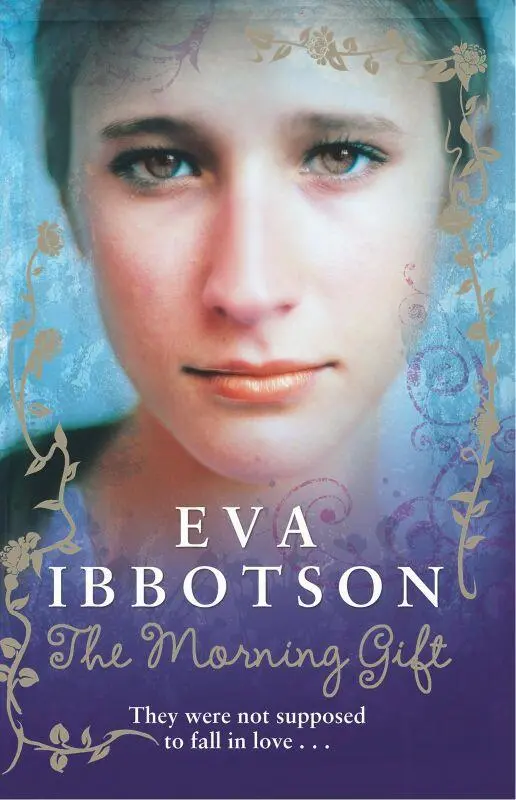
- Название:The Morning Gift
- Автор:
- Издательство:Pan Macmillan
- Жанр:
- Год:0101
- ISBN:9780330477345
- Рейтинг книги:4 / 5. Голосов: 1
-
Избранное:Добавить в избранное
- Отзывы:
-
Ваша оценка:
The Morning Gift: краткое содержание, описание и аннотация
Предлагаем к чтению аннотацию, описание, краткое содержание или предисловие (зависит от того, что написал сам автор книги «The Morning Gift»). Если вы не нашли необходимую информацию о книге — напишите в комментариях, мы постараемся отыскать её.
The Morning Gift — читать онлайн бесплатно полную книгу (весь текст) целиком
Ниже представлен текст книги, разбитый по страницам. Система сохранения места последней прочитанной страницы, позволяет с удобством читать онлайн бесплатно книгу «The Morning Gift», без необходимости каждый раз заново искать на чём Вы остановились. Поставьте закладку, и сможете в любой момент перейти на страницу, на которой закончили чтение.
Интервал:
Закладка:
‘Your mother telephoned, Ruth. She wants you to ring her back at once. She’s waiting by the phone.’ And seeing her face: ‘I’m sure it’s nothing to worry about. I expect Heini’s come early.’
‘Yes.’ But Ruth’s face was drained of all colour. No one telephoned lightly at Number 27. The phone was in the hall, overheard, rickety. The coins collected for it always came out of a jam jar as important as hers for Heini, one spoke over a buzz of interference. Her mother would not have phoned without a strong reason when she was due home so soon in any case. It could, of course, be marvellous news… Heini on an earlier plane… it could be that.
‘I’ll come with you,’ said Pilly.
‘No, Pilly, I’d rather go alone. You keep the dog.’
The servant was waiting, ready to escort her.
‘If you come with me, miss, I’ll take you to Mr Turton. There’s a bit of a row going on at the house with the guests arriving, but Mr Turton’s got a phone in his pantry. You’ll be private there.’
‘Yes,’ said Ruth. ‘Thank you.’ And swallowed hard because her mouth was very dry, and dredged up a smile, and followed him up the path towards the house.
She had managed the bonfire; she had said nothing to the others. She had joined in the singing and helped with the clearing up. But now, lying beside Pilly in the dormitory, she knew she could endure it no longer, being here in this untouched place which washed one clear of anguish, which deceived one into thinking that the world was beautiful.
She had to get back; she had to get back at once. Three more days here were unendurable now that she knew what she knew — and her mother’s incoherent voice, scarcely audible, came back to her yet again — her desperate efforts to tell all she had to tell against the interruptions and the noise.
It was well past midnight; everyone was asleep. Ruth rose, dressed, scribbled a note by torchlight. She would take only the small canvas bag she used on her collecting trips — Pilly would bring the rest. She’d get a lift to Alnwick and wait for the milk train which connected with the express at Newcastle. It didn’t really matter how long she took, only that she was on her way. Every half-hour she spent here was a betrayal.
She crept down the ladder, let herself out. The beauty of the moonlit sea, even in her wretchedness, took her breath away, but she would not let herself be seduced again, not ever — and she began to walk quickly up the lane between the alders and the hazel bushes.
Then, as she came up behind the house, she heard music. Cole Porter’s ‘Night and Day’, a wonderful tune, dreamy… and saw light streaming out onto the terrace.
Of course. Verena’s dance. She had entirely forgotten — inhabiting, since her mother’s phone call, a different world. As she crossed the gravel, meaning to take a short cut to the road, she saw that the drive was full of cars: two-seaters mostly, the colour bleached out of them by moonlight, but the shape — predatory, privileged — perfectly clear. Cars for laughing young men with scarves blowing behind them, young men with goggles and one arm round their giggling girls, driving too fast.
There had been a shower earlier. As she made her way across the lawn, her shoes were soaked. The Chinese lanterns swayed in the breeze, but the long windows were uncurtained and open at the top. She could see as clearly as on a stage the couples revolving. The melody had changed; it was a tango now. She knew the words: It was all ’cos of my jealousy. Some of the guests were dancing cheek to cheek, most were hamming it up, because it was impossible for the British to take anything seriously; certainly not jealousy, certainly not love.
The room, now that the double doors were open, seemed vast; the banks of flowers, the silver champagne buckets belied the informality of Verena’s dance. A few older women sat round the edge, watching the girls in their perms and pastels, the arrogant young men.
And how arrogant they were; how they brayed and shrieked as the music stopped, tossing their heads, pulling their girls to the array of glasses, pouring out more drinks. How they laughed, and slapped each other on the back, while in Vienna people were being piled into cattle trucks and taken to the East, and Heini –
But her mind drew back. It would not follow Heini.
Now she could see Quin. He had come into the room and he was carrying something in a tall glass — carrying it to Verena, to where she sat in a high-backed chair. He didn’t look like the braying young men, even in her anger she had to admit that. He looked older and more intelligent, but he was part of all this. He belonged.
Verena was simpering and he bent his head attentively, squiring her, while the dowagers smirked and nodded. It seemed to be true, what everyone said — that he would marry Verena. She was pointing to something on the floor and he bent to pick it up and handed it to her, gallantly, with a bow. A rose from her extraordinary headdress! Quin as a Rosenkavalier — that was rich! A man who’d rushed out of the Stadtpark as though the music of her city was a plague…
And as if they read her thoughts, the three serious dark-suited men on the dais launched into a waltz! Not Strauss, but Lanner whom she loved as much. She knew it well, she had danced to it with Heini in the Vienna Woods.
‘Oh no! Not that old stuff!’ She could hear the braying, blond young man with the slicked-back hair. ‘Give us something decent!’ A second youth, almost identical, staggered up to the band, shaking his head.
But the band went doggedly on: playing not well, perhaps, but carefully, and the young men gave in and pulled the girls out and began to lurch about, parodying the sweetness of the waltz, exaggerating the steps. Most of them were drunk now, they enjoyed colliding with each other, enjoyed deriding the music of another land. Now one of them stumbled and almost fell — a tall youth with black curls and that was really funny. His partner tried to pull him up and then a red-haired boy with freckles flicked champagne into his face. It was all so hilarious. All such a scream…
The stone was in her hand before she knew that she had picked it up. She must have seen it earlier, for it was the right size, heavy enough to make an impact, small enough for her to propel it with force. The act of throwing it was wonderful: a catharsis — and the crash of the splintered glass. It seemed that she waited for seconds, minutes almost, yet it was not so, for by the time Quin came out on to the terrace, followed by an excited, angry group of revellers, she was already running back out of the light, across the grass… was down in the lane which would lead her to the road.
‘There she is!’
‘It’s a girl! Come on, let’s get her!’
Then Quin’s voice, quiet, yet a whiplash. ‘No. You will all go back inside. I know the girl, she comes from the village and I will deal with her.’
They obeyed him. He had seen where she went, but there was a danger she would turn from the lane into the copse for shelter, and though he knew she could not escape, for the wood ended in a high fence and a stream, there were sometimes gin traps there, set by poachers. Even so, he schooled himself not to run till he was out of sight of the house.
He caught up with her easily. She had done exactly as he had expected.
‘Wait!’ he shouted. ‘There may be traps! Take care!’ He spoke in German, using all the means to calm her, approaching slowly. ‘Don’t move.’
But she had already stopped. When he came up to her she was leaning against a spruce sapling, her posture, in the fleeting moonlight, that of a young St Sebastian waiting for arrows.
His words, when they came, punctured her martyred pose in an instant.
Читать дальшеИнтервал:
Закладка:
Похожие книги на «The Morning Gift»
Представляем Вашему вниманию похожие книги на «The Morning Gift» списком для выбора. Мы отобрали схожую по названию и смыслу литературу в надежде предоставить читателям больше вариантов отыскать новые, интересные, ещё непрочитанные произведения.








Обсуждение, отзывы о книге «The Morning Gift» и просто собственные мнения читателей. Оставьте ваши комментарии, напишите, что Вы думаете о произведении, его смысле или главных героях. Укажите что конкретно понравилось, а что нет, и почему Вы так считаете.