Haruki Murakami - The Wind-Up Bird Chronicle
Здесь есть возможность читать онлайн «Haruki Murakami - The Wind-Up Bird Chronicle» весь текст электронной книги совершенно бесплатно (целиком полную версию без сокращений). В некоторых случаях можно слушать аудио, скачать через торрент в формате fb2 и присутствует краткое содержание. Год выпуска: 1998, ISBN: 1998, Издательство: Shinchosha, Жанр: Современная проза, на английском языке. Описание произведения, (предисловие) а так же отзывы посетителей доступны на портале библиотеки ЛибКат.
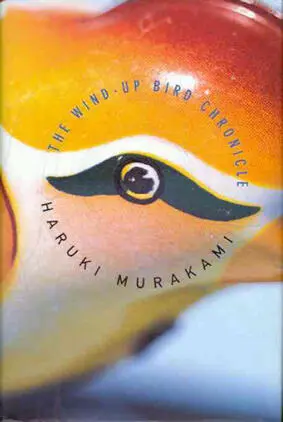
- Название:The Wind-Up Bird Chronicle
- Автор:
- Издательство:Shinchosha
- Жанр:
- Год:1998
- ISBN:0-679-77543-9
- Рейтинг книги:4 / 5. Голосов: 2
-
Избранное:Добавить в избранное
- Отзывы:
-
Ваша оценка:
The Wind-Up Bird Chronicle: краткое содержание, описание и аннотация
Предлагаем к чтению аннотацию, описание, краткое содержание или предисловие (зависит от того, что написал сам автор книги «The Wind-Up Bird Chronicle»). Если вы не нашли необходимую информацию о книге — напишите в комментариях, мы постараемся отыскать её.
In a Tokyo suburb a young man named Toru Okada searches for his wife's missing cat. Soon he finds himself looking for his wife as well in a netherworld that lies beneath the placid surface of Tokyo. As these searches intersect, Okada encounters a bizarre group of allies and antagonists: a psychic prostitute; a malevolent yet mediagenic politician; a cheerfully morbid sixteen-year-old-girl; and an aging war veteran who has been permanently changed by the hideous things he witnessed during Japan's forgotten campaign in Manchuria.
Gripping, prophetic, suffused with comedy and menace,
is a tour de force equal in scope to the masterpieces of Mishima and Pynchon.
The Wind-Up Bird Chronicle — читать онлайн бесплатно полную книгу (весь текст) целиком
Ниже представлен текст книги, разбитый по страницам. Система сохранения места последней прочитанной страницы, позволяет с удобством читать онлайн бесплатно книгу «The Wind-Up Bird Chronicle», без необходимости каждый раз заново искать на чём Вы остановились. Поставьте закладку, и сможете в любой момент перейти на страницу, на которой закончили чтение.
Интервал:
Закладка:
The doctor loved his wife and child. They were the most wonderful thing that had ever happened to him in his life-especially his daughter, for whom his love bordered on obsession. For them, he would have gladly given up his life. Indeed, he had often imagined doing so, and the deaths he had endured for them in his mind seemed the sweetest deaths imaginable. At the same time, however, he would often come home from work and, seeing his wife and daughter there, think to himself, These people are, finally, separate human beings, with whom I have no connection. They were something other, something of which he had no true knowledge, something that existed in a place far away from the doctor himself. And whenever he felt this way, the thought would cross his mind that he himself had chosen neither of these people on his own-which did not prevent him from loving them unconditionally, without the slightest reservation. This was, for the doctor, a great paradox, an insoluble contradiction, a gigantic trap that had been set for him in his life.
The world he belonged to became far simpler, far easier to understand, though, once he was left alone in his residence at the zoo. All he had to think about was taking care of the animals. His wife and daughter were gone. There was no need to think about them for now. The veterinarian and his fate could be alone together.
And it was fate above all, the gigantic power of fate, that held sway over the city of Hsinching in August of 1945-not the Kwantung Army, not the Soviet Army, not the troops of the Communists or of the Kuomintang. Anyone could see that fate was the ruler here and that individual will counted for nothing. It was fate that had spared the elephants and buried the tigers and leopards and wolves and bears the day before. What would it bury now, and what would it spare? These were questions that no one could answer.
The doctor left his residence to prepare for the morning feeding. He assumed that no one would show up for work anymore, but he found two Chinese boys waiting for him in his office. He did not know them. They were thirteen or fourteen years old, dark-complected and skinny, with roving animal eyes. They told us to help you, said one boy. The doctor nodded. He asked their names, but they made no reply. Their faces remained blank, as if they had not heard the question. These boys had obviously been sent by the Chinese people who had worked here until the day before. Those people had probably ended all contact with Japanese now, in anticipation of changes to come, but assumed that children would not be held accountable. The boys had been sent as a sign of goodwill. The workers knew that he could not care for the animals alone.
The veterinarian gave each boy two cookies, then put them to work helping him feed the animals. They led a mule-drawn cart from cage to cage, providing each animal with its particular feed and changing its water. Cleaning the cages was out of the question. The best they could manage was a quick hose-down to wash away the droppings. The zoo was closed, after all: no one would complain if it stank a little.
As it turned out, the absence of the tigers, leopards, bears, and wolves made the job far easier. Caring for big carnivores was a major effort-and dangerous. As bad as the doctor felt when passing their empty cages, he could not suppress a sense of relief to have been spared that job.
They started the work at eight o'clock and finished after ten. The boys then disappeared without a word. The veterinarian felt exhausted from the hard physical labor. He went back to the office and reported to the zoo director that the animals had been fed.
Just before noon, the young lieutenant came back to the zoo, leading the same eight soldiers he had brought with him the day before. Fully armed again, they walked with a metallic clinking that could be heard far in advance of their arrival. Again their shirts were blackened with sweat, and again the cicadas were screaming in the trees. Today, however, they had not come to kill animals. The lieutenant saluted the director and said, We need to know the current status of the zoos usable carts and draft animals. The director informed him that they had exactly one mule and one wagon. We contributed our only truck and two horses two weeks ago, he noted. The lieutenant nodded and announced that he would immediately commandeer the mule and wagon, as per orders of Kwantung Army Headquarters.
Wait just a minute, the veterinarian interjected. We need those to feed the animals twice a day. All our local people have disappeared. Without that mule and wagon, our animals will starve to death. Even with them, we can barely keep up.
Were all just barely keeping up, sir, said the lieutenant, whose eyes were red and whose face was covered with stubble. Our first priority is to defend the city. You can always let the animals out of their cages if need be. We've taken care of the dangerous meat-eaters. The others pose no security risk. These are military orders, sir. You'll just have to manage as you see fit.
Cutting the discussion short, the lieutenant had his men take the mule and wagon. When they were gone, the veterinarian and the director looked at each other. The director sipped his tea, shook his head, and said nothing.
Four hours later, the soldiers were back with the mule and wagon, a filthy canvas tarpaulin covering the mounded contents of the wagon. The mule was panting, its hide foaming with the afternoon heat and the weight of the load. The eight soldiers marched four Chinese men ahead of them at bayonet point-young men, perhaps twenty years old, wearing baseball uniforms and with their hands tied behind their backs. The black-and-blue marks on their faces made it obvious that they had been severely beaten. The right eye of one man was swollen almost shut, and the bleeding lips of another had stained his baseball shirt bright red. The shirtfronts had nothing written on them, but there were small rectangles where the name patches had been torn off. The numbers on their backs were 1, 4, 7, and 9. The veterinarian could not begin to imagine why, at such a time of crisis, four young Chinese men would be wearing baseball uniforms, or why they had been so badly beaten and dragged here by Japanese troops. The scene looked like something not of this world-a painting by a mental patient.
The lieutenant asked the zoo director if he had any picks and shovels he could let them use. The young officer looked even more pale and haggard than he had before. The veterinarian led him and his men to a tool-shed behind the office. The lieutenant chose two picks and two shovels for his men. Then he asked the veterinarian to come with him, and leaving his men there, walked into a thicket beyond the road. The veterinarian followed. Wherever the lieutenant walked, huge grasshoppers scattered. The smell of summer grass hung in the air. Mixed in with the deafening screams of cicadas, the sharp trumpeting of elephants now and then seemed to sound a distant warning.
The lieutenant went on among the trees without speaking, until he found a kind of opening in the woods. The area had been slated for construction of a plaza for small animals that children could play with. The plan had been postponed indefinitely, however, when the worsening military situation caused a shortage of construction materials. The trees had been cleared away to make a circle of bare ground, and the sun illuminated this one part of the woods like stage lighting. The lieutenant stood in the center of the circle and scanned the area. Then he dug at the ground with the heel of his boot.
Were going to bivouac here for a while, he said, kneeling down and scooping up a handful of dirt.
The veterinarian nodded in response. He had no idea why they had to bivouac in a zoo, but he decided not to ask. Here in Hsinching, experience had taught him never to question military men. Questions did nothing but make them angry, and they never gave you a straight answer in any case.
Читать дальшеИнтервал:
Закладка:
Похожие книги на «The Wind-Up Bird Chronicle»
Представляем Вашему вниманию похожие книги на «The Wind-Up Bird Chronicle» списком для выбора. Мы отобрали схожую по названию и смыслу литературу в надежде предоставить читателям больше вариантов отыскать новые, интересные, ещё непрочитанные произведения.










Обсуждение, отзывы о книге «The Wind-Up Bird Chronicle» и просто собственные мнения читателей. Оставьте ваши комментарии, напишите, что Вы думаете о произведении, его смысле или главных героях. Укажите что конкретно понравилось, а что нет, и почему Вы так считаете.