Haruki Murakami - The Wind-Up Bird Chronicle
Здесь есть возможность читать онлайн «Haruki Murakami - The Wind-Up Bird Chronicle» весь текст электронной книги совершенно бесплатно (целиком полную версию без сокращений). В некоторых случаях можно слушать аудио, скачать через торрент в формате fb2 и присутствует краткое содержание. Год выпуска: 1998, ISBN: 1998, Издательство: Shinchosha, Жанр: Современная проза, на английском языке. Описание произведения, (предисловие) а так же отзывы посетителей доступны на портале библиотеки ЛибКат.
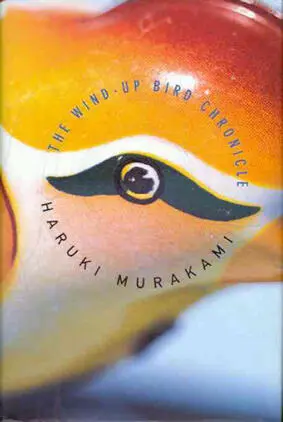
- Название:The Wind-Up Bird Chronicle
- Автор:
- Издательство:Shinchosha
- Жанр:
- Год:1998
- ISBN:0-679-77543-9
- Рейтинг книги:4 / 5. Голосов: 2
-
Избранное:Добавить в избранное
- Отзывы:
-
Ваша оценка:
The Wind-Up Bird Chronicle: краткое содержание, описание и аннотация
Предлагаем к чтению аннотацию, описание, краткое содержание или предисловие (зависит от того, что написал сам автор книги «The Wind-Up Bird Chronicle»). Если вы не нашли необходимую информацию о книге — напишите в комментариях, мы постараемся отыскать её.
In a Tokyo suburb a young man named Toru Okada searches for his wife's missing cat. Soon he finds himself looking for his wife as well in a netherworld that lies beneath the placid surface of Tokyo. As these searches intersect, Okada encounters a bizarre group of allies and antagonists: a psychic prostitute; a malevolent yet mediagenic politician; a cheerfully morbid sixteen-year-old-girl; and an aging war veteran who has been permanently changed by the hideous things he witnessed during Japan's forgotten campaign in Manchuria.
Gripping, prophetic, suffused with comedy and menace,
is a tour de force equal in scope to the masterpieces of Mishima and Pynchon.
The Wind-Up Bird Chronicle — читать онлайн бесплатно полную книгу (весь текст) целиком
Ниже представлен текст книги, разбитый по страницам. Система сохранения места последней прочитанной страницы, позволяет с удобством читать онлайн бесплатно книгу «The Wind-Up Bird Chronicle», без необходимости каждый раз заново искать на чём Вы остановились. Поставьте закладку, и сможете в любой момент перейти на страницу, на которой закончили чтение.
Интервал:
Закладка:
As early as 1920, according to the author, Japans imperial army was looking into the possibility of amassing a huge inventory of winter survival gear in anticipation of all-out war with the Soviets. Equipping the army to fight in bitter cold was viewed as an urgent matter because they lacked the experience of having fought a real battle anyplace with such extreme winter cold as Siberia. If a border dispute led suddenly to a declaration of war against the Soviet Union (which was by no means out of the question in those days), the army was simply unprepared to persevere in a winter campaign. For this reason, a research team was established within the General Staff Office to prepare to fight a hypothetical war with the Soviet Union, the logistics section being charged with investigating the procurement of special winter clothing. In order to grasp what real cold was like, they went to the far northern island of Sakhalin, long a point of dispute with Czarist Russia and then the Soviet Union, and used an actual fighting unit to test insulated boots and coats and underwear. They ran thoroughgoing tests on equipment currently in use by the Soviet Army and on the kind of clothing that Napoleons army had used in its Russian campaign, reaching the conclusion that it would be impossible for the Japanese Army to survive a winter in Siberia with its present equipment. They estimated that some two-thirds of the foot soldiers on the front lines would be put out of commission by frostbite. The army's current survival gear had been manufactured with the somewhat gentler northern China winters in mind, and it was lacking in terms of absolute numbers as well. The research team calculated the number of sheep necessary to manufacture sufficient effective winter clothing to outfit ten divisions (the joke making the rounds of the team then being that they were too busy counting sheep to sleep), and they submitted this in their report, along with estimates of the scale of mechanical equip- ment that would be needed to process the wool.
The number of sheep on the Japanese home islands was clearly insufficient for fighting an extended war in the northern territories against the Soviet Army in the event of economic sanctions or an actual blockade against Japan, and thus it was imperative that Japan secure both a stable supply of wool (and of rabbit and other pelts) in the Manchuria-Mongolia region and the mechanical equipment for processing it, said the report. The man dispatched to make on-the-spot observations in Manchukuo in 1932, immediately after the founding of the puppet regime there, was a young technocrat newly graduated from the Military Staff College with a major in logistics; his name was Yoshitaka Wataya.
Yoshitaka Wataya! This could only have been Noboru's uncle. There just weren't that many Wataya's in the world, and the name Yoshitaka was the clincher.
His mission was to calculate the time that would be needed before such stable supplies of wool could be secured in Manchukuo. Yoshitaka Wataya seized upon this problem of cold- weather clothing as a model case for modern logistics and carried out an exhaustive numerical analysis.
When he was in Mukden, Yoshitaka Wataya sought an introduction to- and spent the entire night drinking and talking with- Lieutenant General Kanji Ishiwara.
Kanji Ishiwara. Another name I knew well. Noboru Wataya's uncle had been in touch with Kanji Ishiwara, the ringleader the year before of the staged Chinese attack on Japanese troops known as the Manchurian Incident, the event that had enabled Japan to turn Manchuria into Manchukuo-and that later would prove to have been the first act in fifteen years of war.
Ishiwara had toured the continent and become convinced not only that all-out war with the Soviet Union was inevitable but that the key to winning that war lay in strengthening Japans logistical position by rapidly industrializing the newly formed empire of Manchukuo and establishing a self-sufficient economy. He presented his case to Yoshitaka Wataya with eloquence and passion. He argued, too, the importance of bringing farmers from Japan to systematize Manchukuo's farming and cattle industries and to raise the level of their efficiency.
Ishiwara was of the opinion that Japan should not turn Manchukuo into another undisguised Japanese colony, such as Korea or Taiwan, and should instead make Manchukuo a new model Asian nation. In his recognition that Manchukuo would ultimately serve as a logistical base for war against the Soviet Union-and even against the United States and England-Ishiwara was, however, admirably realistic. He believed that Japan was now the only Asian nation with the capability of fighting the coming war against the West (or, as he called it, the Final War) and that the other countries had the duty to cooperate with Japan for their own liberation from the West. No other officer in the Imperial Army at that time had Ishiwara's combination of a profound interest in logistics and great erudition. Most other Japanese officers dismissed logistics as an effeminate discipline, believing instead that the proper Way for his majesty's warriors was to fight with bold self-abandonment no matter how ill-equipped one might be; that true martial glory lay in conquering a mighty foe when outnumbered and poorly armed. Strike the enemy and advance too swiftly for supplies to keep up: that was the path of honor.
To Yoshitaka Wataya, the complete technocrat, this was utter nonsense. Starting a long- term war without logistical backing was tantamount to suicide, in his view. The Soviets had vastly expanded and modernized their military capability through Stalins five-year plan of in- tensive economic development. The five bloody years of the First World War had destroyed the old worlds values, and mechanized war had revolutionized European thinking with regard to strategy and logistics. Having been stationed for two years in Berlin, Yoshitaka Wataya knew the truth of this with every bone in his body, but the mentality of the greater part of Japans military men had not outgrown the intoxication of their victory in the Russo-Japanese War, nearly thirty years before.
Yoshitaka Wataya went home to Japan a devoted admirer of Ishiwara's arguments, his worldview, and the charismatic personality of the man himself, and their close relationship lasted many years. He often went to visit Ishiwara, even after the distinguished officer had been brought back from Manchuria to take command of the isolated fortress in Maizuru. Yoshitaka Wataya's precise and meticulous report on sheep farming and wool processing in Manchukuo was submitted to headquarters shortly after he returned to Japan, and it received high praise. With Japans painful defeat in the 1939 battle of Nomonhan, however, and the strengthening of U.S. and British economic sanctions, the military began to shift its attention southward, and the activities of the research team waging hypothetical war against the Soviet Union were allowed to peter out. Of course, one factor behind the decision to finish off the battle of Nomonhan quickly in early autumn and not allow it to develop into a full-scale war was the research teams conclusive report that we are unable to wage a winter campaign against the Soviet Army given our current state of preparedness. As soon as the autumn winds began to blow, Imperial Headquarters, in a move unusual for the normally face- obsessed Japanese Army, washed its hands of the fighting and, through diplomatic negotiations, ceded the barren Hulunbuir Steppe to Outer Mongolian and Soviet troops.
In a footnote, the author pointed out that Yoshitaka Wataya had been purged from holding public office by MacArthur's Occupation after the war and for a time had lived in seclusion in his native Niigata, but he had been persuaded by the Conservative Party to run for office after the purge was lifted and served two terms in the Upper House before changing to the Lower House. A calligraphic scroll of Kanji Ishiwara's hung on the wall of his office.
Читать дальшеИнтервал:
Закладка:
Похожие книги на «The Wind-Up Bird Chronicle»
Представляем Вашему вниманию похожие книги на «The Wind-Up Bird Chronicle» списком для выбора. Мы отобрали схожую по названию и смыслу литературу в надежде предоставить читателям больше вариантов отыскать новые, интересные, ещё непрочитанные произведения.








Обсуждение, отзывы о книге «The Wind-Up Bird Chronicle» и просто собственные мнения читателей. Оставьте ваши комментарии, напишите, что Вы думаете о произведении, его смысле или главных героях. Укажите что конкретно понравилось, а что нет, и почему Вы так считаете.