Haruki Murakami - The Wind-Up Bird Chronicle
Здесь есть возможность читать онлайн «Haruki Murakami - The Wind-Up Bird Chronicle» весь текст электронной книги совершенно бесплатно (целиком полную версию без сокращений). В некоторых случаях можно слушать аудио, скачать через торрент в формате fb2 и присутствует краткое содержание. Год выпуска: 1998, ISBN: 1998, Издательство: Shinchosha, Жанр: Современная проза, на английском языке. Описание произведения, (предисловие) а так же отзывы посетителей доступны на портале библиотеки ЛибКат.
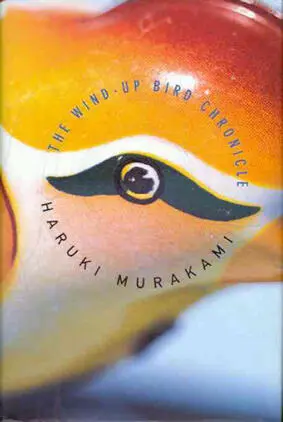
- Название:The Wind-Up Bird Chronicle
- Автор:
- Издательство:Shinchosha
- Жанр:
- Год:1998
- ISBN:0-679-77543-9
- Рейтинг книги:4 / 5. Голосов: 2
-
Избранное:Добавить в избранное
- Отзывы:
-
Ваша оценка:
The Wind-Up Bird Chronicle: краткое содержание, описание и аннотация
Предлагаем к чтению аннотацию, описание, краткое содержание или предисловие (зависит от того, что написал сам автор книги «The Wind-Up Bird Chronicle»). Если вы не нашли необходимую информацию о книге — напишите в комментариях, мы постараемся отыскать её.
In a Tokyo suburb a young man named Toru Okada searches for his wife's missing cat. Soon he finds himself looking for his wife as well in a netherworld that lies beneath the placid surface of Tokyo. As these searches intersect, Okada encounters a bizarre group of allies and antagonists: a psychic prostitute; a malevolent yet mediagenic politician; a cheerfully morbid sixteen-year-old-girl; and an aging war veteran who has been permanently changed by the hideous things he witnessed during Japan's forgotten campaign in Manchuria.
Gripping, prophetic, suffused with comedy and menace,
is a tour de force equal in scope to the masterpieces of Mishima and Pynchon.
The Wind-Up Bird Chronicle — читать онлайн бесплатно полную книгу (весь текст) целиком
Ниже представлен текст книги, разбитый по страницам. Система сохранения места последней прочитанной страницы, позволяет с удобством читать онлайн бесплатно книгу «The Wind-Up Bird Chronicle», без необходимости каждый раз заново искать на чём Вы остановились. Поставьте закладку, и сможете в любой момент перейти на страницу, на которой закончили чтение.
Интервал:
Закладка:
As a result, my closet began to fill up almost before I knew it. Slowly but steadily, new suits, new jackets, and new shirts were invading the territory that had once been occupied by Kumiko's skirts and dresses. Before long, the closet was becoming cramped, and so I folded Kumiko's things, packed them in cartons with mothballs, and put them in a storage area. If she ever came back, I knew, she would have to wonder what in the world had happened in her absence.
I took a long time to explain about Kumiko to Nutmeg, little by little- that I had to save her and bring her back here. She put her elbow on the table, propping her chin in her hand, and looked at me for a while.
So where is it that you're going to save Kumiko from? Does the place have a name or something?
I searched for the words in space. But they were not there in space. Neither were they underground. Someplace far away, I said.
Nutmeg smiled. Its kind of like The Magic Flute. You know: Mozart. Using a magic flute and magic bells, they have to save a princess who's being held captive in a faraway castle. I love that opera. I don't know how many times I've seen it. I know the lines by heart: I'm the birdcatcher, Papageno, known throughout the land. Ever seen it?
I shook my head. I had never seen it.
In the opera, the prince and the birdcatcher are led to the castle by three children riding on a cloud. But whats really happening is a battle between the land of day and the land of night. The land of night is trying to recapture the princess from the land of day. Midway through the opera, the heroes cant tell any longer which side is right- who is being held captive and who is not. Of course, at the end, the prince gets the princess, Papageno gets Papagena, and the villains fall into hell. Nutmeg ran her finger along the rim of her glass. Anyhow, at this point you don't have a birdcatcher or a magic flute or bells.
But I do have a well, I said.
Whenever I grew tired from talking or I was unable to go on telling my story because I lost track of the words I needed, Nutmeg would give me a rest by talking about her own early life, and her stories turned out to be far more lengthy and convoluted than mine. And also, unlike me, she would impose no order on her stories but would leap from topic to topic as her feelings dictated. Without explanation, she would reverse chronological order or suddenly introduce as a major character someone she had never mentioned to me before. In order to know to which period of her life the fragment belonged that she was presently narrating, it was necessary to make careful deductions, though no amount of deduction could work in some cases. She would narrate events she had witnessed with her own eyes, as well as events that she had never witnessed.
They killed the leopards. They killed the wolves. They killed the bears. Shooting the bears took the most time. Even after the two gigantic animals had taken dozens of rifle slugs, they continued to crash against the bars of their cage, roaring at the men and slobbering, fangs bared. Unlike the cats, who were more willing to accept their fate (or who at least appeared to accept it), the bears seemed unable to comprehend the fact that they were being killed. Possibly for that reason, it took them far longer than was necessary to reach a final parting with that temporary condition known as life. When the soldiers finally succeeded in extinguishing all signs of life in the bears, they were so exhausted they were ready to collapse on the spot. The lieutenant reset his pistols safety catch and used his hat to wipe the sweat dripping down his brow. In the deep silence that followed the killing, several of the soldiers seemed to be trying to mask their sense of shame by spitting loudly on the ground. Spent shells were scattered about their feet like so many cigarette butts. Their ears still rang with the crackling of their rifles. The young soldier who would be beaten to death by a Soviet soldier seventeen months later in a coal mine near Irkutsk took several deep breaths in succession, averting his gaze from the bears corpses. He was engaged in a fierce struggle to force back the nausea that had worked its way up to his throat.
In the end, they did not kill the elephants. Once they actually confronted them, it became obvious that the beasts were simply too large, that the soldiers rifles looked like silly toys in their presence. The lieutenant thought it over for a while and decided to leave the elephants alone. Hearing this, the men breathed a sigh of relief. Strange as it may seem-or perhaps it does not seem so strange-they all had the same thought: it was so much easier to kill humans on the battlefield than animals in cages, even if, on the battlefield, one might end up being killed oneself. Those animals that were now nothing but corpses were dragged from their cages by the Chinese workers, loaded onto carts, and hauled to an empty warehouse. There, the animals, which came in so many shapes and sizes, were laid out on the floor. Once he had seen the operation through to its end, the lieutenant returned to the zoo directors office and had the man sign the necessary documents. Then the soldiers lined up and marched away in formation, with the same metallic clanking they had made when they came. The Chinese workers used hoses to wash off the black stains of blood on the floors of the cages, and with brushes they scrubbed away the occasional chunk of animal flesh that clung to the walls. When this job was finished, the workers asked the veterinarian with the blue-black mark on his cheek how he intended to dispose of the corpses. The doctor was at a loss for an answer. Ordinarily, when an animal died at the zoo, he would call a professional to do the job. But with the capital now bracing for a bloody battle, with people now struggling to be the first to leave this doomed city, you couldn't just make a phone call and get someone to run over to dispose of an animal corpse for you. Summer was at its height, though, and the corpses would begin to decompose quickly. Even now, black swarms of flies were massing. The best thing would be to bury them-an enormous job even if the zoo had access to heavy equipment, but with the limited help available to them now, it would obviously be impossible to dig holes large enough to take all the corpses.
The Chinese workers said to the veterinarian: Doctor, if you will let us take the corpses whole, we will dispose of them for you. We have plenty of friends to help us, and we know exactly where to do the job. We will haul them outside the city and get rid of every last speck. We will not cause you any problems. But in exchange, we want the hides and meat. Especially the bear meat: everybody will want that. Parts of bear and tiger are good for medicine-they will command a high price. And though its too late now to say this, we wish you had aimed only at their heads. Then the hides would have been worth a good deal more. The soldiers were such amateurs! If only you had let us take care of it from the beginning, we wouldn't have done such a clumsy job. The veterinarian agreed to the bargain. He had no choice. After all, it was their country.
Before long, ten Chinese appeared, pulling several empty carts behind them. They dragged the animals corpses out of the warehouse, piled them onto the carts, tied them down, and covered them with straw mats. They hardly said a word to each other the whole time. Their faces were expressionless. When they had finished loading the carts, they dragged them off somewhere. The old carts creaked with the strain of supporting the animals weight. And so ended the massacre- what the Chinese workers called a clumsy massacre- of zoo animals on a hot August afternoon. All that was left were several clean-and empty-cages. Still in an agitated state, the monkeys kept calling out to one another in their incomprehensible language. The badgers rushed back and forth in their narrow cage. The birds flapped their wings in desperation, scattering feathers all around. And the cicadas kept up their grating cry.
Читать дальшеИнтервал:
Закладка:
Похожие книги на «The Wind-Up Bird Chronicle»
Представляем Вашему вниманию похожие книги на «The Wind-Up Bird Chronicle» списком для выбора. Мы отобрали схожую по названию и смыслу литературу в надежде предоставить читателям больше вариантов отыскать новые, интересные, ещё непрочитанные произведения.









Обсуждение, отзывы о книге «The Wind-Up Bird Chronicle» и просто собственные мнения читателей. Оставьте ваши комментарии, напишите, что Вы думаете о произведении, его смысле или главных героях. Укажите что конкретно понравилось, а что нет, и почему Вы так считаете.