Haruki Murakami - The Wind-Up Bird Chronicle
Здесь есть возможность читать онлайн «Haruki Murakami - The Wind-Up Bird Chronicle» весь текст электронной книги совершенно бесплатно (целиком полную версию без сокращений). В некоторых случаях можно слушать аудио, скачать через торрент в формате fb2 и присутствует краткое содержание. Год выпуска: 1998, ISBN: 1998, Издательство: Shinchosha, Жанр: Современная проза, на английском языке. Описание произведения, (предисловие) а так же отзывы посетителей доступны на портале библиотеки ЛибКат.
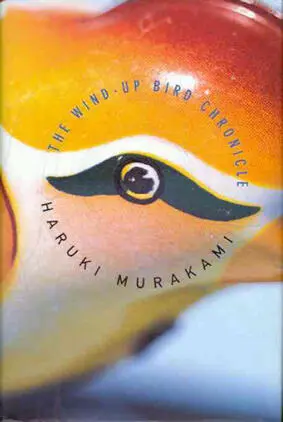
- Название:The Wind-Up Bird Chronicle
- Автор:
- Издательство:Shinchosha
- Жанр:
- Год:1998
- ISBN:0-679-77543-9
- Рейтинг книги:4 / 5. Голосов: 2
-
Избранное:Добавить в избранное
- Отзывы:
-
Ваша оценка:
The Wind-Up Bird Chronicle: краткое содержание, описание и аннотация
Предлагаем к чтению аннотацию, описание, краткое содержание или предисловие (зависит от того, что написал сам автор книги «The Wind-Up Bird Chronicle»). Если вы не нашли необходимую информацию о книге — напишите в комментариях, мы постараемся отыскать её.
In a Tokyo suburb a young man named Toru Okada searches for his wife's missing cat. Soon he finds himself looking for his wife as well in a netherworld that lies beneath the placid surface of Tokyo. As these searches intersect, Okada encounters a bizarre group of allies and antagonists: a psychic prostitute; a malevolent yet mediagenic politician; a cheerfully morbid sixteen-year-old-girl; and an aging war veteran who has been permanently changed by the hideous things he witnessed during Japan's forgotten campaign in Manchuria.
Gripping, prophetic, suffused with comedy and menace,
is a tour de force equal in scope to the masterpieces of Mishima and Pynchon.
The Wind-Up Bird Chronicle — читать онлайн бесплатно полную книгу (весь текст) целиком
Ниже представлен текст книги, разбитый по страницам. Система сохранения места последней прочитанной страницы, позволяет с удобством читать онлайн бесплатно книгу «The Wind-Up Bird Chronicle», без необходимости каждый раз заново искать на чём Вы остановились. Поставьте закладку, и сможете в любой момент перейти на страницу, на которой закончили чтение.
Интервал:
Закладка:
The cages concrete floor was suffused with the piercing smell of the big cats urine, and mixed with it was the warm odor of blood. Blood was still gushing from the holes torn in the tigers bodies, forming a sticky black pond around his feet. All of a sudden, the rifle in his hands felt heavy and cold. He wanted to fling it away, bend down, and vomit the entire contents of his stomach onto the floor. What a relief it would have been! But vomiting was out of the question-the squad leader would beat his face out of shape. (Of course, this soldier had no idea that he would die seventeen months later when a Soviet guard in a mine near Irkutsk would split his skull open with a shovel.) He wiped the sweat from his forehead with the back of his wrist. His helmet was weighing down upon him. One cicada, then another, began to cry again, as if finally revived. Soon their cries were joined by those of a bird- strangely distinctive cries, like the winding of a spring: Creeeak. Creeeak. The young soldier had moved from a mountain village in Hokkaido across the sea to China with his parents at the age of twelve, and together they had tilled the soil of a frontier village in Beian until a year ago, when he had been drafted into the army. Thus he knew all the birds of Manchuria, but strangely, he had never heard a bird with that particular cry. Perhaps it was a bird imported from a distant land, crying in its cage in another part of the zoo. Yet the sound seemed to come from the upper branches of a nearby tree. He turned and squinted in the direction of the sound, but he could see nothing. A huge elm tree with dense leaves cast its cool, sharp shadow on the ground below.
He looked toward the lieutenant, as if requesting instructions. The lieutenant nodded, ordered him out of the cage, and spread open the zoo map again. So much for the tigers. Next well do the leopards. Then maybe the wolves. We've got bears to deal with too. Well think about the elephants when the others are finished off, he thought. And then he realized how hot it was. Take a breather, he said to his men. Have some water. They drank from their canteens. Then they shouldered their rifles, took their places in formation, and headed for the leopard cage. Up in a tree, the unknown bird with the insistent call went on winding its spring. The chests and backs of the mens short-sleeved military shirts were stained black with sweat. As this formation of fully armed soldiers strode along, the clanking of all kinds of metallic objects sent hollow echoes throughout the deserted zoo. The monkeys clinging to the bars of their cages rent the air with ominous screams, sending frantic warnings to all the other animals in the zoo, who in turn joined the chorus in their own distinctive ways. The wolves sent long howls skyward, the birds contributed a wild flapping of wings, some large animal somewhere was slamming itself against its cage, as if to send out a threat. A chunk of cloud shaped like a fist appeared out of nowhere and hid the sun for a time. On that August afternoon, people, animals-everyone was thinking about death. Today the men would be killing animals; tomorrow Soviet troops would be killing the men. Probably.
We always sat across from each other at the same table in the same restaurant, talking. She was a regular there, and of course she always picked up the tab. The back part of the restaurant was divided into private compartments, so that the conversation at any one table could not be heard at another. There was only one seating per evening, which meant that we could talk at our leisure, right up to closing time, without interference from anyone-including the waiters, who approached the table only to bring or clear a dish. She would always order a bottle of Burgundy of one particular vintage and always leave half the bottle unconsumed.
A bird that winds a spring? I asked, looking up from my food.
A bird that winds a spring? said Nutmeg, repeating the words exactly as I had said them, then curling her lips just a little. I don't understand what you're saying. What are you talking about?
Didn't you just say something about a bird that winds a spring?
She shook her head slowly. Hmm. Now I cant remember. I don't think I said anything about a bird.
I could see it was hopeless. She always told her stories like this. I didn't ask her about the mark, either.
So you were born in Manchuria, then? I asked.
She shook her head again. I was born in Yokohama. My parents took me to Manchuria when I was three. My father was teaching at a school of veterinary medicine, but when the Hsinching city administrators wanted someone sent over from Japan as chief veterinarian for the new zoo they were going to build, he volunteered for the job. My mother didn't want to abandon the settled life they had in Japan and go off to the ends of the earth, but my father insisted. Maybe he wanted to test himself in someplace bigger and more open than Japan. I was so young, it didn't matter where I was, but I really enjoyed living at the zoo. It was a wonderful life. My father always smelled like the animals. All the different animal smells would mix together into one, and it would be a little different each day, like changing the blend of ingredients in a perfume. Id climb up onto his lap when he came home and make him sit still while I smelled him.
But then the war took a bad turn, and we were in danger, so my father decided to send my mother and me back to Japan before it was too late. We went with a lot of other people, taking the train from Hsinching to Korea, where a special boat was waiting for us. My father stayed behind in Hsinching. The last I ever saw him, he was standing in the station, waving to us. I stuck my head out the window and watched him growing smaller and smaller until he disappeared into the crowd on the platform. No one knows what happened to him after that. I think he must have been taken prisoner by the Soviets and sent to Siberia to do forced labor and, like so many others, died over there. Hes probably buried in some cold, lonely patch of earth without anything to mark his grave.
I still remember everything about the Hsinching zoo in perfect detail. I can bring it all back inside my head-every pathway, every animal. We lived in the chief veterinarians official residence, inside the grounds. All the zoo workers knew me, and they let me go anywhere I wanted- even on holidays, when the zoo was closed.
Nutmeg closed her eyes to bring back the scene inside her mind. I waited, without speaking, for her to continue her story.
Still, though, I cant be sure if the zoo as I recall it was really like that. How can I put it? I sometimes feel that its too vivid, if you know what I mean. And when I start having thoughts like this, the more I think about it, the less I can tell how much of the vividness is real and how much of it my imagination has invented. I feel as if I've wandered into a labyrinth. Has that ever happened to you?
It had not. Do you know if the zoo is still there in Hsinching? I asked.
I wonder, said Nutmeg, touching the end of her earring. I heard that the place was closed up after the war, but I have no idea if its still closed.
For a very long time, Nutmeg Akasaka was the only person in the world that I could talk to. We would meet once or twice a week and talk to each other across the table at the restaurant. After we had met several times like that, I discovered that she was an extremely accomplished listener. She was quick on the uptake, and she knew how to direct the flow of the story by means of skillfully inserted questions and responses.
So as to avoid upsetting her in any way, I always took great care whenever we met to see that my outfit was neat and clean and well chosen. I would put on a shirt fresh from the cleaners and choose the tie that best matched it in color. My shoes were always shined and spotless. The first thing she would do when she saw me was examine me top to bottom, with the eyes of a chef choosing vegetables. If anything displeased her, she would take me straight to a boutique and buy me the proper article of clothing. If possible, she would have me change into it then and there. When it came to clothing, she would accept nothing less than perfection.
Читать дальшеИнтервал:
Закладка:
Похожие книги на «The Wind-Up Bird Chronicle»
Представляем Вашему вниманию похожие книги на «The Wind-Up Bird Chronicle» списком для выбора. Мы отобрали схожую по названию и смыслу литературу в надежде предоставить читателям больше вариантов отыскать новые, интересные, ещё непрочитанные произведения.









Обсуждение, отзывы о книге «The Wind-Up Bird Chronicle» и просто собственные мнения читателей. Оставьте ваши комментарии, напишите, что Вы думаете о произведении, его смысле или главных героях. Укажите что конкретно понравилось, а что нет, и почему Вы так считаете.