Gail Hareven - Lies, First Person
Здесь есть возможность читать онлайн «Gail Hareven - Lies, First Person» весь текст электронной книги совершенно бесплатно (целиком полную версию без сокращений). В некоторых случаях можно слушать аудио, скачать через торрент в формате fb2 и присутствует краткое содержание. Год выпуска: 2015, Издательство: Open Letter, Жанр: Современная проза, на английском языке. Описание произведения, (предисловие) а так же отзывы посетителей доступны на портале библиотеки ЛибКат.
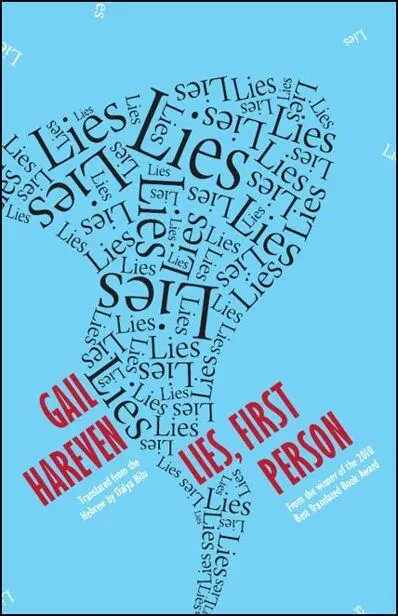
- Название:Lies, First Person
- Автор:
- Издательство:Open Letter
- Жанр:
- Год:2015
- ISBN:нет данных
- Рейтинг книги:3 / 5. Голосов: 1
-
Избранное:Добавить в избранное
- Отзывы:
-
Ваша оценка:
Lies, First Person: краткое содержание, описание и аннотация
Предлагаем к чтению аннотацию, описание, краткое содержание или предисловие (зависит от того, что написал сам автор книги «Lies, First Person»). Если вы не нашли необходимую информацию о книге — напишите в комментариях, мы постараемся отыскать её.
Elinor's comfortable life — popular newspaper column, stable marriage, well-adjusted kids — is totally upended when she finds out that her estranged uncle is coming to Jerusalem to give a speech asking forgiveness for his decades-old book,
.
A shocking novel that galvanized the Jewish diaspora,
was Aaron Gotthilf's attempt to understand — and explain — what it would have been like to be Hitler. As if that wasn't disturbing enough, while writing this controversial novel, Gotthilf stayed in Elinor's parent's house and sexually assaulted her "slow" sister.
In the time leading up to Gotthilf's visit, Elinor will relive the reprehensible events of that time so long ago, over and over, compulsively, while building up the courage — and plan — to avenge her sister in the most conclusive way possible: by murdering Gotthilf, her own personal Hilter.
Along the way to the inevitable confrontation, Gail Hareven uses an obsessive, circular writing style to raise questions about Elinor's mental state, which in turn makes the reader question the veracity of the supposed memoir that they're reading. Is it possible that Elinor is following in her uncle's writerly footpaths, using a first-person narrative to manipulate the reader into forgiving a horrific crime?
Lies, First Person — читать онлайн бесплатно полную книгу (весь текст) целиком
Ниже представлен текст книги, разбитый по страницам. Система сохранения места последней прочитанной страницы, позволяет с удобством читать онлайн бесплатно книгу «Lies, First Person», без необходимости каждый раз заново искать на чём Вы остановились. Поставьте закладку, и сможете в любой момент перейти на страницу, на которой закончили чтение.
Интервал:
Закладка:
But even with this knowledge, even with all the love that God granted her, it still wasn’t easy. People were wonderful to her. So wonderful and so generous. They were so generous in giving her the time she needed. And she really needed time to learn the simplest things: to drive a car, to get onto the expressway. To go to the bank, to be a wife. Because this, being Barnett’s wife, being his mate, was one of the most difficult challenges in the inconceivable bounty that had been showered on her. The pastor’s wife advised them to go to therapy, and they did indeed go to the psychologist Mindy found them, they went together and also separately. The therapy was yet another gift. Their therapist in Urbana had helped her more than all the others she had seen previously, not because the previous ones had been bad, most of them were good people and they had really tried to help her, but now the whole situation was completely different, because she was now able to receive the gift.
“My God who bore the cross with me and for me, Jesus Christ who subjected himself to suffering and to the most terrible humiliations to which a person can be subjected. .” My sister’s voice grew full. I dared to glance at her: her eyes were full of tears, and she blinked to get rid of them. “Jesus told me that I was clean, that he had cleansed me when he was crucified for my sake. When you realize this, that you have been purified and that you are pure, then you really are, from the moment you accept God you are no longer dirty, and after that you are open to receive his grace. And what happened was that I was opened to receive his grace, and all the other wonderful gifts that he in his grace granted me. Including the gift of psychotherapy.”
The new psychologist helped her, as she said, “with the problems of self-image” that she had, and it also helped that she referred her to an additional specialist who diagnosed her particular learning disabilities: it turned out that she suffered not from a single disability, but from two syndromes combined, which clouded the diagnostic picture. The process took time, actually years, during the course of which there was an interval of nearly two years because the money she and Barnett could allocate to treatment ran out, but little by little she understood that “there are methods of coping with a problem like mine, methods developed by different people that can help me and a lot of others like me.”
And then, with the new abilities she had acquired: “I also gradually internalized the fact that even if I’m not brilliant — I’m not stupid either, like I thought I was before.”
I looked at her again; this time she saw me looking, and blushed and smiled at me without resentment, as if she was telling me a story that was all happiness.
And what did I do? I rested my cheek on my knees drawn up under my chin, and listened to my little big sister, this sister who many, many years ago had tucked me into bed. I listened until I was all attention and nothing but attention, and let the story cover me.
Long, long ago we had shared a room. Later on we shared madness and an apartment. In the times we shared she told me stories, but she had never been the heroine of any of the stories she told.
The red bird came back and perched on the lattice, and in a place with a red bird and a white pagoda anything is possible, if only for a moment — even entering into a story without any resentment in it.
•
The man and his wife longed for a child—“In the beginning Barnett would joke about persuading me to have four”—it seemed that God had blessed them with everything, except the child they yearned for more and more. The woman tried fertility treatment, five attempts failed, the money ran out, and the couple accepted that it was God’s will directing them for the time being along another path.
“One of Barnett’s sisters-in-law, a brilliant woman, is a professor at the university, and she often left her two little ones with us. Among the other problems I had with my self-image were quite a few fears about what kind of a mother I would be to my own children. That’s another thing I worked on in therapy. But it turned out that these two kids were the ones who helped me most. Does that make sense? Then I didn’t understand it, but it was as if God were saying to me: Be patient, before I entrust a new soul to your hands, we’ll give you a course to complete. So I completed the course,” her voice filled with an unfamiliar mischievousness, “and apparently nobody has any complaints about the results.”
From the way my sister spoke it was clear to me that this wasn’t the first time she was telling the story about the man and his wife, and presumably not only to herself. But from the moment she embarked on the story of which she was the heroine, from the moment she began telling this fairytale, with pauses in just the right places, I became a willing audience, happy to let her proceed at her own pace, to postpone the entrance of the snake, and put off everything I still had to say to her.
The nephews grew. Their parents found work in another country. The house emptied of children’s laughter, and Elisheva went on waiting patiently for a sign from her God. “All the gospels say clearly that we mustn’t be egoists, and that we shouldn’t think too much about ourselves,” she said to me, not as a stern sermonizer but like a serious, rather tired, little girl being tested on what the sermon said. “What the gospels try to teach us is to go beyond ourselves, beyond our private needs in order to serve others. When I was in therapy I thought a lot about myself, because that’s what it’s like in therapy, you know. But Barnett, and also our pastor’s wife, both of them persuaded me that it was what I had to do in order to be able to serve our Lord better. And they were right. . they were right. Because you see, after everything Jesus gave me, after everything, this was what I prayed for most: for God to show me how he wanted me to serve him.”
The voice of the storyteller faltered, retreated, and died. It seemed that my sister’s thoughts were wandering and that she wouldn’t be able to lead her story to its happy end — and what would I do with this end? And what would I do after it? What could you do with something once it was done? Maybe it was better this way, without an end because that was, in fact, the truth, that it went on and was still going on, not for one hundred twenty days, but forever.
The hand playing with the glove clenched into a fist and then opened again, a hollow palm lying limply on her knee.
“Sometimes I thought that God hadn’t completely forgiven me yet. That was hard for me,” she said and I felt my insides tensing like a bowstring. “Because after the Valley of the Shadow of Death that Aaron put me through, somehow I believed. .” She pronounced the name “Aaron” with the same simplicity as she had pronounced the names of the birds before.
“You remember how his typewriter clattered?” she suddenly asked. “You remember how we could hear it even downstairs? So all the time I knew that somehow it belonged to me too, the book about Hitler. That’s what I knew, that the clacking belonged to those things he did to me, even if I didn’t understand how. Even now I think, and Barnett says so too: there were so many victims in the Holocaust, all the people. . the children who suffered, the mothers who lost everything, so why Hitler? Why about him? How come? How come people don’t know about all the children, why just about Satan. .”
She knew about the publication of the book. One evening, about two years after she arrived in her little town—“We were still living in a different house then”—when she was taking clothes out of the dryer, she heard his name on TV.
For a minute she wasn’t sure if it was his name she had heard. “You know, there are all kinds of people called Aaron, and even though I was stronger, I still wasn’t so strong, so sometimes when people said “Aaron” or some name that sounded like it, I would suddenly panic as if it were him.”
Читать дальшеИнтервал:
Закладка:
Похожие книги на «Lies, First Person»
Представляем Вашему вниманию похожие книги на «Lies, First Person» списком для выбора. Мы отобрали схожую по названию и смыслу литературу в надежде предоставить читателям больше вариантов отыскать новые, интересные, ещё непрочитанные произведения.












Обсуждение, отзывы о книге «Lies, First Person» и просто собственные мнения читателей. Оставьте ваши комментарии, напишите, что Вы думаете о произведении, его смысле или главных героях. Укажите что конкретно понравилось, а что нет, и почему Вы так считаете.