Gail Hareven - Lies, First Person
Здесь есть возможность читать онлайн «Gail Hareven - Lies, First Person» весь текст электронной книги совершенно бесплатно (целиком полную версию без сокращений). В некоторых случаях можно слушать аудио, скачать через торрент в формате fb2 и присутствует краткое содержание. Год выпуска: 2015, Издательство: Open Letter, Жанр: Современная проза, на английском языке. Описание произведения, (предисловие) а так же отзывы посетителей доступны на портале библиотеки ЛибКат.
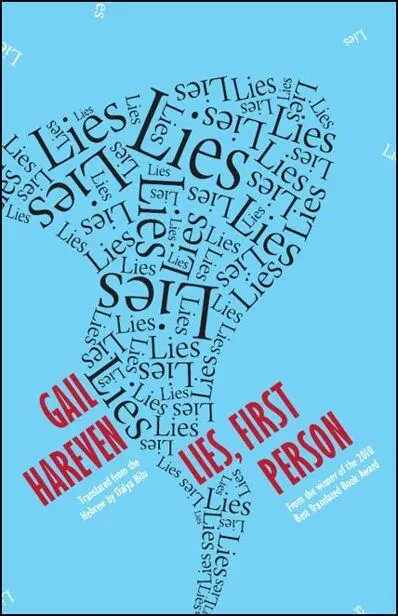
- Название:Lies, First Person
- Автор:
- Издательство:Open Letter
- Жанр:
- Год:2015
- ISBN:нет данных
- Рейтинг книги:3 / 5. Голосов: 1
-
Избранное:Добавить в избранное
- Отзывы:
-
Ваша оценка:
Lies, First Person: краткое содержание, описание и аннотация
Предлагаем к чтению аннотацию, описание, краткое содержание или предисловие (зависит от того, что написал сам автор книги «Lies, First Person»). Если вы не нашли необходимую информацию о книге — напишите в комментариях, мы постараемся отыскать её.
Elinor's comfortable life — popular newspaper column, stable marriage, well-adjusted kids — is totally upended when she finds out that her estranged uncle is coming to Jerusalem to give a speech asking forgiveness for his decades-old book,
.
A shocking novel that galvanized the Jewish diaspora,
was Aaron Gotthilf's attempt to understand — and explain — what it would have been like to be Hitler. As if that wasn't disturbing enough, while writing this controversial novel, Gotthilf stayed in Elinor's parent's house and sexually assaulted her "slow" sister.
In the time leading up to Gotthilf's visit, Elinor will relive the reprehensible events of that time so long ago, over and over, compulsively, while building up the courage — and plan — to avenge her sister in the most conclusive way possible: by murdering Gotthilf, her own personal Hilter.
Along the way to the inevitable confrontation, Gail Hareven uses an obsessive, circular writing style to raise questions about Elinor's mental state, which in turn makes the reader question the veracity of the supposed memoir that they're reading. Is it possible that Elinor is following in her uncle's writerly footpaths, using a first-person narrative to manipulate the reader into forgiving a horrific crime?
Lies, First Person — читать онлайн бесплатно полную книгу (весь текст) целиком
Ниже представлен текст книги, разбитый по страницам. Система сохранения места последней прочитанной страницы, позволяет с удобством читать онлайн бесплатно книгу «Lies, First Person», без необходимости каждый раз заново искать на чём Вы остановились. Поставьте закладку, и сможете в любой момент перейти на страницу, на которой закончили чтение.
Интервал:
Закладка:
“I’m glad to hear that you think so. I’m glad to hear this is your diagnosis, because a lot of people think or thought that my sister is retarded. And retards, as you know, can’t make decisions on their own. I, as opposed to all kinds of people, definitely don’t think she’s retarded, and if that insolent creep, as you call him, if that creep has now emerged from the sewers to intrude on our lives, then to the best of my understanding, to the best of my understanding she has the full right to know. Just make up your mind what you think: either she’s a retard who needs to be protected from the facts, or not. Just make up your mind and tell me if my sister has any rights.”
He didn’t make up his mind and he didn’t tell me, and the last kilometers of the road passed by in silence. We drove into the town, passed more inflated reindeers and Santas, and didn’t see a living soul until we reached the hotel.
By the time Oded had finished tidying the car and removing various items from the bags we had left there before, I was already in the shower, and by the time I emerged from the shower, he was already asleep. I slipped in under the blanket and waited. For quite a long time I waited, patiently and humbly, until my good, tired soldier turned on his side, and without waking up put his arm around me.
— 5 -
Allerton Park is just the thing for souls seeking consolation in the glories of nature: for this purpose precisely, explained my brother-in-law, had the English garden been planted here in the first place, in the heart of the prairie.
A man named Allerton had planted it, and after he himself had found healing there, he had bequeathed his garden and estate to the community, so that anyone in need would always find consolation in it.
Kilometer upon kilometer of the glories of nature: trees and ferns and autumn leaves, etc., and in the heart of the park an avenue, and at its end a pagoda, where seekers of serenity could emulate the golden example of a statue of the Buddha.
Allerton Park, to which we had driven after dismissing the options of the historical-ethnological museum and the Urbana shopping mall.
I wanted a place where I could conduct a private conversation with my sister, and all the glories of the setting left me indifferent, even though Elisheva kept pointing them out to me: Look how tall that tree is. Quick, look over there, a wild bird.
My sister announced the objects to me as if she were out walking with an infant who needed to be taught to look and call things by their names.
The considerate men went ahead of us down the avenue, the tall one and the one who looked short next to him, and when they turned a bend and disappeared into the vegetation, I stopped and stood still.
“There’s something I have to tell you,” I said to her.
The toes of her shoes were a little scuffed: only when I had finished saying what I had to say I raised my eyes from them. “Oded thinks there’s no need to tell you,” I added straight to her face, which had already turned pink from the cold, “but I think that if he succeeded in tracing my cell phone, then there’s a possibility, a faint possibility, that he’ll find you too. So even if there’s only a small chance, it seems to me that you have the right to know.”
This time it was Elisheva who averted her eyes, turning toward me a cheek that still preserved a degree of childish plumpness. “He doesn’t have to search for my address,” she said. “I gave it to him.”
“You what?”
“I sent it to him. I didn’t give him my phone number, but once he has my address. .” Her voice petered out. She blinked madly; yesterday I had noticed that she blinked a lot less than in the past, and now she seemed frightened again: frightened like a child caught red-handed, her profile trembled, and to my horror I realized that my sister was afraid of me. Of me, and not of the serpent. I wanted to shake her, to grab hold of her shoulders and shake her hard until it rid her of the unfairness, the shocking unfairness of being afraid of me.
I looked into the distance, all the way down to the end of the avenue, and only then raised my hand to gently touched her cheek.
“It’s all right,” I said. “Take your time. I understand. Sometimes when something frightens us, we almost want it to happen already. I know. Precisely when the enemy hides. . sometimes the most terrible thing is not knowing.”
What did you write to him? When did you write to him? Where did you get his address? And perhaps it wasn’t just one letter but several that you wrote? And how did he keep his hold on you without my having a clue, without anyone having a clue, because it was inconceivable that anyone would know this terrible thing and not scream so loudly that it reached your idiot sister in Jerusalem, your blind and deaf sister, so that she could come and save you, snatch you away, lock you up if necessary, whatever was needed to separate you from this thing, who perhaps you hadn’t only written to but also met, because he instructed you to meet him, and you didn’t know any better and you could do nothing else, because one-hundred-twenty days of Sodom are never over? I know, I know how they’re never over. Not even one day is ever over.
“It’s all right,” I repeated, gathering all my strength to stop the whirlpool sucking us in, demanding that we face what would come afterward: after she had confessed everything to me.
My sister inclined her head in a movement that signaled neither “yes” nor “no,” and with a confused expression repeated that she had a lot to tell me, and for a long time now she had really wanted to tell me, but she wanted to so badly and there was so much to tell that she didn’t know how to begin.
There wasn’t a single bench to sit on in the whole park, only damp, freezing ground from the long nights. Elisheva seemed to be thinking the same thing.
“Will you be cold if we sit on the steps?” she suddenly came up with a solution.
We sat in the partial cover underneath the statue of the Buddha, my sister on my right, the green of the park in the background woven into the latticework of the pagoda. The bright red of a bird flitted past the white of the latticework, and Elisheva smiled unexpectedly and asked me if I remembered the Belgian birdwatchers, the ones we called “the twins,” and who were actually husband and wife? They were funny, weren’t they, with their pointed noses, and their binoculars? But thanks to them she had learned to pay attention to the birds, and perhaps thanks to them she had bought bird-feeders last year and hung them on the trees in the yard, when we got home she would show them to me. The winters here were hard, and for the little birds they were particularly difficult.
I tucked my coat in underneath me, Elisheva played with her glove, and I waited, my head lowered, for her to begin.
Her first years here hadn’t been easy. She was like a person who had suddenly come into a fortune, a person to whom God had suddenly granted this fortune. A person who at first doesn’t comprehend the extent of his riches. Who doesn’t understand and doesn’t really know how to live with such a great blessing, the likes of which he didn’t know existed, and for which he was not prepared. Back in Jerusalem, when she was in the hospital, she had started to read the bible, and while she was still there she had accepted that God was her Lord, and that everything that was written, every word, was the truth. This was the first treasure that our Lord had given her: that he had revealed his gospel to her. But even after she had accepted the gospel of Christ, she still had a lot to learn, because she read slowly, and because she was, as I knew, “slow in general.” Barnett didn’t press her. He said over and over that everything in creation was the will of God, and that everything had a purpose, including her difficulties and his difficulties and the difficulties of both of them together. And she really knew even then, with her whole heart she knew, that God loved her, that he loved all his children, and God, who knew everything and saw everything, also knew how hard she was trying to understand what he wanted of her and how to give him all of herself, to give him her whole heart, which he had given her.
Читать дальшеИнтервал:
Закладка:
Похожие книги на «Lies, First Person»
Представляем Вашему вниманию похожие книги на «Lies, First Person» списком для выбора. Мы отобрали схожую по названию и смыслу литературу в надежде предоставить читателям больше вариантов отыскать новые, интересные, ещё непрочитанные произведения.










Обсуждение, отзывы о книге «Lies, First Person» и просто собственные мнения читателей. Оставьте ваши комментарии, напишите, что Вы думаете о произведении, его смысле или главных героях. Укажите что конкретно понравилось, а что нет, и почему Вы так считаете.