Edith Pearlman - Honeydew - Stories
Здесь есть возможность читать онлайн «Edith Pearlman - Honeydew - Stories» весь текст электронной книги совершенно бесплатно (целиком полную версию без сокращений). В некоторых случаях можно слушать аудио, скачать через торрент в формате fb2 и присутствует краткое содержание. Год выпуска: 2015, Издательство: Little, Brown and Company, Жанр: Современная проза, на английском языке. Описание произведения, (предисловие) а так же отзывы посетителей доступны на портале библиотеки ЛибКат.
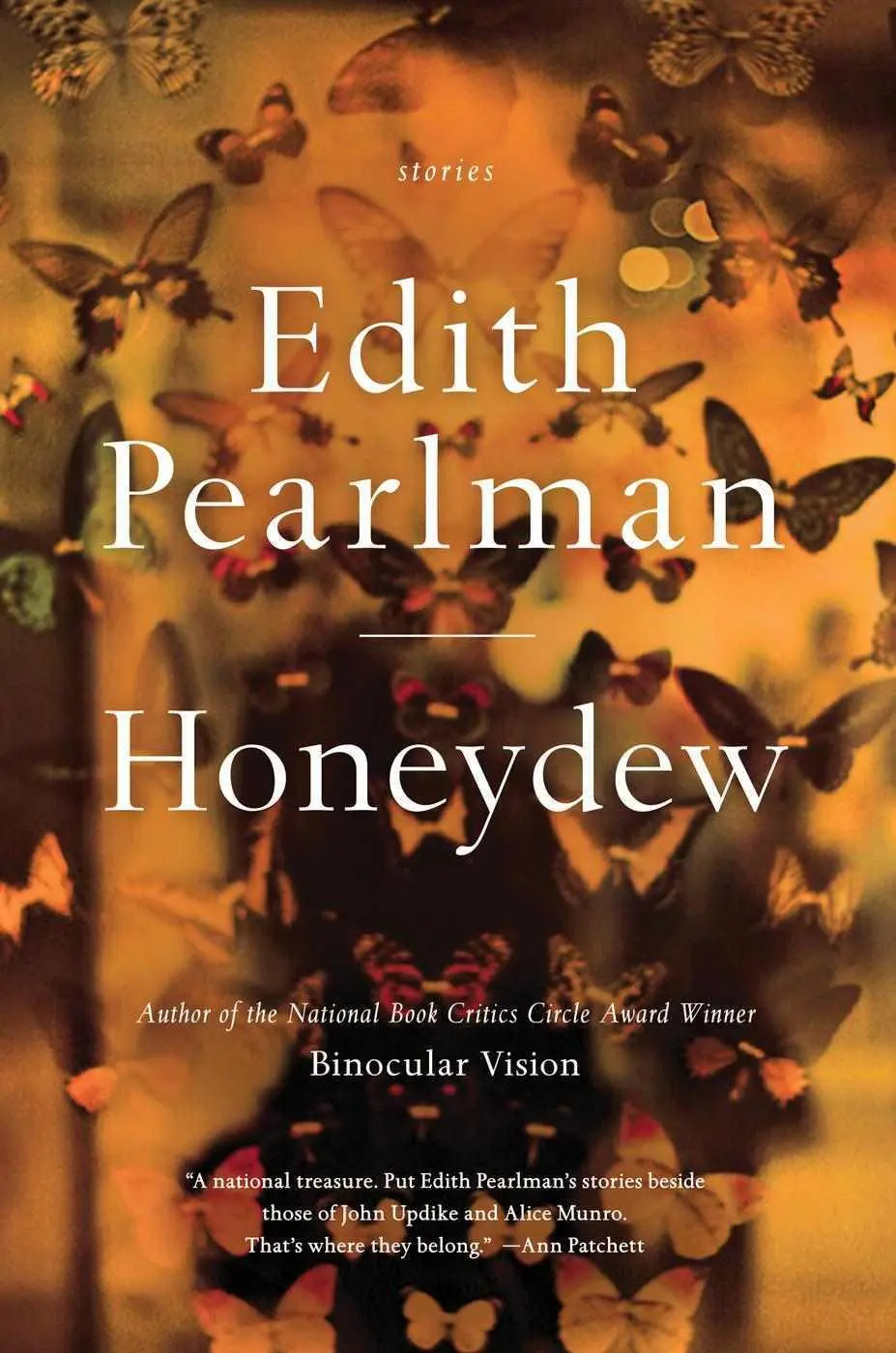
- Название:Honeydew: Stories
- Автор:
- Издательство:Little, Brown and Company
- Жанр:
- Год:2015
- ISBN:нет данных
- Рейтинг книги:5 / 5. Голосов: 1
-
Избранное:Добавить в избранное
- Отзывы:
-
Ваша оценка:
Honeydew: Stories: краткое содержание, описание и аннотация
Предлагаем к чтению аннотацию, описание, краткое содержание или предисловие (зависит от того, что написал сам автор книги «Honeydew: Stories»). Если вы не нашли необходимую информацию о книге — напишите в комментариях, мы постараемся отыскать её.
. From the National Book Critics Circle Award-winning author of
further solidifies Edith Pearlman's place among the likes of all-time great story writers such as John Updike, Alice Munro, Frank O'Connor, and Anton Chekhov.
Pearlman writes about the predicaments of being human. The title story involves an affair, an illegitimate pregnancy, anorexia, and adolescent drug use, but the real excitement comes from the intricate attention Pearlman devotes to the interior life of young Emily, who wishes she were a bug. In "Sonny," a mother prays for her daughters to be barren so they never have to experience the death of a child. "The Golden Swan" transports the reader to a cruise ship with lavish buffets-and a surprise stowaway.
In prose that is as wise as it is poetic, Pearlman shines light on small, devastatingly precise moments to reflect the beauty and grace found in everyday life. She maps the psychological landscapes of her exquisitely rendered characters with unending compassion and seeming effortlessness.
Both for its artistry and for the lives of the characters it presents,
is a collection that will pull readers back time and again. These stories demonstrate once more that Pearlman is a master of the form and that hers is a vision unfailingly wise and forgiving.
Honeydew: Stories — читать онлайн бесплатно полную книгу (весь текст) целиком
Ниже представлен текст книги, разбитый по страницам. Система сохранения места последней прочитанной страницы, позволяет с удобством читать онлайн бесплатно книгу «Honeydew: Stories», без необходимости каждый раз заново искать на чём Вы остановились. Поставьте закладку, и сможете в любой момент перейти на страницу, на которой закончили чтение.
Интервал:
Закладка:
“Come back whenever you’re equal to it,” he said, sounding harried. “Not a minute earlier. But not a minute later.”
Another week went by and the surgeon took off her immobilizing plaster and replaced it with a fat walking cast and a crutch. The cast was white fiberglass with wide blue straps. The monstrosity reached almost to her knee. Within its unyielding embrace her bones and tendons would continue to heal. But of course she couldn’t bike. And she was to throw her high heels into the trash, the doctor said, and never buy another pair.
Mr. Devlin sent the hotel handyman to pick her up every morning. At the end of the working day sometimes the handyman drove her home, sometimes Mr. Devlin himself, sometimes she took a cab, sometimes even Henry showed up. At least she hadn’t gained weight. But her hairdresser had rented a house in Antigua for a month.
“Why don’t you just go gray,” said thoughtless Henry.
She waited a minute or two, then asked, “What’s happening with the chapter?”
“Oh, still high on the list of do-good causes,” he told her. “Contributions are up, in fact.”
“Minata…”
“Didn’t hurt us. May have helped us. People adjust to contradictions, you know. And she’s prettier than that horse face.”
“She gave the lie to what we believe,” said Gabrielle, furious again.
“Anything we believe may be disproven. Think about it, Gabby. The Salem women were possessed by the devil. Homosexuality was a sickness. Cancer was God’s punishment. False beliefs, every one.”
“The earth still circles the sun!”
“Today,” he admitted. “Don’t count on tomorrow.”
VI.
Gabrielle was working late one evening, sitting at her glass-topped desk, reviewing tomorrow’s tasks. She looked up, as was her habit: to see what was going on in the little lobby, to smile at guests in a welcoming but not forward manner. She could not avoid the glimpse of herself in the mirror beside the clerk’s desk — head striped like a skunk’s fur, leg awkwardly outstretched within the disfiguring cast, crutch waiting against a pillar like a hired escort.
A woman stood at the elevator, her back to Gabrielle. Though she was wearing an orange jacket, not a green raincoat, and though her hair was flicked sideways into a toothed barrette, not hanging loose, Gabrielle knew who it was. The hatbox was a sort of hint. But beauty like Minata’s once seen is recognizable even from the rear — beauty originating in a place where skin is brown and teeth white and nymphectomies the local sport. Gabrielle identified also the white-pompadoured man pushing the elevator’s button.
This is not a love hotel… She kept staring until Minata turned. Minata flashed a happy grin, and Gabrielle gave her the professional grimace with the gap where a tooth once resided.
Minata walked across the lobby toward Gabrielle. Her eyes traveled downward and stopped at the boot. Her smile collapsed. “You must wear that thing? For healing? They tell you that?”
“Yes. I can hobble now. When they remove it I’ll be able to walk.”
“Do not wait. Go to Selene.”
Gabrielle felt her face redden. Shame? No, desire: desire that had eluded her for fifty-two years until Selene, maimed Selene…
“Hobble to her from the train station,” Minata suggested. “Or take a cab,” she added, revealing a practical streak, perhaps the very quality that enabled her to make the best of things.
Gabrielle frowned at her own enlarged and stiffened leg.
“Ugly but only a nuisance,” Minata said. “‘The tortoise knows how to embrace its mate.’”
The Golden Swan
The Golden Swan is the grandchild of the Normandie, ” said Dr. Hartmann in his frail but grating voice.
What on earth was he talking about now. His slight accent was German, she guessed.
“I mean, Bella, that cruise ships descend from the great transatlantic liners. There was a time, before airplanes, when if you wanted to cross the ocean you boarded a steamship.”
His student — for Bella felt like his student, though she and Dr. Hartmann were in fact fellow passengers — fingered her limp hair. Dr. Hartmann was what you called professorial — yesterday he had delivered himself of a brief impromptu lecture on semiotics. She wished she’d understood it.
“And there was a time before steamships when, if you wanted to cross the ocean, or even if you didn’t, you sailed on a three-masted schooner.”
“‘Even if you didn’t’?” Bella echoed.
“If you happened to be a slave.”
Their small library — not theirs alone, but they were the sole occupants — was in the innermost portion of the lowest deck available to passengers. It was entirely devoid of natural light. It had a patterned rug, leather chairs, lamps with parchment shades, and four walls of shelves entirely filled with books…some stern hardbacks, some lively paperbacks.
“And now,” Dr. Hartmann wound up, “these ships are constructed solely for the joys of the cruise.” How joyless his voice was. “For swimming, dancing, sunbathing, eating, gambling. The ports of call, you will see for yourself, are incidental. And I have heard of ships which make no stops, giving up all pretense of purpose.” And he produced an inadvertent shudder, and then affected to twinkle.
This cruise was a gift to Bella and Robin from Grandpa, a gift to his dear girls, sweet as candy, pretty as pictures. He liked a little flesh on a female, yes sir! And so, last June, when they were both about to graduate college, he offered them a trip. Anywhere within reason, he said. He didn’t mean Paris.
They didn’t want Paris. They didn’t want Europe at all; they didn’t want to exhaust themselves tramping from site to important site. They wanted bright places and good food, and they knew that a Caribbean cruise promised both. An off-season one would strain Grandpa less — and so, though they could have claimed their gift along with their diplomas, they decided to wait almost a year, until the low rates of March. Meanwhile they got themselves jobs, found apartments.
“And now they’d better lose weight,” Bella’s mother had told Robin’s mother over the telephone.
“They’ll do that in their own good time,” replied comfortable Aunt Dee.
Bella, listening in on the extension, stared bleakly into the receiver. Appetite had plagued her since childhood. In her teens she’d developed an awning of a bosom, though her waist remained relatively slender. Her abdomen bulged. Her large legs were shapely, though, and her ankles were narrow — again, relatively.
Bella was sallow. Robin was pale but blushed easily. She had the ready smile of a child and eyes as green as a cake of scented soap. Her body sloped downward from narrow shoulders past jutting little breasts; it didn’t thicken until the tree-trunk waist; then came very wide hips.
The cousins had been close in high school and had gone to similar large universities. Robin studied child development and became a child-life specialist. Her manner with the hospitalized children she worked with was casual and reassuring. Bella majored in business. She was already the valued office manager of a busy real estate firm whose customers craved vistas, and whirlpool baths, and kitchens with granite counters.
Robin had never had a serious boyfriend and Bella had never had a boyfriend at all. Both liked to read — Robin favored whatever was popular; Bella read newspapers and a business weekly and biographies and, somewhat surreptitiously, novels written for middle-schoolers.
On the Golden Swan were two big dining rooms for evening meals. There were two small restaurants as well, one French and one Italian; but how spendthrift to patronize them when the rest of the food on the ship was free. All you could eat! There were four ports of call, one every other day in the middle of the twelve-day voyage. And swimming pools and a gym and a beauty parlor and a gift shop, and the library like a den in an old mansion. You could play shuffleboard and badminton. From a platform on the pelican deck you could drive golf balls into the sea. A party swirled every night; some had themes like Costume Ball and Talent Show. At the first party, Meet the Captain, a gray-haired Scandinavian with limited English tirelessly shook everybody’s hand and posed for small group photographs displayed for sale later in the central reception room. Robin bought one, and Bella, after some hesitation, also bought one, though she told Robin that the uniformed man must be an impersonator. Shouldn’t a captain be standing on the bridge, his eye out for whales and warships?
Читать дальшеИнтервал:
Закладка:
Похожие книги на «Honeydew: Stories»
Представляем Вашему вниманию похожие книги на «Honeydew: Stories» списком для выбора. Мы отобрали схожую по названию и смыслу литературу в надежде предоставить читателям больше вариантов отыскать новые, интересные, ещё непрочитанные произведения.












Обсуждение, отзывы о книге «Honeydew: Stories» и просто собственные мнения читателей. Оставьте ваши комментарии, напишите, что Вы думаете о произведении, его смысле или главных героях. Укажите что конкретно понравилось, а что нет, и почему Вы так считаете.