Ottessa Moshfegh - Eileen
Здесь есть возможность читать онлайн «Ottessa Moshfegh - Eileen» весь текст электронной книги совершенно бесплатно (целиком полную версию без сокращений). В некоторых случаях можно слушать аудио, скачать через торрент в формате fb2 и присутствует краткое содержание. Год выпуска: 2015, Издательство: Penguin Press, Жанр: Современная проза, на английском языке. Описание произведения, (предисловие) а так же отзывы посетителей доступны на портале библиотеки ЛибКат.
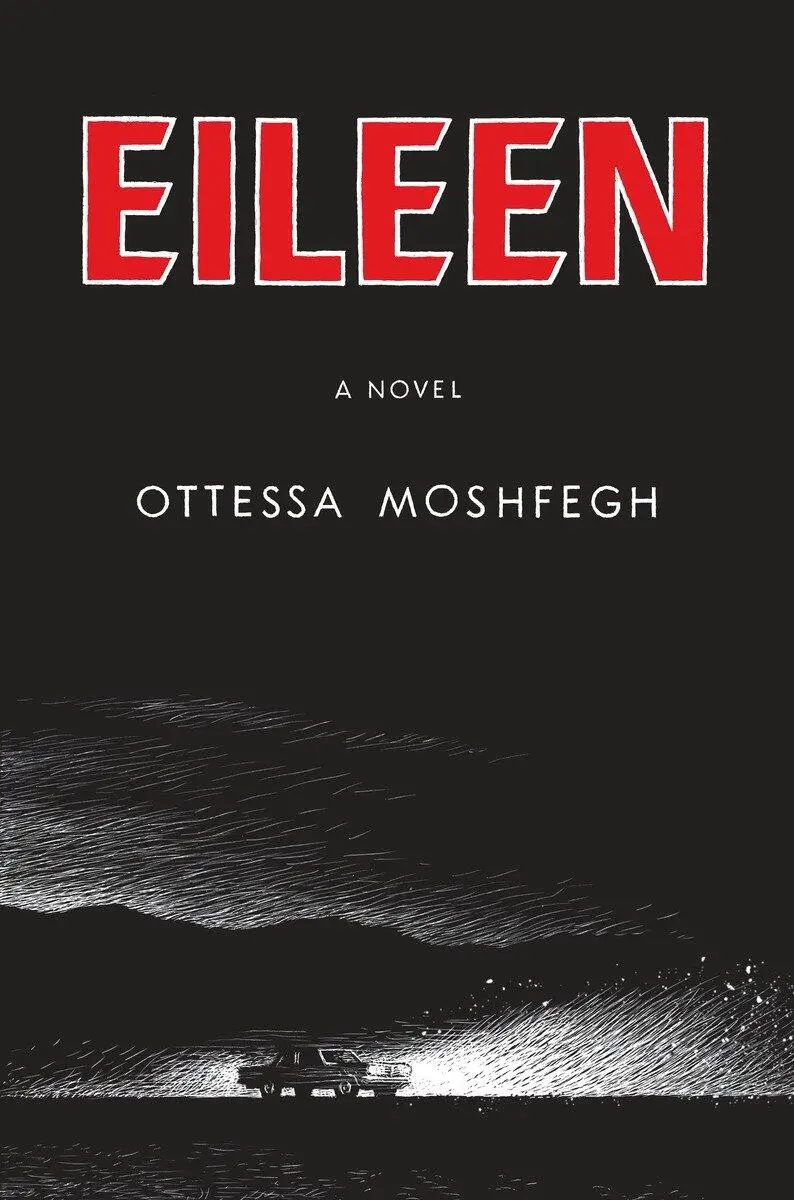
- Название:Eileen
- Автор:
- Издательство:Penguin Press
- Жанр:
- Год:2015
- ISBN:нет данных
- Рейтинг книги:4 / 5. Голосов: 1
-
Избранное:Добавить в избранное
- Отзывы:
-
Ваша оценка:
Eileen: краткое содержание, описание и аннотация
Предлагаем к чтению аннотацию, описание, краткое содержание или предисловие (зависит от того, что написал сам автор книги «Eileen»). Если вы не нашли необходимую информацию о книге — напишите в комментариях, мы постараемся отыскать её.
So here we are. My name was Eileen Dunlop. Now you know me. I was twenty-four years old then, and had a job that paid fifty-seven dollars a week as a kind of secretary at a private juvenile correctional facility for teenage boys. I think of it now as what it really was for all intents and purposes — a prison for boys. I will call it Moorehead. Delvin Moorehead was a terrible landlord I had years later, and so to use his name for such a place feels appropriate. In a week, I would run away from home and never go back. This is the story of how I disappeared. The Christmas season offers little cheer for Eileen Dunlop, an unassuming yet disturbed young woman trapped between her role as her alcoholic father’s caretaker in a home whose squalor is the talk of the neighborhood and a day job as a secretary at the boys’ prison, filled with its own quotidian horrors. Consumed by resentment and self-loathing, Eileen tempers her dreary days with perverse fantasies and dreams of escaping to the big city. In the meantime, she fills her nights and weekends with shoplifting, stalking a buff prison guard named Randy, and cleaning up her increasingly deranged father’s messes. When the bright, beautiful, and cheery Rebecca Saint John arrives on the scene as the new counselor at Moorehead, Eileen is enchanted and proves unable to resist what appears at first to be a miraculously budding friendship. In a Hitchcockian twist, her affection for Rebecca ultimately pulls her into complicity in a crime that surpasses her wildest imaginings.
Played out against the snowy landscape of coastal New England in the days leading up to Christmas, young Eileen’s story is told from the gimlet-eyed perspective of the now much older narrator. Creepy, mesmerizing, and sublimely funny, in the tradition of Shirley Jackson and early Vladimir Nabokov, this powerful debut novel enthralls and shocks, and introduces one of the most original new voices in contemporary literature.
Eileen — читать онлайн бесплатно полную книгу (весь текст) целиком
Ниже представлен текст книги, разбитый по страницам. Система сохранения места последней прочитанной страницы, позволяет с удобством читать онлайн бесплатно книгу «Eileen», без необходимости каждый раз заново искать на чём Вы остановились. Поставьте закладку, и сможете в любой момент перейти на страницу, на которой закончили чтение.
Интервал:
Закладка:
Upstairs, I found my mother’s pills and put them in my purse but didn’t take any. I wanted to save them. If I had to spend Christmas Day at home with my father after he got back from Mass, I wanted to spend it in deep twilight sleep. I went back to my cot and returned to my fantasies of my evening at Rebecca’s. I imagined her saying things like, “I’ve never met anybody like you before.” And also, “I’ve never felt this close to someone before. We have so much in common. You’re perfect.” And I pictured hours of rapt conversation, delicious wine, a warm fire, Rebecca saying, “You’re my best friend. I love you,” and kissing my hand the way you’d kiss the hand of an oracle or a priest. I pulled my hand out from under me, red and cramped, and kissed it reverently. “I love you, too,” I said to it, and laughed at my own silliness, pulling the covers over my head. I waited for Rebecca’s phone call. Somehow I slept. I don’t remember those dreams, the last dreams I’d ever have in that house. I wish I could. I hope they were good ones.
I do remember my father’s wailing later that afternoon from the foot of the attic stairs.
“What’s wrong, Dad?” I yelled, bolting out of bed.
“The phone rang,” he said. “Some woman looking for you. Maybe a lady cop, I don’t know.”
“What did you tell her?”
I stomped my foot waiting for his reply.
“Nothing,” he threw up his arms. “I know nothing and said nothing. Mum from me.” I flew down the stairs, found the phone in the kitchen dangling off the hook, receiver thudding against the wooden cabinet.
“Well, hello, Christmas angel,” is how Rebecca answered when I picked it up.
It’s important to keep in mind, given what I’m about to relay, which is everything I remember from that evening, that I had truly never had a real friend before. Growing up I’d only had Joanie, who disliked me, and a girlfriend or two here and there in grade school, usually the other class reject. I remember a girl with braces on her legs in junior high, and an obese girl in high school who barely spoke. There was an Oriental girl whose parents owned the one Chinese restaurant in X-ville, but even she discarded me when she made the cheerleading squad. Those were not real friends. Believing that a friend is someone who loves you, and that love is the willingness to do anything, sacrifice anything for the other’s happiness, left me with an impossible ideal, until Rebecca. I held the phone close to my heart, caught my breath. I could have squealed with delight. If you’ve been in love, you know this kind of exquisite anticipation, this ecstasy. I was on the brink of something, and I could feel it. I suppose I was in love with Rebecca. She awoke in my heart some long-sleeping dragon. I’ve never felt that fire burning like that again. That day was without a doubt the most exciting day of my life.
She told me to come over whenever I felt like it. She said she would be home, “relaxing. We’ll just sit and chat here,” she said. “Nothing fancy. It’ll be fun. There are some records we can play and maybe dance again, if all goes well.” I remember her kind, measured voice, her words all very clearly. I scribbled her address down — it was not a street name I recognized. I hung up the phone, nearly swooning, and stood there for a minute, blinded with glee.
“None of your business,” I mumbled at my father when he tapped on the kitchen table to startle me out of my trance.
“Pass me some chips!” he yelled back. He seemed to have forgotten the story of my night out with Leonard Polk. I assumed the lie had been flushed away in last night’s gin.
I ran upstairs to get ready. My face in the mirror looked less monstrous than usual. If Rebecca wanted to look at it, maybe it wasn’t so bad, I thought. It’s amazing what the mind will do when the heart is throbbing. I selected a gray linen suit from my mother’s closet, something I thought Rebecca would approve of. Nothing flashy. I must have looked like a dowdy grandmother in that suit, but at the time it felt right — subdued, mature, thoughtful. In retrospect I see that it was what a sidekick would wear, a uniform of service, a blank page. I put on a white nylon slip, a fresh pair of the navy panty hose, my snow boots, my mother’s camel coat. I remember these articles of clothing perfectly since they were what I was wearing and all I ended up taking with me of my mother’s wardrobe when I left X-ville, after all. Despite my grand plans, I left with just those clothes on my back and a purse full of money, and the gun, of course. I brushed my hair in the mirror. My greasy lipstick seemed suddenly pretentious, cheap, idiotic. I decided to go without makeup. After all, Rebecca didn’t wear any. And I suppose my desire to be close with Rebecca, to be understood and accepted by her, allayed my fear of being seen without my mask of cosmetics and indifference.
I remember going and getting the map of X-ville from the car and galloping like a clumsy deer back inside through the glistening mounds of snow. I was full of energy. When I looked out across the yard, carefully shutting the front door, church bells chimed through the bare trees, and I thought how beautiful the light sky was at that moment, tinged orange and blue as the sun set. I was happy. I really was, I thought. I quickly figured out my route to Rebecca’s house, which seemed to be on the wrong side of the tracks, as they say — that barely registered as odd at the time — and then I folded up the map and put it in my coat pocket. I still have that map. It’s at home, pinned up on the back of my closet door. Faded and stiff now, I carried it around for years and I’ve cried over it many times. It’s the map of my childhood, my sadness, my Eden, my hell and home. When I look at it now, my heart swells with gratitude, then shrinks with disgust.
Before I left for Rebecca’s, I drank some vermouth to calm myself, pulled on my mother’s black leather gloves and fox fur hat — her only fur — and said good-bye to my father, who was leaning over the sink, peeling a boiled egg.
“Where do you think you’re going?” he asked benignly, slurring.
“Christmas party,” I answered. I grabbed the wine.
He paused, and looked genuinely perplexed for a moment, then said mockingly, “Just as long as you’ll be home in time for dinner.” He chuckled and plunked the entire egg into his mouth, wiped his hands on his shirt. The last time we’d eaten a real dinner together was years before my mother’s death, perhaps for someone’s birthday — chicken burnt to a crisp in the pan, a soggy pot of macaroni. That one boiled egg and a bag of potato chips was all my father would eat all day. Did I feel bad leaving him that evening? I didn’t. I figured I’d be home that night to bear the brunt of his misery, hear all his complaints, maybe have a drink with him in the morning before he left for church and I took my mother’s last few pills, which I estimated would put me to sleep for the better part of the day. It should have been sad to leave my father alone on Christmas, but if ever my father felt he was at risk for being pitied, he attacked me with an insult aimed precisely at my self-esteem.
“You’re pale as a ghost, Eileen,” he said, reclining back down in his chair. “You could scare small children out of their socks.”
I just laughed at him. In that moment, nothing could hurt me.
I skipped out down the shoveled path and into the black and sparkling wet street. I was on my way to meet my destiny.
• • •
N othing could have added to the pleasure of my anticipation on that drive through X-ville on my way to Rebecca’s house that evening — not the calm roads or the softly falling snow, not the homes full of happy little families, not the gay blinking lights strung up on every Christmas tree. Besides my car’s stink of exhaust and vomit, the air from outside smelled of roasting ham and cookies, but I had no use for that holiday cheer. I had Rebecca now. Life was wonderful. My little world of exhaust and vomit was somehow wonderful. I watched out the open window as I passed guests arriving at one house, a child carrying a pie in a glass pan, parents bearing gifts of wine wrapped in red cellophane and ribbon. They looked happy, but I wouldn’t envy anyone that Christmas, a holiday best suited to those who thrive on self-pity and resentment. That’s what all that eggnog and wine is for, after all. The wine I’d bought for Rebecca sat beside me on the seat, still in the measly brown paper bag from the liquor store. I should have decorated it somehow, I thought. I really ought to have found some wrapping paper, some ribbon. It suddenly seemed disgraceful, insulting really, to show up with such a rough gift. Rebecca deserved better, didn’t she? I thought to knock on someone’s door or rifle through a garbage can for scraps of candy-striped or holly-patterned prints, but I would never do that. Still, the paper bag was less than ideal.
Читать дальшеИнтервал:
Закладка:
Похожие книги на «Eileen»
Представляем Вашему вниманию похожие книги на «Eileen» списком для выбора. Мы отобрали схожую по названию и смыслу литературу в надежде предоставить читателям больше вариантов отыскать новые, интересные, ещё непрочитанные произведения.











Обсуждение, отзывы о книге «Eileen» и просто собственные мнения читателей. Оставьте ваши комментарии, напишите, что Вы думаете о произведении, его смысле или главных героях. Укажите что конкретно понравилось, а что нет, и почему Вы так считаете.