Russell Banks - Continental Drift
Здесь есть возможность читать онлайн «Russell Banks - Continental Drift» весь текст электронной книги совершенно бесплатно (целиком полную версию без сокращений). В некоторых случаях можно слушать аудио, скачать через торрент в формате fb2 и присутствует краткое содержание. Год выпуска: 2007, Издательство: Harper Perennial Modern, Жанр: Современная проза, на английском языке. Описание произведения, (предисловие) а так же отзывы посетителей доступны на портале библиотеки ЛибКат.
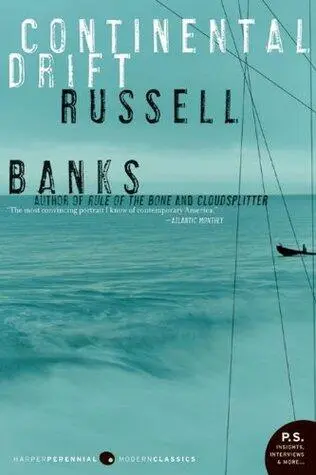
- Название:Continental Drift
- Автор:
- Издательство:Harper Perennial Modern
- Жанр:
- Год:2007
- ISBN:нет данных
- Рейтинг книги:4 / 5. Голосов: 1
-
Избранное:Добавить в избранное
- Отзывы:
-
Ваша оценка:
Continental Drift: краткое содержание, описание и аннотация
Предлагаем к чтению аннотацию, описание, краткое содержание или предисловие (зависит от того, что написал сам автор книги «Continental Drift»). Если вы не нашли необходимую информацию о книге — напишите в комментариях, мы постараемся отыскать её.
is a masterful novel of hope lost and gained, and a gripping, indelible story of fragile lives uprooted and transformed by injustice, disappointment, and the seductions and realities of the American dream.
Continental Drift — читать онлайн бесплатно полную книгу (весь текст) целиком
Ниже представлен текст книги, разбитый по страницам. Система сохранения места последней прочитанной страницы, позволяет с удобством читать онлайн бесплатно книгу «Continental Drift», без необходимости каждый раз заново искать на чём Вы остановились. Поставьте закладку, и сможете в любой момент перейти на страницу, на которой закончили чтение.
Интервал:
Закладка:
So she tries to avoid criticizing Bob for depriving her and the girls of his attention, and really, that is all he’s guilty of so far, so why should he be criticized? He’s working sixty and seventy hours a week at a demeaning, boring job that he was led to expect would be something quite different from what it’s turned out to be, he’s cut himself off from everything that’s familiar to him — landscape, manners, friends — and except for Eddie, around whom he’s never able to rest, he has no one he can simply enjoy himself with, no one to go out for pizza and beers with, no one to go fishing with, no one to go with him on a Sunday morning to Chain-O’-Lakes Park in Winter Haven, where the Red Sox hold their spring training rites and play their exhibition games, where, if he got out there before they went north in late April, he could get, he told her, Carl Yastrzemski’s, Jim Rice’s and Freddie Lynn’s autographs for their son, because someday, he said to her, those guys will be dead and buried and Bob junior won’t believe that his dad saw them in the flesh and actually had a conversation with them.
Elaine feels sorry for her husband. She suggests hiring a babysitter and going out together to the Okie Doke, a dance club she’s heard about from one of the wives she’s befriended at the park, a woman named Ellen Skeeter, but Bob says, “Naw, that’s just one of those cracker joints where the music’s too loud and everybody gets drunk and ends up stomping on your feet if you try to dance or picking a fight with you on the way to the men’s room.”
So she urges him to take a Sunday and pack a lunch and drive with her and the girls to New Smyrna Beach on the coast, but he sighs and says, “Just what I need after a hard week, a day spent in the car fighting the traffic, with the kids fussing in back, a bunch of sandy sandwiches in the sun, and a sunburn to boot. Besides, this time of year the beaches are jammed with all those noisy Canucks who couldn’t afford to come down in January and February. God save me from the Frenchmen. It’s the same kind as used to drive us nuts in July at Old Orchard Beach in Maine.”
Well, maybe he could go fishing with Eddie one Sunday, take a ride in the boat he’s always bragging about, learn how to water ski, since Eddie’s so eager to teach him.
“Fuck Eddie,” Bob grunts, leaning forward on the couch to switch channels on the Sony.
Naturally, then, though neither of them intends or desires it, Bob and Elaine fall to quarreling. At first it’s a snarl and countersnarl, followed by a sullen silence that fades in an hour or two. But then her insecurity and attempts to please him, colliding almost nightly with his desire to be left alone with his fantasies and depression, make him feel entrapped as well, a feeling that makes him act like a man who thinks his guilt is being exploited, even though he believes that he has done nothing to feel guilty for, which only increases his resentment. Confused and angry, he lashes out at her, until she, too, is confused and angry. Weeks go by marked only by their quarrels and the silent, solitary periods in between, a sad time for them, since neither of them knows what is happening to them or how to stop it.
Until finally, one morning in late May, following a particularly vicious argument the night before, a shouting, name-calling fight that began when Bob arrived home from work without the half gallon of milk she’d called and asked him to bring, and he’d stomped to the refrigerator for a beer and found none there, which meant she’d been drinking his beer in the afternoon with her fat friend from Georgia, the redhead whose name he refused to remember because he hated her voice. They’d gone to sleep shuddering with rage and the knowledge that they both were becoming ugly people.
The next morning, Elaine, as usual, wakes first, showers and dresses quickly and wakes the girls. An hour later, showered, shaved, barefoot and wearing a clean pair of khaki pants and a tee shirt, Bob enters the kitchen, passes the girls at the table and Elaine at the sink without acknowledging them, as if the three are familiar bits of furniture, two chairs and a pole lamp reliably in their accustomed places. He opens the refrigerator door and studies its foggy interior, settles finally on tomato juice and closes the door. He has to step around his wife to get a glass from the cupboard, and as he passes her, he looks down at her high, rounded belly.
“Morning,” he says in a low voice.
“Good morning,” she answers, and she looks at her children as if for approval. Wasn’t Mommy polite to Daddy?
Squinting, Emma watches her father carefully. Her puffy, round face is covered with purple jelly. White underpants and a tank top cling to her sausage-like body, making her look more like a miniaturized sumo wrestler than a Caucasian female child. Ruthie, opposite her at the table, ignores her father altogether. Dressed for school in clean corduroy jeans and a striped short-sleeved jersey, she pretends to read the advertising on the back of the Count Chocula box.
“Hi, kids,” Bob says, pouring himself a glass of juice.
Emma continues squinting up at him, as if he were the sun, while Ruthie seems to go on reading about adult daily nutrition requirements.
Bob puts his face next to Emma’s and, grinning, bugs his eyes out. “What’re you so serious about, Flowerpot?”
When the child lets a tentative smile creep over her thin lips, Bob stands up, tousles her thin hair with one hand and empties the glass of juice into his mouth. Then, to Ruthie: “Hey, don’t you say good morning to your father?”
Slowly, like peeling back a gummed sticker, Ruthie removes her gaze from the cereal box and looks into her father’s eyes. Then she looks down, almost shyly. “Hi, Daddy.”
“You want breakfast?” Elaine asks him.
“Sure. Whatcha got?” He’s at the stove, pouring himself a cup of coffee.
“Eggs, if you want. Bacon’s all gone.” She squeezes the words from her mouth like tiny, dry seeds.
“Fine.” Pushing open the screened door, Bob steps outside and, coffee cup in hand, strolls barefoot from the trailer across the driveway and gets the Ledger from the box. Opening it to the sports section, he checks out last night’s major league baseball scores.
“Sonofabitch. They’re on a tear,” he says as he enters. “They do this every fucking spring. Go on a tear and get me all lathered up, then blow it in August to the fucking Yankees.” He sits at the table next to Emma and spreads out the paper.
“You swear too easy.”
“Huh?” He takes a sip of coffee and goes on reading.
“You swear too easy. I wish you wouldn’t.” She stands with her back to the sink, holding one egg in each hand, as if about to juggle them.
“Do you still love Mommy?” Ruthie suddenly asks, somber, unafraid, but deeply interested in his answer. Emma looks up and watches his face. Elaine too. They all watch him. What’s going on? Have they made some kind of bet on it?
“What’re you telling her?” Bob asks Elaine.
“Not a thing. She asked me the same question. Before you came out.”
“And what did you say?”
She looks at the eggs in her hands and taps them lightly against one another. “I said I don’t know.”
Bob glares at his wife, then turns to his daughter. “Why do you want to know a thing like that, Ruthie?”
“I heard you and Mommy yelling last night. You woke me up.”
Bob closes the newspaper and crosses his arms in front of him. “Aw, honey, I’m sorry about all that. Of course I still love Mommy.”
“How come you said you didn’t?”
Bob looks at Elaine, who turns away and cracks first one egg into the skillet, then the other. He feels emptied out, a metal drum. He doesn’t want this. No man wants this.
Читать дальшеИнтервал:
Закладка:
Похожие книги на «Continental Drift»
Представляем Вашему вниманию похожие книги на «Continental Drift» списком для выбора. Мы отобрали схожую по названию и смыслу литературу в надежде предоставить читателям больше вариантов отыскать новые, интересные, ещё непрочитанные произведения.





Обсуждение, отзывы о книге «Continental Drift» и просто собственные мнения читателей. Оставьте ваши комментарии, напишите, что Вы думаете о произведении, его смысле или главных героях. Укажите что конкретно понравилось, а что нет, и почему Вы так считаете.