Marisha Pessl - Night Film
Здесь есть возможность читать онлайн «Marisha Pessl - Night Film» весь текст электронной книги совершенно бесплатно (целиком полную версию без сокращений). В некоторых случаях можно слушать аудио, скачать через торрент в формате fb2 и присутствует краткое содержание. Год выпуска: 2014, Издательство: Random House Trade Paperbacks, Жанр: Современная проза, на английском языке. Описание произведения, (предисловие) а так же отзывы посетителей доступны на портале библиотеки ЛибКат.
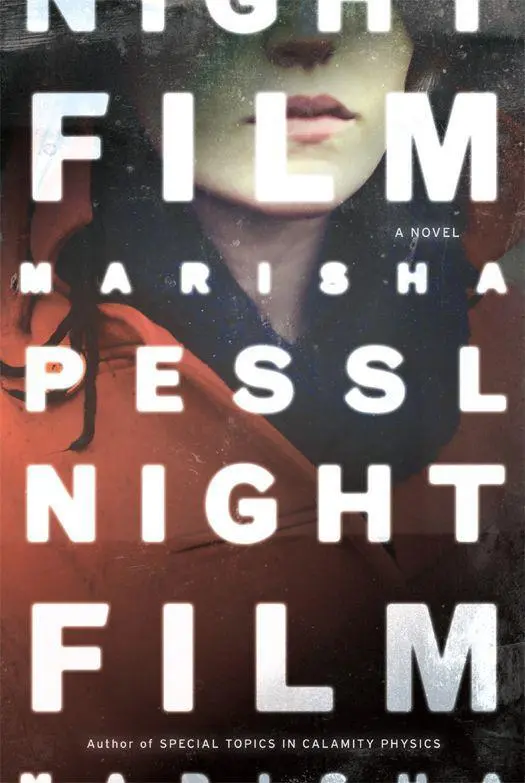
- Название:Night Film
- Автор:
- Издательство:Random House Trade Paperbacks
- Жанр:
- Год:2014
- ISBN:нет данных
- Рейтинг книги:5 / 5. Голосов: 1
-
Избранное:Добавить в избранное
- Отзывы:
-
Ваша оценка:
Night Film: краткое содержание, описание и аннотация
Предлагаем к чтению аннотацию, описание, краткое содержание или предисловие (зависит от того, что написал сам автор книги «Night Film»). Если вы не нашли необходимую информацию о книге — напишите в комментариях, мы постараемся отыскать её.
tells the haunting story of a journalist who becomes obsessed with the mysterious death of a troubled prodigy — the daughter of an iconic, reclusive filmmaker. On a damp October night, beautiful young Ashley Cordova is found dead in an abandoned warehouse in lower Manhattan. Though her death is ruled a suicide, veteran investigative journalist Scott McGrath suspects otherwise. As he probes the strange circumstances surrounding Ashley’s life and death, McGrath comes face-to-face with the legacy of her father: the legendary, reclusive cult-horror-film director Stanislas Cordova — a man who hasn’t been seen in public for more than thirty years.
For McGrath, another death connected to this seemingly cursed family dynasty seems more than just a coincidence. Though much has been written about Cordova’s dark and unsettling films, very little is known about the man himself.
Driven by revenge, curiosity, and a need for the truth, McGrath, with the aid of two strangers, is drawn deeper and deeper into Cordova’s eerie, hypnotic world.
The last time he got close to exposing the director, McGrath lost his marriage and his career. This time he might lose even more.
Night Film
Night Film — читать онлайн бесплатно полную книгу (весь текст) целиком
Ниже представлен текст книги, разбитый по страницам. Система сохранения места последней прочитанной страницы, позволяет с удобством читать онлайн бесплатно книгу «Night Film», без необходимости каждый раз заново искать на чём Вы остановились. Поставьте закладку, и сможете в любой момент перейти на страницу, на которой закончили чтение.
Интервал:
Закладка:
I glanced at Nora, and she nodded imperceptibly, making the same connection I was. The townhouse Hopper had broken into last night was on East Seventy-first; Olivia had to be referring to that very house. I also recognized the sentiments she described, the unrequited feeling about Cordova, the need for a resolution, for an end, how it nibbled at you over the years; I had it myself.
“By then, I was fifty years old, no longer the skittish ingenue. I’d been married for twenty years, had raised three boys. It would take a hell of a lot more to terrify me.”
She leaned forward, taking another cake. The three Pekingese’s eyes were glued to it. To their evident heartbreak, she placed it in her own mouth, chewing.
“It was a beautiful dinner, but oddly enough Cordova wasn’t even there. There was only his wife, Astrid, who explained her husband had gotten waylaid working in the country and wouldn’t be able to make it. I was thrown by this. I suspected something was wrong, as if it were a trap. And yet it was a wonderful mix of people, two of whom I knew from my old theater days. Whatever reservations I had about being there soon dissipated. A Russian opera star, a Danish scientist, a French actress known for her immense beauty — and yet the unmistakable center of attention was Cordova’s daughter, Ashley. She was cultivating a rather stellar piano career at the time. She was twelve, the most beautiful child I’d ever seen, eyes almost clear. She played for us. Shubert, a Bach concerto, a movement from Stravinsky’s Petrushka, and then she joined us for dinner. Oddly enough, she chose to sit right beside me. Immediately, I felt disconcerted. Her eyes, they were so beautiful and yet so …”
Olivia clasped her hands, frowning.
“What?” I prompted.
Her eyes met mine. “ Old. They’d seen too much.”
She paused to take a deep breath, smiling ruefully.
“Dinner was fantastic. The conversation, fascinating. Ashley was charming. And yet when she fell silent she seemed absent, as if she’d slipped off somewhere else, into some other world. When dinner was over, Astrid suggested we play a Japanese game that she claimed the family often played after dinner, having learned it from a real Japanese samurai who apparently lived with the family. It was called The Game of One Hundred Candles. Later, I looked up the Japanese term. Hyakumonogatari Kaidankai is what it’s called. Have you heard of it?”
“No,” I said, shaking my head.
“It’s an old Japanese parlor game. It dates back to the Edo period. The seventeenth, eighteenth centuries. One hundred candles are lit, and each candle is blown out after someone tells a short kaidan. Kaidan is Japanese for ghost story. This continues, the room gradually getting darker and darker, until the final candle is blown out. It’s at this moment that a supernatural entity is finally inside the room. It’s usually an onryo¯ —a Japanese ghost who seeks vengeance.”
Olivia took a long breath, exhaling.
“We began to play, all of us fairly drunk on port and dessert wine, each of us grasping at our stories, but when Ashley told hers they were perfectly succinct tales. I assumed she’d memorized them — unless at twelve she could speak so eloquently, right off the top of her head. Her voice was leisurely and low, and at times it sounded like it was coming from somewhere else in the room. Every story she told was riveting, some disturbingly violent. One I remember described a master raping a poor servant girl and leaving her for dead on the side of the road. I was amazed at how easily her lips formed the words as if she were talking about something perfectly natural. At times I had a sense of being outside myself as she talked, some where else. And then — I don’t know how exactly it turned out that way — there was one candle left and Ashley was up to tell the final story. It was a tale of unrequited love, a Romeo and Juliet tale of illness and hope, a girl dying young, thereby setting her lover free. Everyone was mesmerized. She blew out the candle, and it was pitch-black in the room. Too dark. People were giggling. Someone told a dirty joke. Suddenly, there was a sucking noise and I felt a cold finger touching my forehead. I was certain Ashley had reached over and touched me. I shrieked, tried to stand, yet both of my legs had fallen asleep. To my utter humiliation, I tumbled out of my chair, right onto the floor. Astrid, apologizing, helped me to my feet and turned the lights on. Everyone was laughing. Ashley sat there, without looking at me, but smiling. That feeling I’d had all those years ago when I was at The Peak, that pressing, as if my insides were being taken hold of, it was there again. I waited a few moments, feeling ill, then made my excuses and left. I went home, fixed myself some tea, and went to bed. But hours later, when Mike woke up beside me, I was in a coma. I’d had a stroke. I regained consciousness in the hospital and realized I’d lost the use of my right arm.”
Olivia gazed down at her limp arm cradled in the scarf, almost as if it were separate from her, the gnarled albatross she was forced to carry.
“I’d had a brain aneurysm. Doctors said it was my stress over the incident that must have triggered it. I’m a practical woman, Mr. McGrath. I am not prone to drawing hysterical conclusions. What I do know is that they did something to her, to Ashley, to make her behave in such a way.”
“Who?”
“Her family. Cordova.”
“And what exactly do you think they did?”
She looked thoughtful. “Do you have children?”
“A daughter.”
“Then you know she was born innocent, yet soaks up everything around her like a sponge. Their way of life at The Peak, my own encounter there all those years ago, the questions he asked me. It was as if I were an experiment. They must have done that to Ashley. Except, unlike me, she couldn’t run away. At least not as a child.”
I glanced at Nora. She looked spellbound. What Olivia said fit in with my assumption, that at the time of her death Ashley had been on bad terms with her family, hiding under an assumed name, searching for someone known as the Spider. What I couldn’t understand was why she returned to the townhouse, unless it was to meet with Inez Gallo. Perhaps Gallo lived there.
“Have you heard of someone connected to Cordova with the nickname the Spider?” I asked, sitting forward.
“The Spider.” Olivia frowned. “No.”
“What about Inez Gallo? It wouldn’t be her nickname, would it?”
“Cordova’s assistant? Not to my knowledge. But I don’t know anything about her, except I believe she was the woman who escorted me in to see Cordova. And while he interviewed me, she sat on his right side, as if she were his henchman or bodyguard, or perhaps his subconscious.”
I nodded. This subservient, looming position certainly backed up what was written about Inez Gallo on the Blackboards.
“Why doesn’t anyone talk about Cordova?” I asked.
“They’re terrified. They ascribe a power to him, real or imagined, I don’t know. What I do know is that within that family’s history there are atrocious acts. I’m certain of it.”
“Why haven’t you looked into it? You’re obviously quite passionate about the matter. Surely you’d have a vast array of resources at your disposal.”
“I made a promise to my husband. He wanted me to put the business behind me, given what happened. If I ruffled feathers, trying to get to the bottom of it, would I lose the use of my other arm ? And then my legs? Because a part of me actually believes, you see, that yes, there was something in that room summoned by that girl, and what I was brought there for, an act of revenge, had happened exactly as they’d planned. I’d been made to pay for some perceived offense I’d done against my sister.”
Читать дальшеИнтервал:
Закладка:
Похожие книги на «Night Film»
Представляем Вашему вниманию похожие книги на «Night Film» списком для выбора. Мы отобрали схожую по названию и смыслу литературу в надежде предоставить читателям больше вариантов отыскать новые, интересные, ещё непрочитанные произведения.






Обсуждение, отзывы о книге «Night Film» и просто собственные мнения читателей. Оставьте ваши комментарии, напишите, что Вы думаете о произведении, его смысле или главных героях. Укажите что конкретно понравилось, а что нет, и почему Вы так считаете.