Marisha Pessl - Night Film
Здесь есть возможность читать онлайн «Marisha Pessl - Night Film» весь текст электронной книги совершенно бесплатно (целиком полную версию без сокращений). В некоторых случаях можно слушать аудио, скачать через торрент в формате fb2 и присутствует краткое содержание. Год выпуска: 2014, Издательство: Random House Trade Paperbacks, Жанр: Современная проза, на английском языке. Описание произведения, (предисловие) а так же отзывы посетителей доступны на портале библиотеки ЛибКат.
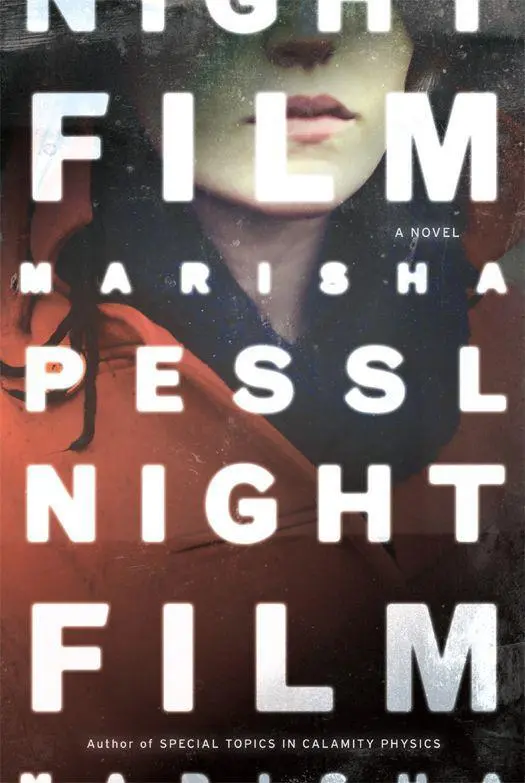
- Название:Night Film
- Автор:
- Издательство:Random House Trade Paperbacks
- Жанр:
- Год:2014
- ISBN:нет данных
- Рейтинг книги:5 / 5. Голосов: 1
-
Избранное:Добавить в избранное
- Отзывы:
-
Ваша оценка:
Night Film: краткое содержание, описание и аннотация
Предлагаем к чтению аннотацию, описание, краткое содержание или предисловие (зависит от того, что написал сам автор книги «Night Film»). Если вы не нашли необходимую информацию о книге — напишите в комментариях, мы постараемся отыскать её.
tells the haunting story of a journalist who becomes obsessed with the mysterious death of a troubled prodigy — the daughter of an iconic, reclusive filmmaker. On a damp October night, beautiful young Ashley Cordova is found dead in an abandoned warehouse in lower Manhattan. Though her death is ruled a suicide, veteran investigative journalist Scott McGrath suspects otherwise. As he probes the strange circumstances surrounding Ashley’s life and death, McGrath comes face-to-face with the legacy of her father: the legendary, reclusive cult-horror-film director Stanislas Cordova — a man who hasn’t been seen in public for more than thirty years.
For McGrath, another death connected to this seemingly cursed family dynasty seems more than just a coincidence. Though much has been written about Cordova’s dark and unsettling films, very little is known about the man himself.
Driven by revenge, curiosity, and a need for the truth, McGrath, with the aid of two strangers, is drawn deeper and deeper into Cordova’s eerie, hypnotic world.
The last time he got close to exposing the director, McGrath lost his marriage and his career. This time he might lose even more.
Night Film
Night Film — читать онлайн бесплатно полную книгу (весь текст) целиком
Ниже представлен текст книги, разбитый по страницам. Система сохранения места последней прочитанной страницы, позволяет с удобством читать онлайн бесплатно книгу «Night Film», без необходимости каждый раз заново искать на чём Вы остановились. Поставьте закладку, и сможете в любой момент перейти на страницу, на которой закончили чтение.
Интервал:
Закладка:
“What was it?” I asked when she didn’t immediately go on.
She looked at me, her face somber. “A pricking needle. They were used in European witch-hunts of the sixteenth and seventeenth centuries. They’re made of precious metals, artfully engraved. The ‘pricker’ would use it to stab the accused woman, usually stripped naked, all over her body. When he at last found a spot that didn’t bleed or cause pain, he’d found the witch’s mark. If he found such a place, it was of course because she could no longer scream. She’d been stabbed by this needle some three hundred times and was unconscious, slowly bleeding to death. These things, archaic instruments of torture, have a vibrant market today for certain willing collectors.”
Nora was so captivated she’d forgotten to chew the rather large piece of cake in her mouth. A crumb fell from her lips, which she hastily collected from the hem of her sweater. She swallowed with a loud gulp.
“But I soon put the bizarre lunch out of my head, because someone — a masculine-looking hausfrau with a sweaty face and gleaming black eyes — announced that Cordova was ready to meet with me. I was escorted through various corridors, into a large room filled with filing cabinets and a long dining-room table. A man sat at the very end. He was like a king on a throne, stacks of papers and photographs of locations, costumes, scene notes, piled all around him. He was fat, but not grotesque in the way Orson Welles became, or Hitchcock, or even Brando. His massiveness was somehow distinguished. He had a round face with thick black hair, and he wore glasses, the lenses round and black as ink. He was handsome. At least I think he was. He had one of those faces that captivated you. And yet you couldn’t remember it a minute later, as if your brain just couldn’t memorize the features, the way it can’t memorize an infinite number. Possibly this was due to the glasses, the lack of eyes. For a moment I thought he was blind, but he wasn’t, because he stared at me without saying a word and then informed me I had parsley on my lip. I did, much to my chagrin. And then he asked if I wanted to be in his picture. Obviously I eagerly said yes, oh, yes. I’d been a huge fan since Figures. He smiled. Then he began to ask me a series of pointed questions, all of which became increasingly personal and unsettling. He asked if I had family, a boyfriend, if I was sexually active, how regularly did I go to the doctor, who was my next of kin. Was I healthy? Was I easily spooked? That was quite a preoccupation. He wanted to know what I was afraid of: heights, spiders, drowning, the sea. How much physical pain had I ever endured? What was my worst nightmare? I began to suspect the underlying purpose of the questions wasn’t so much to know me or see if I was right for the part but to learn how isolated a person I was, who would notice if I ever vanished or changed in some way. I kept asking what the part was. I very much wanted to see the script. He greeted such requests with only silence and a knowing smile. Finally another person came in — a woman — and escorted me out. It felt like I’d been grilled for over an hour. It was only fifteen minutes.”
Olivia took a deep breath and poured us more tea with her functioning hand. When she grabbed the tongs for a sugar cube and dropped it into her cup, I noticed with surprise her fingers were trembling. She was nervous.
“It became clear,” she went on, “that there would be further discussion of Thumbscrew after supper. I agreed. A maid brought me to my room. It was an enormous house, and my room was a suite, a wall of windows with gauzy curtains like long bridal veils and a view of a lake far down the hill. I’d never seen such a beautiful room. I lay down on the bed, intending to shut my eyes for just a moment, but fell into a deep sleep. I must have been more exhausted from the drive than I realized. Three hours later, I woke up very suddenly in the dark, gasping for air, my throat hurting as if someone had been strangling me. My wrists and arms felt as if they’d somehow been pinned down. They ached. But there was no one, no sign of any restraints. And then I saw with horror my suitcase was empty. All of my clothes had been neatly hung up in the closet. Even my underwear had been folded into meticulous piles in the dresser drawer. A dress of mine that I was seemingly meant to wear down for dinner was laid out for me, including earrings and a silver comb for my hair. The windows were open, too, the curtains blowing every which way. They’d been closed when I fell asleep. Every hair on my arms was standing up, as if I were about to be struck by lightning. I had only one thought. I had to escape. Dinner was starting at eight o’clock, and there were more guests arriving. I didn’t care. I threw my clothes into the suitcase and hurried out, managing to find a back staircase, running outside into the night. My car was exactly where I’d left it, and I drove out without turning on my headlights. At first I was sure someone was following me. There were headlights a few turns in the road behind me. But they were gone by the time I reached the gate. It was closed. I got out, unlocked it myself, and frantically drove away. I didn’t stop for six hours. But that feeling —a weight, a suffocation, as if my entire body had been put in some sort of vise — it didn’t go away for four days. I came very close to checking myself into a hospital.”
Olivia paused to take two orange petits fours from the tea stand, feeding one to herself, the other to a Pekingese. When she looked back at us, she smiled ruefully.
“Of course, the more time that went by, when I thought back to that incident I felt humiliated. Time leeches most horror and pain from our memories. All that so-called terror I’d felt, I reasoned it’d been my youth, an overwrought imagination. Distortion, his picture about the teenagers’ contagious insanity — it had made a deep impression on me. I’d gotten mixed up. I’d confused the art with the life. I wrote Cordova three notes of apology shortly after the episode and heard nothing back from him except a very churlish response.”
“What was it?”
“Something to the effect of, if I was the last person on Earth, he’d never cast me in one of his pictures. I suppose that invitation to The Peak was my audition and I’d blown it.”
I couldn’t help but smile. What she said corroborated seamlessly with Beckman’s letter from Cordova to Endicott, the one he passed around to his students.
She shrugged dismissively. “It was fine by me. Two years later, I was a married woman. I had a family, real love, a real life. I’d long given up my actress dreams, dreams of fame, which I understood was nothing more than consigning oneself to a cheap carnival where one lives forever in a cage, applauded and ridiculed by equal measure. Then, in 1999, I received an invitation quite out of the blue. It was from Cordova. He was inviting me to a private dinner at his home, this time in the city. This was a few years after his final film, To Breathe with Kings, long after he’d buried himself underground, when he was more secretive and chilling a figure than ever before. I was hesitant to accept, but then again, it was Cordova. I was still a fan. I’d gone to considerable lengths to obtain copies of his contraband work. To me he was more of a magician, a hypnotist in the vein of Rasputin. Not a filmmaker. All these years later, I still felt unrequited about him. It gnawed at me, ever so slightly, this question about him I needed answered. The location of the dinner was almost next door, just across Park Avenue on Seventy-first Street. If I felt uncomfortable I could leave at any time and simply walk home.”
Читать дальшеИнтервал:
Закладка:
Похожие книги на «Night Film»
Представляем Вашему вниманию похожие книги на «Night Film» списком для выбора. Мы отобрали схожую по названию и смыслу литературу в надежде предоставить читателям больше вариантов отыскать новые, интересные, ещё непрочитанные произведения.


Обсуждение, отзывы о книге «Night Film» и просто собственные мнения читателей. Оставьте ваши комментарии, напишите, что Вы думаете о произведении, его смысле или главных героях. Укажите что конкретно понравилось, а что нет, и почему Вы так считаете.