Marisha Pessl - Night Film
Здесь есть возможность читать онлайн «Marisha Pessl - Night Film» весь текст электронной книги совершенно бесплатно (целиком полную версию без сокращений). В некоторых случаях можно слушать аудио, скачать через торрент в формате fb2 и присутствует краткое содержание. Год выпуска: 2014, Издательство: Random House Trade Paperbacks, Жанр: Современная проза, на английском языке. Описание произведения, (предисловие) а так же отзывы посетителей доступны на портале библиотеки ЛибКат.
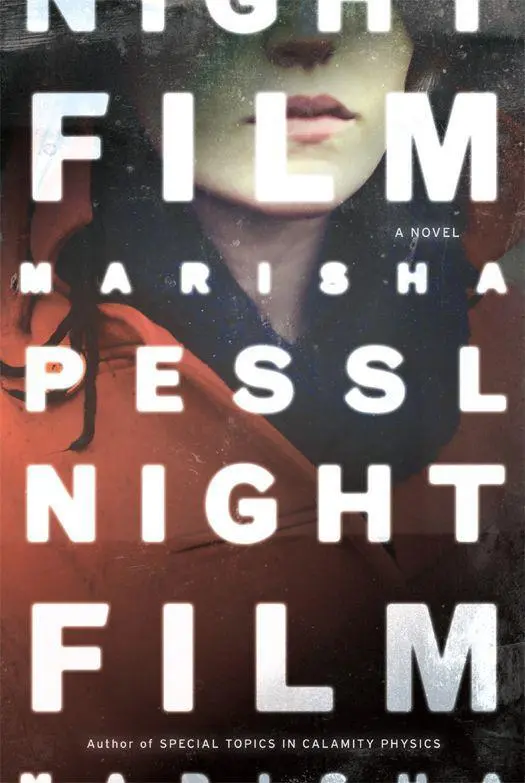
- Название:Night Film
- Автор:
- Издательство:Random House Trade Paperbacks
- Жанр:
- Год:2014
- ISBN:нет данных
- Рейтинг книги:5 / 5. Голосов: 1
-
Избранное:Добавить в избранное
- Отзывы:
-
Ваша оценка:
Night Film: краткое содержание, описание и аннотация
Предлагаем к чтению аннотацию, описание, краткое содержание или предисловие (зависит от того, что написал сам автор книги «Night Film»). Если вы не нашли необходимую информацию о книге — напишите в комментариях, мы постараемся отыскать её.
tells the haunting story of a journalist who becomes obsessed with the mysterious death of a troubled prodigy — the daughter of an iconic, reclusive filmmaker. On a damp October night, beautiful young Ashley Cordova is found dead in an abandoned warehouse in lower Manhattan. Though her death is ruled a suicide, veteran investigative journalist Scott McGrath suspects otherwise. As he probes the strange circumstances surrounding Ashley’s life and death, McGrath comes face-to-face with the legacy of her father: the legendary, reclusive cult-horror-film director Stanislas Cordova — a man who hasn’t been seen in public for more than thirty years.
For McGrath, another death connected to this seemingly cursed family dynasty seems more than just a coincidence. Though much has been written about Cordova’s dark and unsettling films, very little is known about the man himself.
Driven by revenge, curiosity, and a need for the truth, McGrath, with the aid of two strangers, is drawn deeper and deeper into Cordova’s eerie, hypnotic world.
The last time he got close to exposing the director, McGrath lost his marriage and his career. This time he might lose even more.
Night Film
Night Film — читать онлайн бесплатно полную книгу (весь текст) целиком
Ниже представлен текст книги, разбитый по страницам. Система сохранения места последней прочитанной страницы, позволяет с удобством читать онлайн бесплатно книгу «Night Film», без необходимости каждый раз заново искать на чём Вы остановились. Поставьте закладку, и сможете в любой момент перейти на страницу, на которой закончили чтение.
Интервал:
Закладка:
As Marlowe’s life burned so bright one needed shades, Olivia’s dimmed into nonexistence. Her only booked job was as an understudy in the 1972 Broadway production of Ring Around the Bathtub, which closed the very night it opened.
The sisters had allegedly not spoken in over thirteen years. But it seemed with one on the West Coast, the other on the East, at last there was enough space between them.
And then on October 25, 1979: a fateful accident.
While Marlowe was horseback riding with friends in Montecito, a lawnmower spooked her horse. It reared and bolted, leaping over a fence and onto Highway 101, throwing Marlowe from the saddle. Miraculously, she sustained only multiple fractures to her left leg, though it was so severe doctors ordered her to stay at Cedars-Sinai hospital in traction for two months.
Every afternoon, Knightly came to her bedside to read to her. When the months were finished, doctors decided she needed another few weeks. Knightly continued his visits — until one day he was late and the next day, later, and on the third day, he didn’t show up at all. After a ten-day absence, during which Marlowe heard nothing from him, he finally appeared at the hospital.
He announced their engagement was off. Apologizing, sobbing out of his own sadness and guilt, he presented Marlowe Hughes with a black pearl ring, the platinum band inscribed with four words: Fly on, beautiful child.
Marlowe was devastated. Nurses claimed she tried to throw herself out of the window in her room. Four weeks later, two days after she was released from the hospital, The New York Times made the stunning announcement: “Du Pont Heir ‘Knightly’ Marries Olivia Endicott, Actress.”
It was a private ceremony at the family’s estate in the Hudson River Valley.
No one, not even Beckman, had any idea how Olivia had pulled it off — where she’d met Knightly or how she’d transferred his affection for Marlowe, one of the most beautiful women in the world, onto her, an ordinary woman. Some suggested it was hypnosis, even a deal with the devil, starting with the fateful horseback-riding accident.
Or was it simply an unfortunate coincidence?
Marlowe never spoke publicly of the incident, though years later, when she was asked about her sister in an interview, she said: “I wouldn’t piss on Olivia if she were on fire.”
She did fly on —or at least tried to. Marlowe married three times: to a set designer in 1981, to Cordova in 1985—their union lasting just three months, though he was able to extract a stunning performance from her in Lovechild. She married a veterinarian in 1994; they divorced just four years later. She had no children. In her forties, Ms. Hughes found herself sliding down that character arc of so many movie goddesses before her: She became mortal. She aged. Roles stopped coming. There was plastic surgery, whispers of a painkiller addiction, and after an embarrassing appearance in Superman IV: The Quest for Peace, in which her makeup looked like it’d been applied with crayons, a quick cane-tug exit from the public stage.
Olivia remained married to Knightly. They had three sons. For the past twenty-seven years, she sat on the board of the Metropolitan Museum of Art, the most socially exalted position in the city, and still does.
“Marlowe got the fame, Olivia the prince,” Beckman would intone in a low voice, his eyes sparking in the firelight. “But who won at life ?”
The consensus was Olivia.
“Perhaps,” Beckman would say. “But who knows what jealousies have eaten away her insides like acid on old pipes?”
There was one final detail. It concerned Cordova.
Even after she was married to Knightly, Olivia Endicott continued to work here and there on Broadway throughout the eighties, though she gave up the stage in order to fulfill her role as a mother, wife, and philanthropist.
Yet she remained a rabid Cordova fan.
According to Beckman, Olivia wrote the director letter after letter, hounding him with mad persistence. She begged to work with him, audition for him, take even a silent walk-on role. At the very least, she hoped to meet him. Cordova appeared to be the last thing she required — the final pie piece — to wholly vanquish her sister.
“And to Olivia’s every letter, Cordova responded with the same typewritten sentence,” Beckman said.
At this point in the story, Beckman stood up, steadying himself on his Persian ottoman. Then he’d shuffle over to the dark, dank corner of his living room, where he’d brutally jerk open a desk drawer stuffed with papers, receipts, Broadway Playbill s, rooting around the contents. A minute later, when he staggered back to the gathering, he’d be holding a pristine cream-colored envelope in his hands.
Slowly, he’d present it to the nearest student, who would nervously open it, pulling out a letter, silently reading it before blinking in awe and passing it to the kid next to him.
Beckman claimed he’d found the copy randomly at an estate sale.
November 11, 1988
My dear du Pont:
If all of the people on Earth were dead but you, you would still not appear in my picture.
Cordova
64
Relaying the tale to Nora, I was nowhere near as theatrical in the telling as Beckman.
“ ‘Fly on, beautiful child’?” she repeated. “That’s the saddest goodbye in the world. Do you think it’s all true?”
“I do.”
“Call Olivia. Immediately. ”
I dialed the number.
“Of course, Mr. McGrath,” said the secretary on the other end. “Are you available tomorrow? Ms. du Pont is off to Saint Moritz the following day. She was hoping you’d forgive her for the late notice and squeeze her into your busy schedule, as she won’t be back for four months.”
I agreed to meet Olivia at her apartment at noon the following day. The address was about as close to an American Buckingham Palace as you could get: 740 Park Avenue. It’d been the childhood home of Jackie Kennedy and countless other legendary heirs and heiresses, and was pure old rich New York: staunch, graying at the temples, secretive, and snooty as hell.
As I hung up, I realized that my cellphone was buzzing.
I didn’t recognize the number, Golden Way Market, Inc.
“Who is it?” asked Nora.
“I suspect it’s the first person calling about Ashley’s missing-person flier.”
65
Golden Way was a Chinese grocery that ignored the English language so aggressively, standing in one of the narrow aisles, pungent with smells of fish and sesame, I could convince myself I was in China’s Chongqing province.
There were shriveled whole chickens strung up by their talons, trillions of noodles, black teas, and lethal-looking produce — red chilies that’d numb your tongue for a year; greens so spiky, they looked like they’d slit your throat as you swallowed them. Outside, the store looked like an underworld heavy lurking on the sidewalk — a dirty red awning pulled low over its cruddy windows and stands of bruised fruit.
I headed after Nora, who’d disappeared in the back, finding her alone in front of a table piled with what appeared to be packets of potato chips, until I read the label: ROAST DRIED SQUID SHAVINGS.
She shrugged, puzzled. “I just spoke to a man, but he disappeared through there.” She pointed at a set of steel doors beside a few fish tanks, gray fish drifting inside.
When I’d answered the call, a man who barely spoke English announced he had informations, though he was unable to explain what exactly it was. Finally, a woman came on the line to bark an address: 11 Market Street. The address was near East Broadway, only a block and a half from 83 Henry, so it was certainly feasible Ashley had come in.
Читать дальшеИнтервал:
Закладка:
Похожие книги на «Night Film»
Представляем Вашему вниманию похожие книги на «Night Film» списком для выбора. Мы отобрали схожую по названию и смыслу литературу в надежде предоставить читателям больше вариантов отыскать новые, интересные, ещё непрочитанные произведения.



Обсуждение, отзывы о книге «Night Film» и просто собственные мнения читателей. Оставьте ваши комментарии, напишите, что Вы думаете о произведении, его смысле или главных героях. Укажите что конкретно понравилось, а что нет, и почему Вы так считаете.