Marisha Pessl - Night Film
Здесь есть возможность читать онлайн «Marisha Pessl - Night Film» весь текст электронной книги совершенно бесплатно (целиком полную версию без сокращений). В некоторых случаях можно слушать аудио, скачать через торрент в формате fb2 и присутствует краткое содержание. Год выпуска: 2014, Издательство: Random House Trade Paperbacks, Жанр: Современная проза, на английском языке. Описание произведения, (предисловие) а так же отзывы посетителей доступны на портале библиотеки ЛибКат.
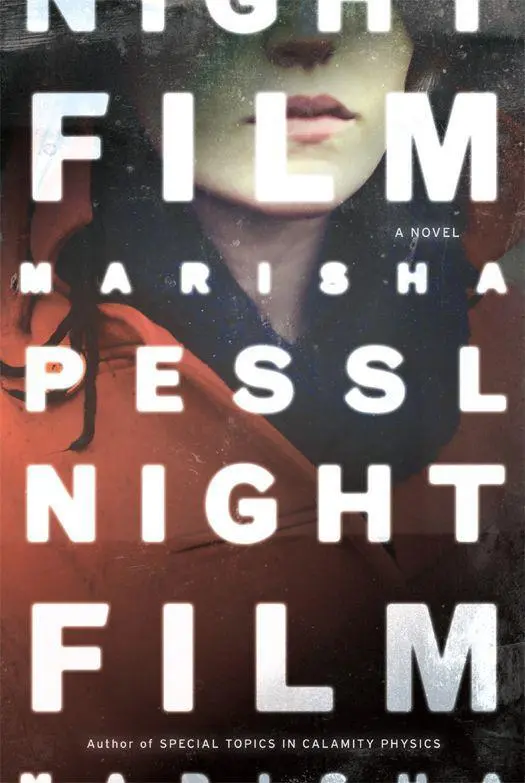
- Название:Night Film
- Автор:
- Издательство:Random House Trade Paperbacks
- Жанр:
- Год:2014
- ISBN:нет данных
- Рейтинг книги:5 / 5. Голосов: 1
-
Избранное:Добавить в избранное
- Отзывы:
-
Ваша оценка:
Night Film: краткое содержание, описание и аннотация
Предлагаем к чтению аннотацию, описание, краткое содержание или предисловие (зависит от того, что написал сам автор книги «Night Film»). Если вы не нашли необходимую информацию о книге — напишите в комментариях, мы постараемся отыскать её.
tells the haunting story of a journalist who becomes obsessed with the mysterious death of a troubled prodigy — the daughter of an iconic, reclusive filmmaker. On a damp October night, beautiful young Ashley Cordova is found dead in an abandoned warehouse in lower Manhattan. Though her death is ruled a suicide, veteran investigative journalist Scott McGrath suspects otherwise. As he probes the strange circumstances surrounding Ashley’s life and death, McGrath comes face-to-face with the legacy of her father: the legendary, reclusive cult-horror-film director Stanislas Cordova — a man who hasn’t been seen in public for more than thirty years.
For McGrath, another death connected to this seemingly cursed family dynasty seems more than just a coincidence. Though much has been written about Cordova’s dark and unsettling films, very little is known about the man himself.
Driven by revenge, curiosity, and a need for the truth, McGrath, with the aid of two strangers, is drawn deeper and deeper into Cordova’s eerie, hypnotic world.
The last time he got close to exposing the director, McGrath lost his marriage and his career. This time he might lose even more.
Night Film
Night Film — читать онлайн бесплатно полную книгу (весь текст) целиком
Ниже представлен текст книги, разбитый по страницам. Система сохранения места последней прочитанной страницы, позволяет с удобством читать онлайн бесплатно книгу «Night Film», без необходимости каждый раз заново искать на чём Вы остановились. Поставьте закладку, и сможете в любой момент перейти на страницу, на которой закончили чтение.
Интервал:
Закладка:
Nora looked bewildered.
“Olivia Endicott du Pont wants to meet with me.”
Nora frowned. “Who’s Olivia Endicott du Pont?”
63
“They were sisters. They were actors. And they loathed each other.”
This was how Beckman always began his favorite true Hollywood story — the Tale of the Warring Endicott Sisters — intoning that last sentence with such Old Testament severity, you could practically feel the sky turning gray, clouds turning inside out, and a black mist of locusts swarming the horizon.
I’d heard Beckman recount the story at least five times, always after three in the morning after a dinner party at his apartment with his students, when he was amped up on vodka and rapt attention, his black hair falling into his face glistening with sweat.
I was always game to hear the Endicott story for two reasons: One, feuding sisters fueled the imagination. As Beckman liked to say: “Marlowe and Olivia Endicott make Cain and Abel look like the Farrelly brothers.”
Unlike the infamous feuds between Bette Davis and Joan Crawford, Liz Taylor and Debbie Reynolds, Olivia de Havilland and Joan Fontaine, Angie and Jennifer, the Endicott sisters’ bad blood was kept entirely out of the press — apart from a few blind items in Bill Dakota’s Hollywood “Confidential” Star Magazine —a dead silence that only emphasized its evident ferocity.
Second, for all of Beckman’s flair for dramatics, his propensity to act out all of the parts as if he were on stage at the Nederlander, on each occasion, every detail remained exactly the same, without any new aspect or embellishment. The story was like a precious jeweled necklace; every time Beckman brought it out, each gleaming detail was cut and meticulously set in the exact same pattern it always had been.
I’d fact-checked it myself when I was first researching Cordova five years ago, and, by association, Marlowe Hughes. She was his leading lady and former wife of three months, star of Cordova’s harrowing Lovechild. Every name, date, and location Beckman mentioned flawlessly corroborated with public record, so I’d come to believe that this tale of fighting sisters, however wild it sounded, must be true.
Born in April 1948, Olivia Endicott was Marlowe Hughes’s older sister by just ten months.
Naturally, Marlowe Hughes wasn’t born Marlowe Hughes. She was born Jean-Louise “J.L.” Endicott on February 1, 1949, in Tokyo.
Most people enter the world looking like red, shriveled trolls. J.L. resembled an angel. When the nurses spanked her so she’d take her first breath, rather than squealing like a monkey, J.L. sighed, smiled, and fell asleep. From the moment she was brought home from the hospital, it was as if Olivia had become a piece of furniture.
“Olivia wasn’t ugly,” Beckman said. “Far from it. With dark hair, a sweet face, she was pretty. And yet from the time she was ten months old, she might as well have been chintz curtains when her sister was in the room.”
They were army brats. Their mother was a nurse, their father a medical doctor at Iruma Air Base. In 1950, the family left Japan for Pasadena, California, though within a few months, their father, John, deserted the family, leaving them in deep debt and forcing their mother to take on work cleaning rooms at a motor hotel and washing dishes. Years later, Marlowe would hire a detective to find her father, learning he’d moved to Argentina with a male retired army colonel with whom he still lived.
Neither sister would speak of their father ever again.
The rivalry was there, even in grade school. Olivia cut up J.L.’s clothes and peed on J.L.’s toothbrush. For retaliation, J.L. would only have to show up anywhere Olivia was —at ballet school, at choir — in order to render her “a tiny tear in the wallpaper,” as Beckman put it. Because J.L. could dance, too, and sing. And while Olivia was shy, uptight, and nervous in temperament, J.L. cracked dirty sailor jokes and laughed with her head back. She was a blond Ava Gardner: green eyes, faint cleft chin (as if God, wanting to sign this particular work, had proudly pressed his thumb in there), a face like a heart. The reaction was always the same, from the ballet teacher to the choir director to Olivia’s own friends: besotted.
Olivia secretly referred to her sister as Jail Endicott, a verbal smearing of her initials.
They attended different middle and high schools — their mother’s attempt to diffuse the tension — but any boy Olivia brought by the house was unfailingly smitten by J.L. Was she doing it on purpose? Were her looks her fault?
According to Beckman, it couldn’t be helped.
“If you’re given a free Aston Martin, you’re going to take it for a wild ride to test how fast it goes. Naturally, as a teenager Marlowe overdid it. If Olivia had done something to her, like steal her math homework or put mayonnaise in her Pond’s cold cream, J.L. would drape herself on the couch and watch The Ford Television Theatre, wearing shorts and a halter top right in front of Olivia’s boyfriend. When Olivia suggested they move into another room, the poor delirious kid wouldn’t even hear her.”
Olivia resolved to keep friends away from the house, but to keep her sister out of sight was like trying to keep the sun down.
“So what could Olivia do, a mere mortal chained by way of genetics to a goddess?”
She ran away from home.
In 1964, at sixteen, Olivia moved to West Hollywood with two girlfriends from Miss Dina’s Ballet School. Within three months, Olivia had an agent and a small walk-on role in the 1965 film Beach Blanket Bingo. She was hardworking, diligent, rehearsing more than anyone else. Olivia had finally found her voice and her calling, landing roles in television, including Run for Your Life and Death Valley Days.
“For the first time in her life, she felt she existed,” Beckman said.
At that point, acting wasn’t even on J.L.’s radar.
She’d discovered sex, having lost her virginity to a science teacher. But when Olivia was the focus of a short write-up in Variety called “Rising Stars,” for the hell of it, J.L. cut school and went to an open call for the television series Combat! The casting director fell in love with her but knew she needed a better name than the thorny mouthful J.L. Endicott.
He happened to be reading Raymond Chandler’s The Big Sleep at the time, featuring the famous detective Philip Marlowe. There was also a ten-cent Los Angeles scandal tabloid in front of him, Confidential: Uncensored and Off the Record, open to an article about Howard Hughes’s rumored narcotic addiction.
He stitched together a name fit for a movie queen: Marlowe Hughes.
Marlowe received her big break in 1966 as Woman in The Appaloosa, starring Marlon Brando (having a brief affair with Brando himself), while Olivia languished in bad TV, appearing in bit parts on The Andy Griffith Show and Hawk. By 1969, Marlowe was a star, appearing in four films, her name emblazoned across billboards over Sunset Boulevard. Olivia retreated to New York to try the stage. In 1978, at Warren Beatty’s bungalow party at the Beverly Hills Hotel, Marlowe was introduced to the dashing Michael Knight Winthrop du Pont, a Princeton-educated football player, war hero, one of the heirs to the Du Pont fortune, and the basis for Beatty’s dashing millionaire character Leo Farnsworth in Heaven Can Wait. Everyone called him Knightly, due to his perfect looks and old-fashioned charm. Within three months, Marlowe and Knightly were engaged.
Читать дальшеИнтервал:
Закладка:
Похожие книги на «Night Film»
Представляем Вашему вниманию похожие книги на «Night Film» списком для выбора. Мы отобрали схожую по названию и смыслу литературу в надежде предоставить читателям больше вариантов отыскать новые, интересные, ещё непрочитанные произведения.



Обсуждение, отзывы о книге «Night Film» и просто собственные мнения читателей. Оставьте ваши комментарии, напишите, что Вы думаете о произведении, его смысле или главных героях. Укажите что конкретно понравилось, а что нет, и почему Вы так считаете.