Marisha Pessl - Night Film
Здесь есть возможность читать онлайн «Marisha Pessl - Night Film» весь текст электронной книги совершенно бесплатно (целиком полную версию без сокращений). В некоторых случаях можно слушать аудио, скачать через торрент в формате fb2 и присутствует краткое содержание. Год выпуска: 2014, Издательство: Random House Trade Paperbacks, Жанр: Современная проза, на английском языке. Описание произведения, (предисловие) а так же отзывы посетителей доступны на портале библиотеки ЛибКат.
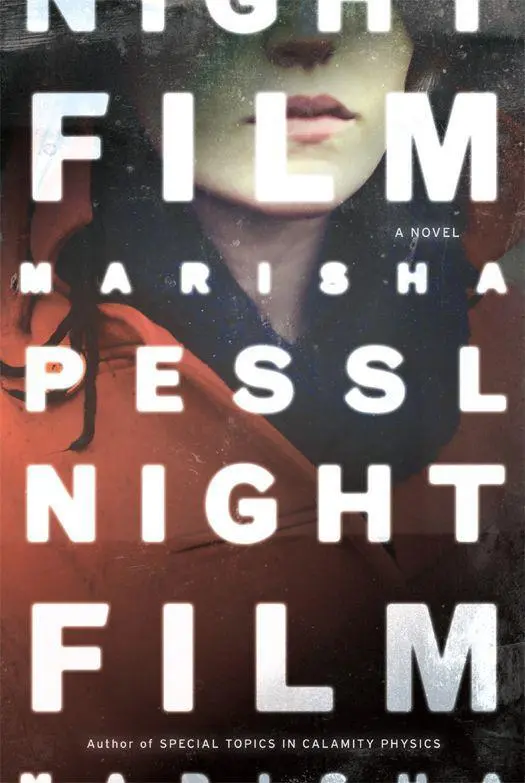
- Название:Night Film
- Автор:
- Издательство:Random House Trade Paperbacks
- Жанр:
- Год:2014
- ISBN:нет данных
- Рейтинг книги:5 / 5. Голосов: 1
-
Избранное:Добавить в избранное
- Отзывы:
-
Ваша оценка:
Night Film: краткое содержание, описание и аннотация
Предлагаем к чтению аннотацию, описание, краткое содержание или предисловие (зависит от того, что написал сам автор книги «Night Film»). Если вы не нашли необходимую информацию о книге — напишите в комментариях, мы постараемся отыскать её.
tells the haunting story of a journalist who becomes obsessed with the mysterious death of a troubled prodigy — the daughter of an iconic, reclusive filmmaker. On a damp October night, beautiful young Ashley Cordova is found dead in an abandoned warehouse in lower Manhattan. Though her death is ruled a suicide, veteran investigative journalist Scott McGrath suspects otherwise. As he probes the strange circumstances surrounding Ashley’s life and death, McGrath comes face-to-face with the legacy of her father: the legendary, reclusive cult-horror-film director Stanislas Cordova — a man who hasn’t been seen in public for more than thirty years.
For McGrath, another death connected to this seemingly cursed family dynasty seems more than just a coincidence. Though much has been written about Cordova’s dark and unsettling films, very little is known about the man himself.
Driven by revenge, curiosity, and a need for the truth, McGrath, with the aid of two strangers, is drawn deeper and deeper into Cordova’s eerie, hypnotic world.
The last time he got close to exposing the director, McGrath lost his marriage and his career. This time he might lose even more.
Night Film
Night Film — читать онлайн бесплатно полную книгу (весь текст) целиком
Ниже представлен текст книги, разбитый по страницам. Система сохранения места последней прочитанной страницы, позволяет с удобством читать онлайн бесплатно книгу «Night Film», без необходимости каждый раз заново искать на чём Вы остановились. Поставьте закладку, и сможете в любой момент перейти на страницу, на которой закончили чтение.
Интервал:
Закладка:
“What year was this?” I asked nonchalantly.
“The year of Isolate production. Spring of ’93, I think.”
Ashley’s birthday was December 30, 1986 . If this was the spring before, then she was six years old at the time.
“Did you meet Ashley?” I asked.
Peg nodded, reluctant to go on, but then, it seemed she couldn’t leave such a vibrant question dangling in the air.
“She was beautiful. Short dark hair, almost black. Like a sprite. Pale gray eyes.” She smiled, suddenly animated. “I was seventeen. Wasn’t into kids at all. But totally out of the blue, Ashley took my hand and brought me down to a deserted part of the lake where there was a willow tree and tall grass, the water emerald green. She asked me if I could see the trolls. I still remember the names. Elfriede and Vanderlye. By the time she let go of my hand and took off across the field chasing a butterfly — a butterfly that was huge, bright red and orange, like this property had their own insects — I believed in trolls. I still do.”
She fell silent, seemingly embarrassed by her zeal. Sam, I noticed, was staring at Peg, listening intently.
It was dark now in the park, the strangers standing along the fence, faceless. The giant elm trees with their outstretched limbs were sinking deeper into the darkness, slipping away. The pack of dogs was still going strong, a white-and-brown blurry squall of panting and flying gravel.
“I’ve held on to that day,” Peg continued in a thin voice, “like some faded postcard. Something you put in a scrapbook to remind yourself of perfect happiness — that it does exist, for one moment, like a sudden streak of lightning through the sky. When I read what happened to Ashley, I couldn’t believe it. I didn’t know her at all, but … it seemed so sudden. And wrong. If you have a family like that and you still can’t withstand this world, what hope is there for the rest of us?”
She smiled sadly, looking away.
“What was he like to work with?” Silently I cringed at the probing question. Thankfully, she just shrugged.
“I had such a small part. I was only on the set for two days. I understood nothing that was going on, really, because the crew was Mexican and Cordova’s assistant gave them all their directions in Spanish.”
“His assistant — you’re talking about Inez Gallo?”
“Yeah. But the crew all called her coyote. ”
“ Coyote? Why?”
“No idea,” she answered.
“Do you still keep in touch with Cordova? Or anyone from that time?”
Peg shook her head. “After he’d gotten your performance, extracted what he wanted like a surgeon harvesting organs, he was done with you. After my two days of shooting, that was it.”
She turned away from me to unzip her backpack, taking out a dog’s leash, clipping it to Leopold’s collar.
“I actually have to get going.”
She was seconds from walking away. I wanted more time, was tempted to throw caution to the wind and keep riddling the woman with questions, anything to get her to keep talking, to tell me more. Yet I sensed her candor was fleeting, the moment already gone.
She stood up, stooping over to help her dog off the bench. He moved like an old man with arthritis. She actually picked up his back legs for him, placing them on the ground, and turned to me with a perfunctory smile.
“Take care.”
“You, too,” I said.
And then she and Leopold were walking away, two slow-moving figures impervious to the pack of dogs charging past them.
“Is she a nice lady?” Sam asked me, wiping her curls out of her eyes.
“Very nice.”
Sam climbed up onto the bench beside me, sitting close, staring fixedly up at my face.
“Is she sad?” she asked.
“No, honey. She’s lived-in.”
Sam seemed to accept this. It was one of the things I loved about her. I could make some ambiguous observation about human beings, about their failings or hypocrisies, their deep-seated pain — and she took in the comment like an old diamond dealer handed a raw stone, turning it over in her palm, then pocketing the gem to be examined and cut later, moving on.
Sam scratched her cheek and interlaced her fingers in her lap — copying the way my fingers were interlaced — and we watched them go in silence.
Leopold waited at the gate as Peg unlatched it, and he ambled through. The dog then paused, turning his head to watch as Peg locked the gate behind them, shoving her hands into her pockets — all of it, a slow choreographed movement only the most longtime of couples could do, only after years.
They strolled out into the park, and the farther they went, the more they had nothing discernible about them except the fact that they were together. And even at the greatest of distances, when they were just two dark shapes moving away, side by side, you could still see they were a remarkable pair.
57
“Ms. Quincy is coming down, ” said the doorman, hanging up the phone.
I bent down to Sam. Her ballet slippers were scruffy and her tutu was slightly crushed, but otherwise she looked all right.
“I’m proud of you, toots,” I told her.
The elevator doors opened, Cynthia emerging in a crisp white blouse, jeans, dazzling swish of gold hair, Tod’s suede driving loafers. I could see from her smiling face that she was furious.
“Hi, love,” she said to Sam. “Go wait for Mommy by the elevators.”
Sam blinked up at her and padded obediently across the marble lobby.
Cynthia turned to me. “I said six. ”
“I know—”
“She was auditioning for The Nutcracker. ”
“I worked it out with Dorothy. She’s going to make the party scene.”
She sighed, heading back across the lobby. “Just don’t forget Thursday,” she added over her shoulder.
“Thursday?”
She turned. “Bruce and I are going to Santa Barbara ?”
“Right. Sam is staying with me for the weekend.”
Shooting me a warning look— Don’t mess this up —she took Sam’s hand and they stepped into the elevators. I held up a hand, waving, and Sam smiled just as the doors closed.
58
The afternoon Peg Martin had described at The Peak sounded almost too idyllic to be real. But she’d been only seventeen at the time, doubtlessly insecure and impressionable, so it was possible she’d taken creative liberties with the memory without even realizing it. Given Cordova’s terrifying subject matter, for his home and workplace to be such a blissful paradise seemed unlikely. How close was an artist’s real life to his work ? Doctoral students wrote dissertations on the subject. Yet when Peg had described Ashley leading her down to the lake where the trolls lived — there was something undeniably honest about the episode, also when she’d described Cordova as a surgeon harvesting organs, leaving his actors for dead.
Within every elaborate lie, a kernel of truth.
I let myself into my apartment, noticing music coming from the living room. I threw my coat on the chair, striding into the living room, finding Nora curled up in the leather club chair, Septimus the parakeet perched on her knee. Hopper was slouched on the couch, looking over some papers. The three reversing candles Cleo had given us at Enchantments were burning on the coffee table in front of him beside a pizza box.
“You’re home!” Nora announced brightly.
“Don’t tell me,” I said. “You both lost your cellphones and gale-force winds uprooted every landline on the East Coast.”
“We’re sorry. But we had a good reason to go MIA.” She looked meaningfully at Hopper and he smiled, some shared excitement between them.
Читать дальшеИнтервал:
Закладка:
Похожие книги на «Night Film»
Представляем Вашему вниманию похожие книги на «Night Film» списком для выбора. Мы отобрали схожую по названию и смыслу литературу в надежде предоставить читателям больше вариантов отыскать новые, интересные, ещё непрочитанные произведения.








Обсуждение, отзывы о книге «Night Film» и просто собственные мнения читателей. Оставьте ваши комментарии, напишите, что Вы думаете о произведении, его смысле или главных героях. Укажите что конкретно понравилось, а что нет, и почему Вы так считаете.