Marisha Pessl - Night Film
Здесь есть возможность читать онлайн «Marisha Pessl - Night Film» весь текст электронной книги совершенно бесплатно (целиком полную версию без сокращений). В некоторых случаях можно слушать аудио, скачать через торрент в формате fb2 и присутствует краткое содержание. Год выпуска: 2014, Издательство: Random House Trade Paperbacks, Жанр: Современная проза, на английском языке. Описание произведения, (предисловие) а так же отзывы посетителей доступны на портале библиотеки ЛибКат.
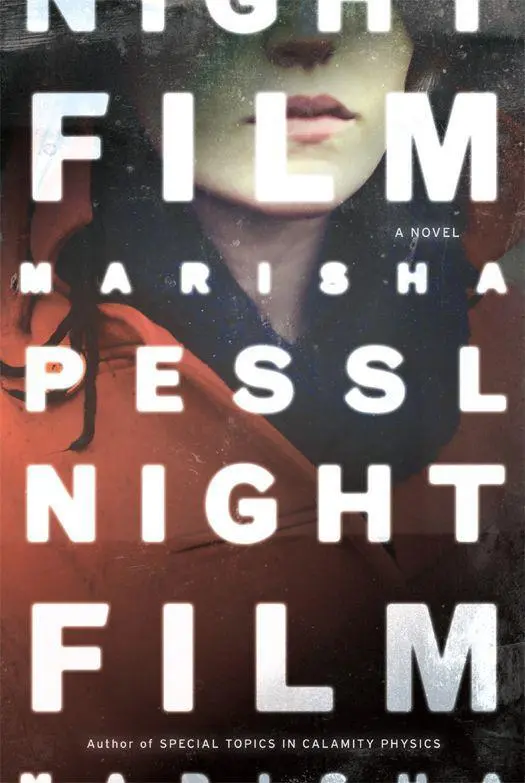
- Название:Night Film
- Автор:
- Издательство:Random House Trade Paperbacks
- Жанр:
- Год:2014
- ISBN:нет данных
- Рейтинг книги:5 / 5. Голосов: 1
-
Избранное:Добавить в избранное
- Отзывы:
-
Ваша оценка:
Night Film: краткое содержание, описание и аннотация
Предлагаем к чтению аннотацию, описание, краткое содержание или предисловие (зависит от того, что написал сам автор книги «Night Film»). Если вы не нашли необходимую информацию о книге — напишите в комментариях, мы постараемся отыскать её.
tells the haunting story of a journalist who becomes obsessed with the mysterious death of a troubled prodigy — the daughter of an iconic, reclusive filmmaker. On a damp October night, beautiful young Ashley Cordova is found dead in an abandoned warehouse in lower Manhattan. Though her death is ruled a suicide, veteran investigative journalist Scott McGrath suspects otherwise. As he probes the strange circumstances surrounding Ashley’s life and death, McGrath comes face-to-face with the legacy of her father: the legendary, reclusive cult-horror-film director Stanislas Cordova — a man who hasn’t been seen in public for more than thirty years.
For McGrath, another death connected to this seemingly cursed family dynasty seems more than just a coincidence. Though much has been written about Cordova’s dark and unsettling films, very little is known about the man himself.
Driven by revenge, curiosity, and a need for the truth, McGrath, with the aid of two strangers, is drawn deeper and deeper into Cordova’s eerie, hypnotic world.
The last time he got close to exposing the director, McGrath lost his marriage and his career. This time he might lose even more.
Night Film
Night Film — читать онлайн бесплатно полную книгу (весь текст) целиком
Ниже представлен текст книги, разбитый по страницам. Система сохранения места последней прочитанной страницы, позволяет с удобством читать онлайн бесплатно книгу «Night Film», без необходимости каждый раз заново искать на чём Вы остановились. Поставьте закладку, и сможете в любой момент перейти на страницу, на которой закончили чтение.
Интервал:
Закладка:
I took a minute to watch them, too, so as not to appear forward. A hyper Dalmatian was the leader of the pack. That white hoochie-mama Chihuahua was making her rounds — yipping, desperate for a john — but every dog was besotted with a soggy tennis ball.
“Okay,” I said. “This is a long shot, and you’re probably going to think I’m crazy.”
She glanced at me, wary.
“ Isolate 3 . The maid with the broken arm. It was you, wasn’t it?”
She blinked in surprise. She was never recognized. I was certain I overplayed it, sounding a little too amazed, but she nodded.
“That’s right.”
“You were great in it. The only thing that kept me from losing my mind.”
She smiled, her face flushing.
It is a truth universally acknowledged that no actor ever tires of hearing they were brilliant in a role.
“I have to ask. What was he like? Cordova.”
Her smile vanished like a match blown out. Glancing at her watch, she grabbed the strap of her backpack, pulling it into the crook of her arm, about to leave. But then, to my relief, Sam had managed to fully woo Leopold. He was wagging his tail. It moved like a windshield wiper. Seeing this — and Sam, quietly discussing something of great importance with the dog — she hesitated.
“It’s tragic what happened to his daughter,” I noted.
Peg scratched her nose.
“But then, I’m not surprised,” I went on. “To create a body of work that twisted and visceral, the man has to be horrifying in his personal life. You have to be. Look at Picasso. O’Neill. Tennessee Williams. Capote. Were these shiny happy people spreading sunshine? No. Only the greatest of personal demons can force you to do powerful work.”
I figured if I steamrolled the woman with words she might not get up and leave. She was sitting back against the bench, studying me with an absorbed expression.
“Maybe,” she said. “You can never tell how a family is from the outside. But I just …”
She fell silent because that goddamn tennis ball had just rolled exactly behind her feet. She bent down, grabbing it, the dogs freezing in incredulity, mouths closed, ears perked. She threw it, sitting back again as they took off in a stampede across the gravel.
“You just …?” I prompted quietly.
Good God, let her speak. And calm down, for Christ’s sake.
“When they first started shooting Isolate, ” she said, glancing at me, “he invited my boyfriend to spend the afternoon with his family up at the house. The Peak. He never did things like that. He was private. At least that’s what I’d heard. But his wife was organizing a picnic. They did it all the time in the summer. Billy was invited. So I got to tag along.”
He was private. She actually meant Cordova.
And Billy — it had to be William Bassfender, the boyfriend she’d mentioned in the Sneak interview. He was the muscular, tattooed Scottish man who’d played the prisoner in the Isolate, Specimen 12. If I remembered correctly, after Isolate 3 Bassfender went on to do a play on London’s West End and had been about to appear in Oliver Stone’s Nixon, when he was killed in a car accident in Germany.
I turned my gaze back to the dogs so she wouldn’t realize I was hanging on her every word.
“It was surreal. Granted, any family that was together, not shouting or stumbling-down drunk, would have been surreal to me. But even now I think there was more love and joy in that family than I’ve ever seen before or since.” She shook her head in disbelief. “They had their own language.”
I stared. “What?”
“Cordova’s son, Theo, invented a language for the family. They spoke it to each other, telling jokes and laughing, which made them even more intimidating. I remember Astrid explaining it to me like it was yesterday. ‘The Russians have sixteen words for love. Our language has twenty.’ She brought out all of these notebooks Theo had done. He’d written his own dictionary thick as a Bible, filled with grammar rules and conjugations of irregular verbs he’d made up. Astrid taught me some of the words. I’ve never forgotten them. One was terulya. It meant deep-diving love, a love that excavates you. It’s something you have to have before you die in order to have lived. I remember being shocked a teenage boy came up with this stuff. But that’s how they all were. They mopped life up with themselves. None of them were encumbered by anything. There were no limits.”
She fell silent, wistful, maybe even slightly jealous of this family she was describing. She crossed her arms, frowning out at the dogs again.
“A picnic, ” I repeated, a prompt for her to keep talking.
“It was a bright day. Once you turned onto the property you continued along a long drive through woods. And at the end, the house rose up, an enormous manor commanding the hill like a castle out of a fairy tale. It was deserted. Billy and I pounded on the door and wandered around the house and the gardens. There was no sign of anyone. Finally, after twenty minutes, the massive front door opened and a Japanese man stood there. He’d just woken up and didn’t speak any English. He was wearing green silk pajamas and a sword around his waist, and he wandered out, rubbing his eyes, yawning, saying something in Japanese as he beckoned for us to follow him. He led us down to the lake. That’s where everyone was. A group sitting on white blankets under white umbrellas. Everyone was there, except Cordova. He was working that day. At least, that’s what they said.”
She took a deep breath. “It was like wandering into a painting. A dream sequence. There were movie stars, Jack Nicholson and Dennis Hopper, but they weren’t the star attraction. There were astronauts talking about deep space. A former member of the CIA living off the grid who kept in his wallet the New York Times article reporting his death. A famous playwright. A local priest who’d wandered the world for fifteen years and come home. Cordova’s son, Theo, was there. He was sixteen and gorgeous, photographing everything with an old Leica camera, standing waist-deep in the marshes to capture shots of warring dragonflies. He was having a very intense love affair with a woman named Rachel, ten years older than he. She was there, too. I remember someone saying she’d been in one of Cordova’s films.”
“Which one?”
“I don’t remember.” She smiled wistfully. “Cordova’s set designer had built the family a fleet of brightly colored sailboats —pirate ships, everyone called them — to sail around the lake. There was a pack of dogs, half wolf. One of the guests told the story of how the Cordovas had rescued them in the middle of the night from a farmer who’d been breeding them for dogfights. These were the true stories they were telling. Cordova’s mother was there. She didn’t speak English, was dying of cancer. They were so gentle with her, folding her into a deck chair so she could sit under an umbrella, drinking Limoncello. I swore to myself if I was ever so lucky to have a family, I wanted it to be like that. It was the living experience of a fantasy. I spent most of the afternoon with a philosopher from France and Astrid, who was teaching everyone to oil paint. We all had our easels along the lake’s edge, standing in the wind, painting. When Billy and I left, the sun was going down and I felt a terrible sense of mourning, as if I’d spent the afternoon on an island paradise and now the ocean was pulling me out to sea and I’d never be able to make my way back.”
“Sounds like Shangri-la,” I said, when she didn’t go on.
She glanced at me distractedly, saying nothing, and I regretted speaking, for fear I’d punctured the spell she’d been under, recounting that day. The words had sputtered, then to my immense surprise blasted out of her like a fountain, one that’d been dry for years. Now she seemed sorry that she’d said anything at all.
Читать дальшеИнтервал:
Закладка:
Похожие книги на «Night Film»
Представляем Вашему вниманию похожие книги на «Night Film» списком для выбора. Мы отобрали схожую по названию и смыслу литературу в надежде предоставить читателям больше вариантов отыскать новые, интересные, ещё непрочитанные произведения.



Обсуждение, отзывы о книге «Night Film» и просто собственные мнения читателей. Оставьте ваши комментарии, напишите, что Вы думаете о произведении, его смысле или главных героях. Укажите что конкретно понравилось, а что нет, и почему Вы так считаете.