Marisha Pessl - Night Film
Здесь есть возможность читать онлайн «Marisha Pessl - Night Film» весь текст электронной книги совершенно бесплатно (целиком полную версию без сокращений). В некоторых случаях можно слушать аудио, скачать через торрент в формате fb2 и присутствует краткое содержание. Год выпуска: 2014, Издательство: Random House Trade Paperbacks, Жанр: Современная проза, на английском языке. Описание произведения, (предисловие) а так же отзывы посетителей доступны на портале библиотеки ЛибКат.
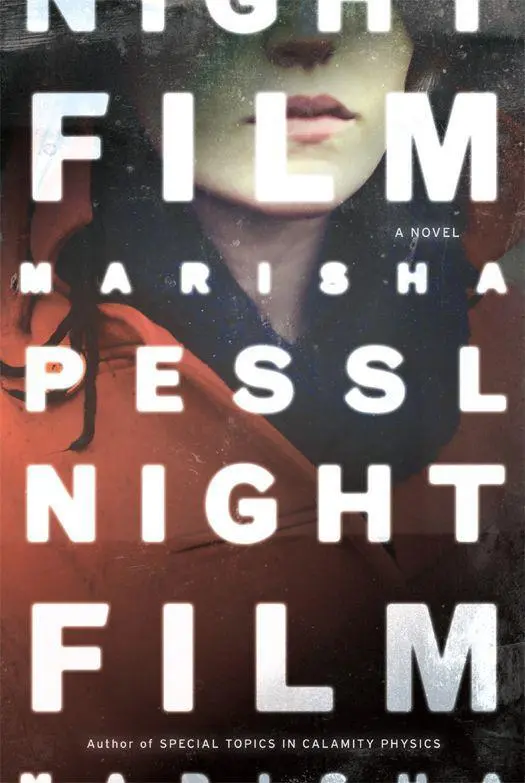
- Название:Night Film
- Автор:
- Издательство:Random House Trade Paperbacks
- Жанр:
- Год:2014
- ISBN:нет данных
- Рейтинг книги:5 / 5. Голосов: 1
-
Избранное:Добавить в избранное
- Отзывы:
-
Ваша оценка:
Night Film: краткое содержание, описание и аннотация
Предлагаем к чтению аннотацию, описание, краткое содержание или предисловие (зависит от того, что написал сам автор книги «Night Film»). Если вы не нашли необходимую информацию о книге — напишите в комментариях, мы постараемся отыскать её.
tells the haunting story of a journalist who becomes obsessed with the mysterious death of a troubled prodigy — the daughter of an iconic, reclusive filmmaker. On a damp October night, beautiful young Ashley Cordova is found dead in an abandoned warehouse in lower Manhattan. Though her death is ruled a suicide, veteran investigative journalist Scott McGrath suspects otherwise. As he probes the strange circumstances surrounding Ashley’s life and death, McGrath comes face-to-face with the legacy of her father: the legendary, reclusive cult-horror-film director Stanislas Cordova — a man who hasn’t been seen in public for more than thirty years.
For McGrath, another death connected to this seemingly cursed family dynasty seems more than just a coincidence. Though much has been written about Cordova’s dark and unsettling films, very little is known about the man himself.
Driven by revenge, curiosity, and a need for the truth, McGrath, with the aid of two strangers, is drawn deeper and deeper into Cordova’s eerie, hypnotic world.
The last time he got close to exposing the director, McGrath lost his marriage and his career. This time he might lose even more.
Night Film
Night Film — читать онлайн бесплатно полную книгу (весь текст) целиком
Ниже представлен текст книги, разбитый по страницам. Система сохранения места последней прочитанной страницы, позволяет с удобством читать онлайн бесплатно книгу «Night Film», без необходимости каждый раз заново искать на чём Вы остановились. Поставьте закладку, и сможете в любой момент перейти на страницу, на которой закончили чтение.
Интервал:
Закладка:
“He’s not home,” said the woman rudely.
“Any idea when he’ll be back?”
She squinted at him. “You all get off our property or I’m callin’ the cops.”
She was about to slam the door, when a man materialized beside her.
“What’s the matter?”
He had a soft, mild-mannered voice, in startling contrast to the woman, who appeared to be his wife. He was considerably shorter than she, and looked younger — early thirties — stocky, wearing a faded blue flannel button-down tucked neatly into his jeans, the sleeves rolled up. He had brown hair in a crew cut and broad, reddish features that were neither unattractive nor handsome, only ordinary. It was the face of a million other men.
“Are you Morgan Devold?” asked Hopper.
“What’s this about?”
“Briarwood.”
“You all got some nerve showin’ up here,” said the woman.
“Stace. It’s all right.”
“ No more communication. You heard the lawyer—”
“It’s fine.”
“It’s not fine —”
“Let me handle it.” He said it with a sharp, raised voice, and suddenly somewhere in a back room, a baby started to cry.
The woman darted out of the doorway, though not before glaring at him.
“Get rid of them,” she said.
Morgan — it appeared this was Morgan — stepped forward with an apologetic smile. As the baby wailed, he said nothing, and the way he stood there, stranded behind the screen door, reminded me of my last visit to the Bronx Zoo with Sam; she’d pointed out with great concern a chimpanzee staring dolefully out at us from behind the glass — such profound sadness, such resignation.
“You guys are from Briarwood?” he asked uncertainly.
“Not exactly,” said Hopper.
“Then what’s this really about?”
Hopper stared at him for a second before answering. “ Ashley. ”
It was surprising, the knowing way he said her name. In fact, it was ingenious —implying Ashley was some incredible experience both of them had had, so memorable, any mention of a last name was unnecessary. She was a magnificent hidden island, a secret house on a rocky cliff, visited by only a privileged few. If it was a deliberate trap on Hopper’s part, it worked, because instantly a look of recognition appeared on the man’s face.
Glancing furtively over his shoulder — where his wife had just disappeared to tend to the baby — he turned back to us. With a guilty smile, he extended his index finger and, careful not to make any noise, pushed it against the screen, quietly opening the door.
“Out here,” he whispered.
20
We followed Morgan Devold to the edge of the yard, where there were dense trees, close to the children’s pool filled with black water and leaves. The baby was still crying, though away from the house now the wind acted as a balm on the sound, easing it, folding it into the cold shivers of the night.
“How’d you find me?” Morgan asked rather resignedly, hooking his thumbs in his jean pockets.
“Through a nurse at Briarwood,” said Hopper.
“Which one?”
“She didn’t tell us her name,” I said. “But she was young. Red hair and freckles.”
He nodded. “Genevieve Wilson.”
“Is she a friend of yours?”
“Not really. But I heard she made a stink to administration when I got the ax.”
“You used to work at Briarwood?”
He nodded again.
“Doing what?”
“Security.”
“For how long?”
“ ’Bout seven years? Before that, I did security at Woodbourne. I was all set for a promotion at Briarwood. Thought I was going to be assistant head.” Smiling sadly, he looked up, staring past me to his own house. He looked bewildered, as if he didn’t recognize it or couldn’t remember how he’d come to live there.
“Who are you guys?” he asked.
“Private investigators,” said Nora with evident excitement.
Somewhere Sam Spade just rolled over in his grave. I was certain Morgan would call us out on this obvious lie, but he nodded.
“Who hired you?” he asked solemnly. “Her family?”
He meant Ashley.
“We work for ourselves,” I said.
“Everything you tell us can be off the record,” added Nora.
He seemed to accept this, too, staring into the dark water of the pool. I realized then, he didn’t care who we were. Some people were so burdened by a secret they’d give it away free to any willing stranger.
“Stace doesn’t know a thing about it,” he said. “She thinks I was fired ’cause Briarwood found out we’re Adventists.”
“It’ll stay that way,” said Hopper. “How did you know Ashley?”
But Morgan was no longer paying attention. Something had caught his attention in the kiddie pool. Frowning, he stepped a few feet away, picked up a fallen tree branch, and extended it into the water, trawling through the decaying leaves and mud.
A bulky object was actually floating there, bobbing along the bottom. He snagged it on the branch, pulling it toward him.
I thought it was a drowned animal — a squirrel or possum. So did Nora; she was staring at me with a stricken, horrified face as Morgan reached right in and pulled the thing out, dripping.
It was a plastic baby doll.
It was missing an eye, half bald, seeping blackened water, yet still smiling manically with puffy cheeks, what remained of its yellow hair matted with leaves. It was wearing a ruffled white dress, now mottled black, some kind of fungus growing like rancid heads of cauliflower out of the neck. Its fat little arms reached out at nothing.
“Last few weeks I turned the house upside down looking for this thing,” mumbled Morgan, shaking his head. “My daughter cried for three days straight when it went missing. Couldn’t find it. Was like the doll got fed up, walked clear outta the house. I had to sit her down, tell her it was gone now, went to be with God in heaven. Whole time, it was just out here. ”
He chuckled at the irony of it, a tight, frustrated sound.
“How did Ashley break out of Briarwood?” Hopper asked, glancing at me, indicating he sensed something was off with the man.
“With me,” Morgan answered simply, still staring down at the doll.
Hopper nodded, waiting for him to go on. But he didn’t.
“ How? ” Hopper prompted in a low voice.
Morgan glanced at us again, as if remembering we were there, smiling sadly. “It’s funny how the night that changes your life forever starts out like all the others.”
He let his arm fall to his side, holding the doll by its leg, its dress hanging over its head, exposing frilly underwear and drooling black water on the grass.
“I was coverin’ for a buddy of mine,” he said. “Working the night shift. Nine to nine. Stace hated when I took all-nighters, but I liked to watch the monitors at night. It’s easy work. I’m the only one in the back rooms of the center. Patients are asleep, the corridors so still and quiet, it’s like you’re the last man alive.” He cleared his throat. “I guess it was about three in the morning. I wasn’t paying much attention. I had some magazines. Wasn’t supposed to, but I’d done it a million times before. Nothing happens. There’s nothing ever going on except the nurses checkin’ the Code Reds.”
“And what are the Code Reds?” I asked.
“Patients on suicide watch.”
“What about Code Silver?” asked Hopper.
“Those are the patients kept apart ’cause they can hurt themselves and others. I’d been watching all night. It was like every other. Quiet. I’m flipping through a magazine when I glance up and something catches my eye on the monitor. One a’ them music rooms in Straffen. There’s somebody in there. As soon as I seen that, it switches to another. Video feeds are on a ten-second rotation. You can break the sequence to take a longer look at any live feed. I break, go back to that music room. I see there’s a girl in there. She’s a patient, ’cause she’s wearing the authorized white pajamas. She’s at the piano. Camera’s high in the corner of the ceiling, so I’m lookin’ down on her, a little over her shoulder. All I see are her skinny arms moving fast, her dark hair in a braid. Never seen her before. I work day shifts mostly, and you get to know the patients. I channel in audio, turn up the speaker …”
Читать дальшеИнтервал:
Закладка:
Похожие книги на «Night Film»
Представляем Вашему вниманию похожие книги на «Night Film» списком для выбора. Мы отобрали схожую по названию и смыслу литературу в надежде предоставить читателям больше вариантов отыскать новые, интересные, ещё непрочитанные произведения.











Обсуждение, отзывы о книге «Night Film» и просто собственные мнения читателей. Оставьте ваши комментарии, напишите, что Вы думаете о произведении, его смысле или главных героях. Укажите что конкретно понравилось, а что нет, и почему Вы так считаете.