Marisha Pessl - Night Film
Здесь есть возможность читать онлайн «Marisha Pessl - Night Film» весь текст электронной книги совершенно бесплатно (целиком полную версию без сокращений). В некоторых случаях можно слушать аудио, скачать через торрент в формате fb2 и присутствует краткое содержание. Год выпуска: 2014, Издательство: Random House Trade Paperbacks, Жанр: Современная проза, на английском языке. Описание произведения, (предисловие) а так же отзывы посетителей доступны на портале библиотеки ЛибКат.
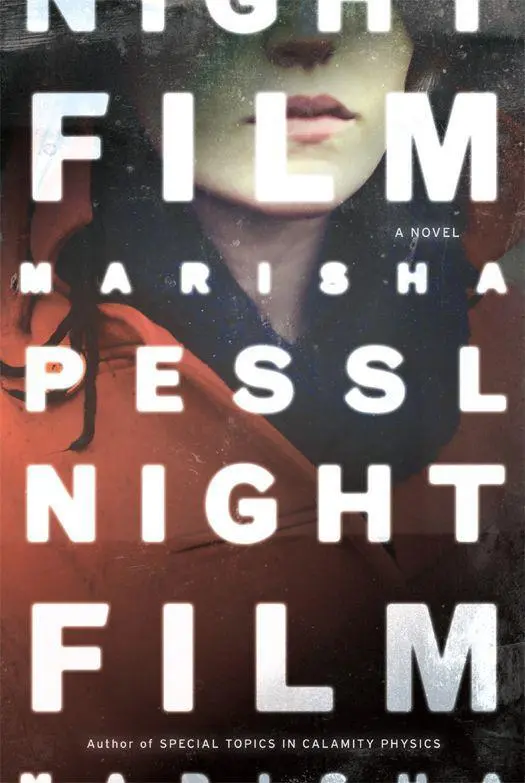
- Название:Night Film
- Автор:
- Издательство:Random House Trade Paperbacks
- Жанр:
- Год:2014
- ISBN:нет данных
- Рейтинг книги:5 / 5. Голосов: 1
-
Избранное:Добавить в избранное
- Отзывы:
-
Ваша оценка:
Night Film: краткое содержание, описание и аннотация
Предлагаем к чтению аннотацию, описание, краткое содержание или предисловие (зависит от того, что написал сам автор книги «Night Film»). Если вы не нашли необходимую информацию о книге — напишите в комментариях, мы постараемся отыскать её.
tells the haunting story of a journalist who becomes obsessed with the mysterious death of a troubled prodigy — the daughter of an iconic, reclusive filmmaker. On a damp October night, beautiful young Ashley Cordova is found dead in an abandoned warehouse in lower Manhattan. Though her death is ruled a suicide, veteran investigative journalist Scott McGrath suspects otherwise. As he probes the strange circumstances surrounding Ashley’s life and death, McGrath comes face-to-face with the legacy of her father: the legendary, reclusive cult-horror-film director Stanislas Cordova — a man who hasn’t been seen in public for more than thirty years.
For McGrath, another death connected to this seemingly cursed family dynasty seems more than just a coincidence. Though much has been written about Cordova’s dark and unsettling films, very little is known about the man himself.
Driven by revenge, curiosity, and a need for the truth, McGrath, with the aid of two strangers, is drawn deeper and deeper into Cordova’s eerie, hypnotic world.
The last time he got close to exposing the director, McGrath lost his marriage and his career. This time he might lose even more.
Night Film
Night Film — читать онлайн бесплатно полную книгу (весь текст) целиком
Ниже представлен текст книги, разбитый по страницам. Система сохранения места последней прочитанной страницы, позволяет с удобством читать онлайн бесплатно книгу «Night Film», без необходимости каждый раз заново искать на чём Вы остановились. Поставьте закладку, и сможете в любой момент перейти на страницу, на которой закончили чтение.
Интервал:
Закладка:
Directly across the street, a white farmhouse stood in the middle of a wild lawn, the grass strewn with garbage. On a drooping telephone wire sat two black birds, too tiny and fat to be crows. The Qwik Mart door dinged behind me and I turned to see an old man in a green flannel shirt and workman’s boots, heading to a pickup, a brown mutt in the bed. The man climbed behind the wheel and they pulled out, swerving to make a right extremely close to Hopper, the muffler backfiring.
Hopper didn’t react. He was staring in a sort of melancholic trance out at the middle of the road, oblivious to the cars speeding by.
Maybe that was the point — he was imagining stepping in front of one. He looked like he was at a river’s edge, about to throw himself in. It was a melodramatic thought — probably residual paranoia from the appearance of that nurse. I could still see her anxious, freckled face staring at me, her lips chapped, the window clouding over from her breath, erasing her mouth.
Hopper took a drag of his cigarette, brushing his hair from his eyes, and looked up at the sky, squinting at those birds on the telephone wires. More had appeared out of nowhere. Now there were seven — seven tiny black notes on an otherwise empty piece of sheet music, the lines and bars sagging, giving up as they stretched between poles and twisted on down the road.
Another ding and Nora emerged, her arms laden with coffee cups, jelly beans, Bugles, and a phone book. She spread it all out on the hood.
“I got Hopper some coffee,” she whispered, holding up the jumbo-sized cup and squinting worriedly across the parking lot at him. “He looks like he needs caffeine.”
“He looks like he needs a hug.”
She set the cup down, flipping through the phone book.

“It’s here,” she whispered in amazement.
I walked over, staring down at the page.
19
“It’s the next driveway,” said Nora, squinting at the phone.
The drive to Livingston Manor was an hour and a half of snaking backcountry roads. It was already getting dark, the sky fading to a bruised blue. There were no street signs along Benton Hollow Road, no house numbers, no streetlights, not even any lines — just my car’s faded headlights, which didn’t so much push back the advancing dark as nervously rummage through it. To our left was a wall of solid shrubbery, barbed and impenetrable; to our right, vast black land stretched out, rumpled pastures and faded farmhouses, a lone porch light punctuating the night.
“This is it,” whispered Nora excitedly, pointing at an opening in the shrubs.
There was a metal mailbox, but no number and no name.
I made the turn.
It was a constricted gravel drive straight uphill through dense foliage, an opening barely wide enough for a man, much less a car. The incline grew steeper, so I had to floor it, the entire car shimmying uncontrollably like the space shuttle trying to break the sound barrier. Spindly branches slapped the windshield.
After about a minute, we inched over the crest of the hill.
Instantly, I hit the brakes.
Far in front of us, across a scruffy lawn, wedged back between tall trees, sat a tiny wooden house so decrepit it rendered us mute.
The white paint was cracked and flaking. Shingles were missing from the roof, exposing a raw black hole, windows along the attic floor punched out and charred black. Strewn across the yard among the dead leaves and a large fallen tree were a child’s toys — a wagon, a tricycle, and, farther off, along the edge of the yard where it was dark, an old plastic kiddie pool looking like a popped blister.
There was something so inherently menacing about the house as it loomed there, poised in the shadows, I automatically turned off the engine and headlights. A lone lit bulb by the front door illuminated a porch swing half on the ground and an old air conditioner. Another light was on in one of the back rooms — a tiny rectangular window lit with mint-green curtains pulled tightly closed.
It occurred to me we had no context whatsoever for this man —Morgan Devold. We were following the tip of a total stranger, a Briarwood nurse — who, recalling the way she’d thrown herself in front of the car, hadn’t appeared exactly rational.
Parked beside the house in front of a wooden shed were a pickup truck and an old gray Buick, a plastic tarp hanging out of the trunk.
“Now what?” Nora said nervously, biting her thumbnail.
“Let’s go over the plan,” I said.
“ Plan? ” Hopper said with a laugh, leaning forward between us. “It’s simple. We talk to Morgan Devold and find out what he knows. Let’s go.”
Before I could say a word, he’d climbed out, slammed the door, and was making his way across the yard. His gray wool coat caught the wind, flapping out behind him, and with his head down, his walk deliberate as he headed straight for the house, he resembled some kind of moody comic-book character about to unleash brutal vengeance on the inhabitants.
“He’s certainly come back from the dead,” I muttered. “What’d you put in his coffee?”
Nora didn’t answer — she was too busy fumbling for the door handle like an eager kid sister who didn’t want to be left behind. Within seconds she scrambled out, dashing right after him.
I held back, waiting. Let them be the scouts —the lowly privates who checked for land mines before the general arrived.
Their footsteps were the only sounds — soft crunches through the leaves and grass strewn with sticks. Maybe it was the peeling paint, giving the house scaly skin, but the place looked reptilian and alive, poised beyond the trees, waiting — that lone lit window like an eye watching us.
Somewhere far away, a dog barked.
Hopper was already at the front porch, so I climbed out of the car. He stepped around the air conditioner, pulled open the screen, and knocked on the door.
There was no answer.
He knocked again, waiting, a blast of wind sending a cluster of leaves across the lawn.
Still no answer. He let the screen bang closed and jumped down into the flower bed spiked with dead stalks and a tangled garden hose. Shading his eyes, he peered in one of the windows.
“ Someone’s home,” he whispered. “There’s a TV on in the kitchen.”
“What are they watching?” I asked quietly, striding over the giant fallen tree trunk and then, past Nora, inspecting something lying facedown in the grass. It was an old teddy bear.
“Why?” whispered Hopper, glancing back at me.
“We’ll be able to tell what type of people we’re dealing with. If it’s hardcore Japanese anime, we’ve got problems. But if it’s a Barbara Walters special—”
“It looks like a rerun of The Price Is Right. ”
“That’s even worse.”
Hopper stepped gingerly back up onto the porch, this time noticing a dirt-encrusted doorbell. He pressed it twice.
Suddenly there was the jumble of locks turning, a chain sliding, and the front door gasped open, revealing a middle-aged blond woman behind the screen. She was wearing baggy gray sweats, a stained blue T-shirt, her peroxide-streaked hair in a ponytail.
“Good evening, ma’am,” Hopper said. “Sorry to disturb you during the dinner hour. But we’re looking for Morgan Devold.”
She surveyed him suspiciously, then craned her neck to look at me.
“What do you all want with Morgan?”
“Just to chat,” Hopper said with a laid-back shrug. “It should only take a few minutes. We’re from Briarwood.”
Читать дальшеИнтервал:
Закладка:
Похожие книги на «Night Film»
Представляем Вашему вниманию похожие книги на «Night Film» списком для выбора. Мы отобрали схожую по названию и смыслу литературу в надежде предоставить читателям больше вариантов отыскать новые, интересные, ещё непрочитанные произведения.









Обсуждение, отзывы о книге «Night Film» и просто собственные мнения читателей. Оставьте ваши комментарии, напишите, что Вы думаете о произведении, его смысле или главных героях. Укажите что конкретно понравилось, а что нет, и почему Вы так считаете.