Marisha Pessl - Night Film
Здесь есть возможность читать онлайн «Marisha Pessl - Night Film» весь текст электронной книги совершенно бесплатно (целиком полную версию без сокращений). В некоторых случаях можно слушать аудио, скачать через торрент в формате fb2 и присутствует краткое содержание. Год выпуска: 2014, Издательство: Random House Trade Paperbacks, Жанр: Современная проза, на английском языке. Описание произведения, (предисловие) а так же отзывы посетителей доступны на портале библиотеки ЛибКат.
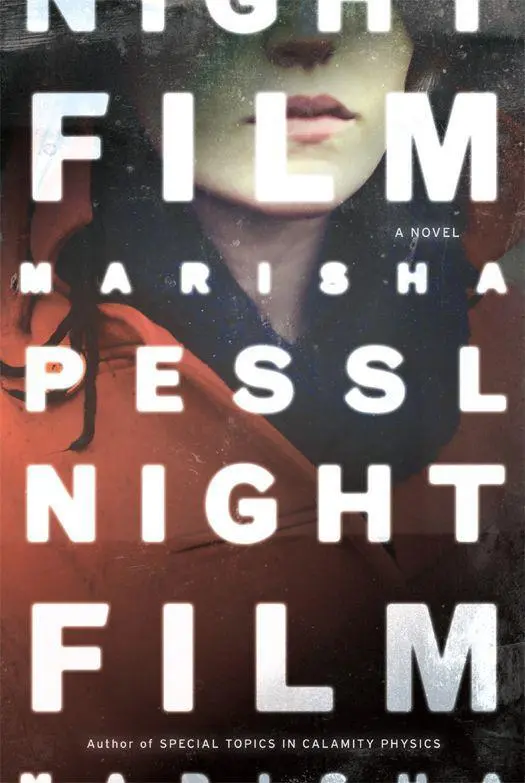
- Название:Night Film
- Автор:
- Издательство:Random House Trade Paperbacks
- Жанр:
- Год:2014
- ISBN:нет данных
- Рейтинг книги:5 / 5. Голосов: 1
-
Избранное:Добавить в избранное
- Отзывы:
-
Ваша оценка:
Night Film: краткое содержание, описание и аннотация
Предлагаем к чтению аннотацию, описание, краткое содержание или предисловие (зависит от того, что написал сам автор книги «Night Film»). Если вы не нашли необходимую информацию о книге — напишите в комментариях, мы постараемся отыскать её.
tells the haunting story of a journalist who becomes obsessed with the mysterious death of a troubled prodigy — the daughter of an iconic, reclusive filmmaker. On a damp October night, beautiful young Ashley Cordova is found dead in an abandoned warehouse in lower Manhattan. Though her death is ruled a suicide, veteran investigative journalist Scott McGrath suspects otherwise. As he probes the strange circumstances surrounding Ashley’s life and death, McGrath comes face-to-face with the legacy of her father: the legendary, reclusive cult-horror-film director Stanislas Cordova — a man who hasn’t been seen in public for more than thirty years.
For McGrath, another death connected to this seemingly cursed family dynasty seems more than just a coincidence. Though much has been written about Cordova’s dark and unsettling films, very little is known about the man himself.
Driven by revenge, curiosity, and a need for the truth, McGrath, with the aid of two strangers, is drawn deeper and deeper into Cordova’s eerie, hypnotic world.
The last time he got close to exposing the director, McGrath lost his marriage and his career. This time he might lose even more.
Night Film
Night Film — читать онлайн бесплатно полную книгу (весь текст) целиком
Ниже представлен текст книги, разбитый по страницам. Система сохранения места последней прочитанной страницы, позволяет с удобством читать онлайн бесплатно книгу «Night Film», без необходимости каждый раз заново искать на чём Вы остановились. Поставьте закладку, и сможете в любой момент перейти на страницу, на которой закончили чтение.
Интервал:
Закладка:
She put on the coat, stepped in front of Sam’s Big Bird mirror, and took a very long time fixing a bright green scarf around her neck. She then grabbed a black fedora off the bedpost, setting it delicately atop her head like a lost queen crowning herself. I followed her downstairs in a sort of daze. She set down her bags, heading into my office. She’d picked up Septimus from the kennel. She crouched beside his cage.
“When Grandma Eli gave me Septimus, she gave me the directions that went with him,” she said. “You have to give him away to someone who needs him. That’s part of his magic. You’re supposed to know the right time to give him away, and it’s when it hurts the most. I want you to have him.”
“I don’t want a bird.”
“But you need a bird.”
She unlatched the door, and the blue parakeet fluttered into her palm. She whispered something into his invisible ear, returned him to his swing, and then she was moving again, slipping past me down the hall. She didn’t stop until we were outside on my stoop.
“I’ll go with you. Interview the hippie. Make sure this person wasn’t part of the Symbionese Liberation Army—”
“No. I’m handling it.”
“So that’s it ? I’ll never see you again?”
She wrinkled her nose as if I’d said something idiotic. “ ’course you’re going to see me again.” She reached up onto her tiptoes and hugged me. The girl gave the most premium of hugs — skinny arms clamped around your neck like zip ties, bony knees bumping yours. It was like she was trying to get an indelible impression of you to take away with her forever.
She grabbed her bags and took off down the steps.
I waited until she rounded the corner, then took off after her. I knew she’d kill me if she saw me, but thankfully the sidewalks were mobbed with shoppers, so I was able to stay out of sight, tailing her all the way into the subway, where she hopped on a 1 train, transferred to the L and then the 6, finally exiting at Astor Place.
Emerging from the packed station, I lost sight of her. I looked everywhere, even began to panic, worried that was it, I’d never know what happened to her, if she was safe — Bernstein, the precious gold coin slipping out of my fumbling hands, disappearing into New York’s millions.
But then I spotted her. She’d crossed Saint Marks Place, was walking with her usual corkscrew gait past the pizza parlor, the racks of magazines. I followed her down East Ninth, coming to a small triangular garden where the street intersected Tenth. She skipped up the steps of a shabby brownstone. I held back, slipping into a doorway.
Nora set down her bags and rang the bell.
As I’d tailed her, I’d mapped the various rescue scenarios — barging in the front door, kicking aside the nine cats, the raccoon, four decades’ worth of Village Voice s, racing past the stoners making out on the couch and the psychedelic poster for the Human Be-In, all the way upstairs to Nora’s room: rat-friendly, stench of old sponge. Nora, perched on the edge of a futon, would spring to her feet, throwing her arms around my neck.
Woodward? I made a huge mistake.
And yet. Though the building was certainly dodgy — rusty air conditioners, window boxes with dead plants — I noticed on the first and second floors there were not one but two bay windows, and they did appear to get tons of light.
But no one had answered the door. Nora rang the buzzer a second time.
Let no one be home. Let the super-nice hippie have had a family emergency back in Woodstock. Or if someone answered, let it be a half-naked singer-songwriter with a tattoo on his chest that read WELCOME TO THE RAINBOW. Let me just rescue her one more time.
The door opened, and a plump woman with frizzy gray hair appeared, wearing a striped apron streaked with dirt from a flower bed or clay from a potter’s wheel. She was unquestionably into tarot cards and soy, though I might have been wrong about everything else. Nora said something, and the woman smiled, taking a Duane Reade bag as they disappeared inside, the door closing.
I waited for something — music turning on, a light. But there was nothing, nothing for me, not anymore, only a soft breeze coursing down the block, pushing the stray yellow leaves and the bits of trash caught along the curb.
I walked home.
102
I’d decided it’d be wise to take a few days to recover from The Peak and clear my head before organizing my thoughts, wrapping up the investigation. I had that persistent sense again of having swum through leagues of blackened water, my insides still leaden, my mind streaked with mud.
Yet real life was calling. I had unpaid bills, voicemails, month-old emails I hadn’t bothered to open, quite a few from friends who’d written I’m worried and You OK and WTF??? in the subject lines. I wrote them all back — I’d bought a replacement HP laptop a week before we left for The Peak — but to do even this simple task seemed pointless and irritating.
I began to realize, with a sort of morbid fascination, that I hadn’t actually left The Peak — not entirely. Because the moment I was in bed, lights off, I needed only to close my eyes and I was back there. That property, maybe it was an unrequited time I’d always be returning to now, the way others returned in their dreams to golden childhood dances or battlefields, weekends at a lake house with some girl in a red bikini. Half awake, half dreaming, I plunged back inside that estate, wandering its dark gardens and statues hacked to pieces, past the dogs, the blinding flashlights manned by shadows. I backtracked through the tunnels, no longer searching for evidence to incriminate Cordova, but some crucial part of myself I’d accidentally lost up there — like an arm, or my soul.
And that fear I’d felt, the disembodying confusion, seemed to be a drug I was now addicted to, because moving through the ordinary world — watching CNN, reading the Times, walking to Sant Ambroeus to have a coffee at the bar — made me feel exhausted, even depressed. Perhaps I was suffering from the same problem as the man who’d sailed around the world and now on land, facing his farmhouse, his wife and kids, understood that the constancy of home stretching out before him like a dry flat field was infinitely more terrifying than any violent squall with thirty-foot swells.
Why did I assume that I’d be fine, be able to process The Peak as if it were a trip to Egypt or the time in Mitú I’d been held for eleven days in a jail cell — a harrowing experience to digest and get over? Not this thing. No, The Peak and the truth about what the man had done were still sitting in my stomach very much alive, pulsing and drooling and intact, making me increasingly sick, maybe even killing me.
This restlessness was made all the more worse by the fact that I was alone. Everyone was gone. Nora was right. Hopper was as finished as she was. I called him twice, heard nothing. I didn’t understand it — that they could both be done with the case and me, simple as that, that they could so ignorantly conclude that it all ended here. Didn’t they want to know if those were real human bones I’d found up there, that there were no other children hurt in Cordova’s mad attempts to save Ashley’s life? Weren’t they curious about the obvious remaining question — where was Cordova now?
I drew all sorts of scathing conclusions — that they’d finally shown me their true colors; they were young and shallow; it was a larger indicator of the problems of today’s youth; raised by the Internet, they flitted from one fixation to the next with all the gravity of a mouse-click — but the truth was, I missed them. And I was furious I cared.
Читать дальшеИнтервал:
Закладка:
Похожие книги на «Night Film»
Представляем Вашему вниманию похожие книги на «Night Film» списком для выбора. Мы отобрали схожую по названию и смыслу литературу в надежде предоставить читателям больше вариантов отыскать новые, интересные, ещё непрочитанные произведения.








Обсуждение, отзывы о книге «Night Film» и просто собственные мнения читателей. Оставьте ваши комментарии, напишите, что Вы думаете о произведении, его смысле или главных героях. Укажите что конкретно понравилось, а что нет, и почему Вы так считаете.