Marisha Pessl - Night Film
Здесь есть возможность читать онлайн «Marisha Pessl - Night Film» весь текст электронной книги совершенно бесплатно (целиком полную версию без сокращений). В некоторых случаях можно слушать аудио, скачать через торрент в формате fb2 и присутствует краткое содержание. Год выпуска: 2014, Издательство: Random House Trade Paperbacks, Жанр: Современная проза, на английском языке. Описание произведения, (предисловие) а так же отзывы посетителей доступны на портале библиотеки ЛибКат.
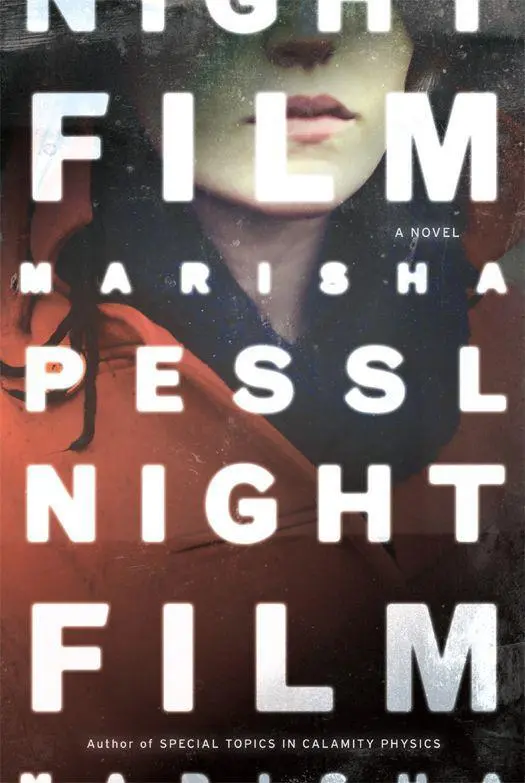
- Название:Night Film
- Автор:
- Издательство:Random House Trade Paperbacks
- Жанр:
- Год:2014
- ISBN:нет данных
- Рейтинг книги:5 / 5. Голосов: 1
-
Избранное:Добавить в избранное
- Отзывы:
-
Ваша оценка:
Night Film: краткое содержание, описание и аннотация
Предлагаем к чтению аннотацию, описание, краткое содержание или предисловие (зависит от того, что написал сам автор книги «Night Film»). Если вы не нашли необходимую информацию о книге — напишите в комментариях, мы постараемся отыскать её.
tells the haunting story of a journalist who becomes obsessed with the mysterious death of a troubled prodigy — the daughter of an iconic, reclusive filmmaker. On a damp October night, beautiful young Ashley Cordova is found dead in an abandoned warehouse in lower Manhattan. Though her death is ruled a suicide, veteran investigative journalist Scott McGrath suspects otherwise. As he probes the strange circumstances surrounding Ashley’s life and death, McGrath comes face-to-face with the legacy of her father: the legendary, reclusive cult-horror-film director Stanislas Cordova — a man who hasn’t been seen in public for more than thirty years.
For McGrath, another death connected to this seemingly cursed family dynasty seems more than just a coincidence. Though much has been written about Cordova’s dark and unsettling films, very little is known about the man himself.
Driven by revenge, curiosity, and a need for the truth, McGrath, with the aid of two strangers, is drawn deeper and deeper into Cordova’s eerie, hypnotic world.
The last time he got close to exposing the director, McGrath lost his marriage and his career. This time he might lose even more.
Night Film
Night Film — читать онлайн бесплатно полную книгу (весь текст) целиком
Ниже представлен текст книги, разбитый по страницам. Система сохранения места последней прочитанной страницы, позволяет с удобством читать онлайн бесплатно книгу «Night Film», без необходимости каждый раз заново искать на чём Вы остановились. Поставьте закладку, и сможете в любой момент перейти на страницу, на которой закончили чтение.
Интервал:
Закладка:
Hours later, at dusk, we were back in Manhattan, driving down its battered blocks of pedestrians and potholes. Hopper asked me to drop him off at his apartment on Ludlow, the only words he’d said during the entire ride.
He climbed out of the Jeep, pulling his backpack over his shoulder.
“I’ll see you guys,” he said curtly and slammed the door.
“Wait,” said Nora.
She hastily scrambled out and threw her arms around his neck, hugging him right on the sidewalk. He chucked her affectionately on the chin and moved up the steps to his building. When she climbed back in, I was surprised to see that she was crying.
“ Bernstein. Hey. What’s the matter?”
“You don’t get it.” She wiped her eyes. “We’re never going to see him again.”
“What? Don’t be silly.”
She shook her head in disagreement, watching him disappear inside.
I was surprised by the pronouncement, to say the least, certain it couldn’t be true. It couldn’t end like this, not here, when so much was still unanswered, but then I remembered his apartment, the bare walls and the bag from South Dakota, the lyrics from “Ramble On.” Had he found all the answers he needed and he was finished with us — simple as that?
I didn’t know what to say, because abruptly Nora was heartbroken. She silently wept all the way out of the Lower East Side, down Houston Street, and well into the West Village. I tried comforting her, but ultimately was too drained to do more than concentrate on the simple task of getting the rental Jeep back to Hertz.
A hot Saturday night in the Village was detonating around us. As we walked back to Perry Street, negotiating the dense crowds and honking cars, Nora didn’t say a word. When I let us back into the apartment, she ignored my question about whether or not she wanted any dinner, fleeing upstairs to Sam’s room.
I headed to my office. It looked solemn, untouched. Gazing at the windows, the night, I actually wished Septimus was there on the windowsill to greet me. I could’ve used the company; he might be a parakeet, but he was reasonable. But we’d taken him to a kennel to be looked after. There was nothing and no one here.
I tried calling Cynthia — I had the overwhelming desire to hear Sam’s low voice, to hear that she was all right — but she didn’t pick up. I left a message. I went upstairs and took a shower, locked everything I’d taken out of The Peak in my safe, and climbed into bed. I’d stuck Brad Jackson’s coat on a hanger, hanging it on the back of my closet door. It looked oddly limp there, oddly lifeless. Had I gone far enough up there? Seen enough at The Peak to get to the bottom of it?
98
I woke up gasping and lurched upright, expecting to hit my head on the ceiling of yet another hexagon, only to realize I really was at home. Nora was perched on the edge of my bed.
“Christ. You scared me.”
“I’m sorry,” she said.
“Everything all right?” I sat up, propping myself up on the pillows. I was relieved to see she was no longer crying. “Are you upset about what happened? I’m sure you’re wrong about Hopper.”
“No. Yes. It’s just …”
“What?”
“When we were tracking Ashley before, she was alive. Now I can feel she’s gone. And when Hopper said goodbye it reminded me of Terra Hermosa. There, the endings hit you hard because they’re sudden. Like, one day Amelia who loves flowers is there in the dining hall with her oxygen tank ordering the fruit plate, and the next? She’s nowhere. All they leave out is this memorial and what it is depends on what hallway you lived on. Like, if you lived on the first floor they put up an easel with a laminated picture of you smiling and knitting with your glasses around your neck. But if you lived on the fourth floor, they put this guestbook out to sign with flowers and a poem about loss printed off the Internet. And that’s it. After two weeks they take it down, the poster and the guestbook, and it’s like you were never there. I hate it so much.”
“ I hate it so much.”
“It’s not fair.”
“It’s not. But then, that’s the game. It makes life great. The fact that it ends when we don’t want it to. The ending gives it meaning. But now that you mention it, will you promise to off me when I’m ninety and never leave home without an oxygen tank? Make a day of it. Just roll me and my wheelchair off the George Washington Bridge and call it a life. Deal?”
The request seemed to make her smile. “Deal.”
“They should really tack that on to the marriage ceremony. ‘Do you promise to love, honor, obey me, and also to kill me when I can no longer stand in a shower?’ ”
“I really love you, Scott.”
She blurted the words. They took me so off guard, I wasn’t certain I’d heard her correctly, but then she slid forward in the dark, kissed me on the mouth, then sat back, studying me intently, as if she’d just added a key ingredient to a new science experiment.
“What’d you do that for?”
“I told you. I love you. And not as a friend or a boss, but real love. I’ve known it for twenty-four hours.”
“Sounds like a stomach bug that will pass.”
“I’m serious.” She scrambled on top of me, sitting Indian-style on my shins, and before I could stop her, the girl leaned in and planted another kiss on me, her hands clasping the sides of my head. I was almost too tired to do anything about it, but managed to grab her shoulders and pull her away.
“You need to go back to bed.”
“You don’t think I’m pretty?”
“You’re gorgeous.”
She was inches from my face, really squinting, as if it were a section of a globe she’d never closely inspected before, an ocean filled with strings of unnamed islands.
“So what’s the matter?”
“To my knowledge, Woodward and Bernstein never took it this far. I’d prefer we didn’t, either.”
“You’re making a joke ?”
“You have your life in front of you. You’re young, and I’m … an old bicycle.” I had no idea where that unfortunate metaphor came from — maybe I was half asleep — but I suddenly had a very unpleasant vision of myself as a rusty junkyard ten-speed, no front wheel, stuffing bulging out of the torn seat.
“You’re not. You’re amazing. ”
“ You’re amazing.”
“Well, two people who feel that way should be together right now this second and not think.” She scrambled eagerly right alongside me, as if we were together in a compact camping tent. She felt bony and light, and as she rolled over me, her hair and a smell of soap fell around my head, a waterfall I was drenched inside.
“Nora. Please. Go to bed. ” I shoved her back, a little more forcefully this time. “I love you, too,” I went on. “You know I do — but, not like that.”
I was aware of how shoddily stitched together the words were — suddenly I was a kid in the hall standing outside my locker about to head to Math. But that was how it went sometimes, the English language, when you really needed it, crumbled to clay in your mouth. That’s when all the real things were said.
“Why are you treating me like I don’t know my own feelings?”
“Experience. I’m forty-three. Maybe even forty-four.”
“In olden days people only lived to thirty, so I’d be ancient. ”
“And I’d be dead.”
“Why do you have to joke? Why can’t you just be ?”
I didn’t answer, only held out my hand, waiting for her to take it.
Читать дальшеИнтервал:
Закладка:
Похожие книги на «Night Film»
Представляем Вашему вниманию похожие книги на «Night Film» списком для выбора. Мы отобрали схожую по названию и смыслу литературу в надежде предоставить читателям больше вариантов отыскать новые, интересные, ещё непрочитанные произведения.





Обсуждение, отзывы о книге «Night Film» и просто собственные мнения читателей. Оставьте ваши комментарии, напишите, что Вы думаете о произведении, его смысле или главных героях. Укажите что конкретно понравилось, а что нет, и почему Вы так считаете.