Marisha Pessl - Night Film
Здесь есть возможность читать онлайн «Marisha Pessl - Night Film» весь текст электронной книги совершенно бесплатно (целиком полную версию без сокращений). В некоторых случаях можно слушать аудио, скачать через торрент в формате fb2 и присутствует краткое содержание. Год выпуска: 2014, Издательство: Random House Trade Paperbacks, Жанр: Современная проза, на английском языке. Описание произведения, (предисловие) а так же отзывы посетителей доступны на портале библиотеки ЛибКат.
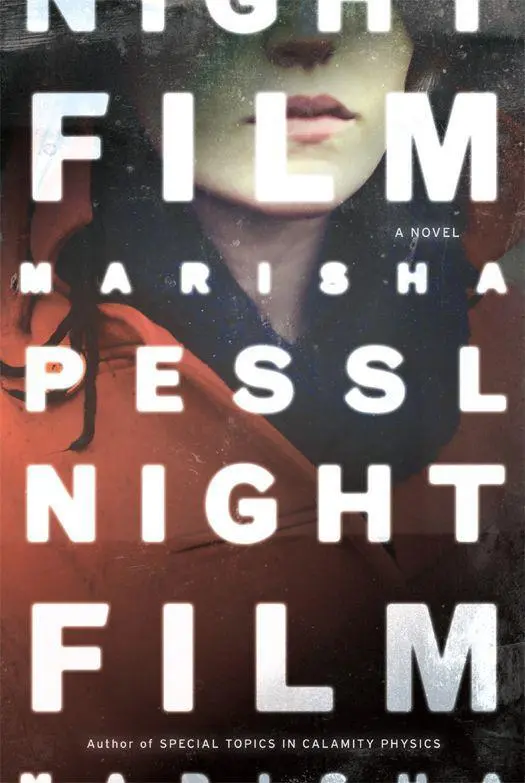
- Название:Night Film
- Автор:
- Издательство:Random House Trade Paperbacks
- Жанр:
- Год:2014
- ISBN:нет данных
- Рейтинг книги:5 / 5. Голосов: 1
-
Избранное:Добавить в избранное
- Отзывы:
-
Ваша оценка:
Night Film: краткое содержание, описание и аннотация
Предлагаем к чтению аннотацию, описание, краткое содержание или предисловие (зависит от того, что написал сам автор книги «Night Film»). Если вы не нашли необходимую информацию о книге — напишите в комментариях, мы постараемся отыскать её.
tells the haunting story of a journalist who becomes obsessed with the mysterious death of a troubled prodigy — the daughter of an iconic, reclusive filmmaker. On a damp October night, beautiful young Ashley Cordova is found dead in an abandoned warehouse in lower Manhattan. Though her death is ruled a suicide, veteran investigative journalist Scott McGrath suspects otherwise. As he probes the strange circumstances surrounding Ashley’s life and death, McGrath comes face-to-face with the legacy of her father: the legendary, reclusive cult-horror-film director Stanislas Cordova — a man who hasn’t been seen in public for more than thirty years.
For McGrath, another death connected to this seemingly cursed family dynasty seems more than just a coincidence. Though much has been written about Cordova’s dark and unsettling films, very little is known about the man himself.
Driven by revenge, curiosity, and a need for the truth, McGrath, with the aid of two strangers, is drawn deeper and deeper into Cordova’s eerie, hypnotic world.
The last time he got close to exposing the director, McGrath lost his marriage and his career. This time he might lose even more.
Night Film
Night Film — читать онлайн бесплатно полную книгу (весь текст) целиком
Ниже представлен текст книги, разбитый по страницам. Система сохранения места последней прочитанной страницы, позволяет с удобством читать онлайн бесплатно книгу «Night Film», без необходимости каждый раз заново искать на чём Вы остановились. Поставьте закладку, и сможете в любой момент перейти на страницу, на которой закончили чтение.
Интервал:
Закладка:
“But Ashley’s neighbor,” interjected Nora. “Iona. She wasn’t illegal. She had an American accent, and she told us she’d lived there for a year. Why would she take off?”
“To avoid arrest for prostitution.”
Nora was unconvinced. “It doesn’t seem right.”
They fell silent, waiting for me to weigh in. I recognized the moment for what it was, the chance not to go ahead, to reconsider everything, and go back.
The sky had faded from white to gray, the surrounding forest hushed and still. I climbed in and grabbed the paddle.
“We’ll look into it when we get back,” I said.

There wasn’t a stream — only a swamp.
We’d spent the last hour crossing Lows Lake, Hopper and I paddling in silent tandem. Battered by shifting currents and a cold, unrelenting wind, we sailed past deserted islands crowded with pines and a ghost tree growing straight out of the water, its gaunt trunk and scrawny branches raised heavenward like an outcast pleading for his life. Now, having reached the north shore, we were doggedly searching for the hidden rivulet that would take us into The Peak. We were trapped in muddy water barbed with grasses and covered with thick green algae, which broke apart in clumps, then, after we’d edged through, resealed, erasing all signs of our passing.
The wind had dissipated —strange, as it’d been so turbulent minutes ago out on the lake. Dense trees surrounded us, packed like hordes of stranded prisoners. There wasn’t a single bird, not a scuttle through the branches, not a cry — as if everything alive had fled.
“This can’t be right,” said Nora, turning around.
I hadn’t realized, sitting behind her, how worried she’d become.
“Let me see the map.”
She handed it to me along with the compass.
“We should go back,” she blurted, staring into the reeds.
“What?” asked Hopper irritably, turning.
“We can’t get stuck in this in the dark. We can’t sleep here.”
“Who said anything about sleeping here?”
“We’re supposed to be following a stream. Where’s the stream?”
“We’ll give it a little while longer,” I said.
Within minutes, we were stuck on a submerged log. Hopper, without hesitation, clambered out and, standing thigh-deep in the muck, shoved us loose. Climbing back in, his jeans were coated with mud and that strange neon algae, though he didn’t seem to notice or care. He stared resolutely ahead as if in a trance, beating the grasses with his oar. I couldn’t help but imagine he was thinking about Ashley, because out here, the stark emptiness of the wilderness seemed to naturally summon regrets and fear.
Our progress remained slow. The swamp reeked of decay, a smell that seemed to be coming off the algae, which only grew thicker the deeper into this bog we drifted. We had to shove the paddles straight down to wrestle the canoe even an inch past the sludge and yellow reeds rising around us, forming a suffocating corridor.
I checked my watch. It was already after five. It’d be nightfall in less than an hour. Our plan had been to be on The Peak property by now.
Suddenly Nora gasped, clamping a hand over her mouth and pointing at something to her left.
A faded piece of red string had been knotted to one of the reeds, the end dangling in the water. I recognized it immediately. Marlowe had claimed Cordova discovered such strings when he’d first moved to The Peak. They’d led him to the clearing where the townspeople performed their rituals.
“We’re going the right way,” said Hopper.
We pushed on, the swamp suddenly deepening, the mud thinning. A frail but discernible current appeared, seemingly out of nowhere. The only sounds were the laps of the water, the grasses bending around us, whispering against the sides of the boat.
“I can see the fence,” said Hopper.
Sure enough — far ahead, I could make out the dark silhouette of Cordova’s military fence cutting across the stream, marking the southern edge of his property.
When we were twelve feet away, we extended the paddles to the bank. The fence looked like something surrounding a defunct prison, the chain links rusted, the top looped with razor wire. Where the water passed underneath, the wires had been brutally hacked —exactly as Marlowe had described, the ends gnarled and twisted back, leaving a triangular hole about a foot wide.
“See any cameras?” I asked.
Nora, looking through the binoculars, shook her head.
I unzipped my backpack, removed the fluorescent bulb, and climbed out, heading to the fence. Immediately I spotted three wires running horizontally across the distorted chain links. They hung loosely, and on the closest metal fencepost they’d twisted free of the casings.
I tapped the metal end of the bulb against the wires. It remained dim touching the first two. But on the third, the one closest to the ground, the bulb glowed orange and blew out.
After all these years, it was still a live wire. I stepped closer to the stream, following the cable’s path as it hung slackly between the severed links, dangling across the top, continuing on the other side.
“There’s an electric current in the wire,” I said, stepping back to them. ”It just blew out the bulb.”
“Killer security system,” Hopper said. “No pun intended.”
“It’s not funny,” said Nora, looking at me uncertainly.
“There’s enough room to pass,” I said. “We each lie down. Go through one at a time.”
The other option was to swim through — without the boat, it’d be easy to get by unscathed — but for us all to be soaked from the neck down in temperatures about to fall below twenty degrees would be a major handicap, making a systematic search of the property difficult. Passing under the wire inside the canoe was our best bet, so long as we each stayed lower than the boat’s rim. The canoe was fiberglass, but there was aluminum detailing along the outer edges. I wasn’t an electrician, but it seemed possible it might conduct current if the wire grazed it.
“Hopper,” I said, “you’re first.”
He shoved his backpack into the center of the canoe and, lying down in the hull, crossed his arms.
Pulling away, we took a moment to reposition ourselves, angling the bow toward the mangled opening. It was probably just my eyes adjusting to the fading light, but as we glided forward, I swore the fence’s wires seemed to constrict, squirm like plants sensitive to movement.
When we were two feet away, suddenly we slipped into a strong current and were whipped sideways, crashing against the opening, the wire lowering from the impact.
“It’s about to touch, ” whispered Nora.
“Keep your arms off the metal,” I ordered.
She raised her paddle as I shoved mine in, forcing the bow through, the chain links scraping the boat. We eased in another few inches, and I realized the wire was lowering again — as if it were a rigged trap. Before I could react, it struck the rim of the canoe. I waited for a white blast of electricity.
Nothing.
I thrust the paddle into the water, keeping the canoe steady in the undercurrent. I propelled us forward another foot or so. Hopper was on the opposite side, the wire in front of Nora, the chain links rasping.
“You’re clear,” I said.
Hopper sat up. Nora slid the oar to him, and she inched forward, curling up into a fetal position in the hull.
“If I get zapped and it’s my time to go, I just want to say I love you both and these times have been the best in my life.”
“It’s not your time quite yet, Bernstein,” I said.
Читать дальшеИнтервал:
Закладка:
Похожие книги на «Night Film»
Представляем Вашему вниманию похожие книги на «Night Film» списком для выбора. Мы отобрали схожую по названию и смыслу литературу в надежде предоставить читателям больше вариантов отыскать новые, интересные, ещё непрочитанные произведения.








Обсуждение, отзывы о книге «Night Film» и просто собственные мнения читателей. Оставьте ваши комментарии, напишите, что Вы думаете о произведении, его смысле или главных героях. Укажите что конкретно понравилось, а что нет, и почему Вы так считаете.