Roy Scranton - War Porn
Здесь есть возможность читать онлайн «Roy Scranton - War Porn» весь текст электронной книги совершенно бесплатно (целиком полную версию без сокращений). В некоторых случаях можно слушать аудио, скачать через торрент в формате fb2 и присутствует краткое содержание. Город: New York, Год выпуска: 2016, ISBN: 2016, Издательство: Soho Press, Жанр: prose_military, Современная проза, на английском языке. Описание произведения, (предисловие) а так же отзывы посетителей доступны на портале библиотеки ЛибКат.
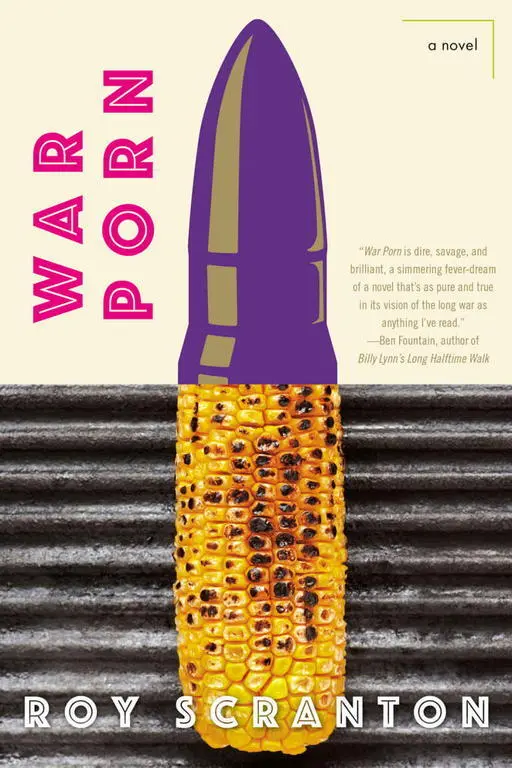
- Название:War Porn
- Автор:
- Издательство:Soho Press
- Жанр:
- Год:2016
- Город:New York
- ISBN:978-1-61695-715-5
- Рейтинг книги:5 / 5. Голосов: 1
-
Избранное:Добавить в избранное
- Отзывы:
-
Ваша оценка:
War Porn: краткое содержание, описание и аннотация
Предлагаем к чтению аннотацию, описание, краткое содержание или предисловие (зависит от того, что написал сам автор книги «War Porn»). Если вы не нашли необходимую информацию о книге — напишите в комментариях, мы постараемся отыскать её.
Videos, images, and narratives featuring graphic violence, often brought back from combat zones, viewed voyeuristically or for emotional gratification. Such media are often presented and circulated without context, though they may be used as evidence of war crimes. War porn is also, in Roy Scranton’s searing debut novel, a metaphor for the experience of war in the age of the War on Terror, the fracturing and fragmentation of perspective, time, and self that afflicts soldiers and civilians alike, and the global networks and face-to-face moments that suture our fragmented lives together. In
three lives fit inside one another like nesting dolls: a restless young woman at an end-of-summer barbecue in Utah; an American soldier in occupied Baghdad; and Qasim al-Zabadi, an Iraqi math professor, who faces the US invasion of his country with fear, denial, and perseverance. As
cuts from America to Iraq and back again, as home and hell merge, we come to see America through the eyes of the occupied, even as we see Qasim become a prisoner of the occupation. Through the looking glass of
, Scranton reveals the fragile humanity that connects Americans and Iraqis, torturers and the tortured, victors and their victims.
War Porn — читать онлайн бесплатно полную книгу (весь текст) целиком
Ниже представлен текст книги, разбитый по страницам. Система сохранения места последней прочитанной страницы, позволяет с удобством читать онлайн бесплатно книгу «War Porn», без необходимости каждый раз заново искать на чём Вы остановились. Поставьте закладку, и сможете в любой момент перейти на страницу, на которой закончили чтение.
Интервал:
Закладка:
It wasn’t like last time, when her daughters were still children and Mohammed was away, called up in the reserves. When she couldn’t sleep at night for fear that he would die and she wouldn’t even know. When her nightmares had woken the children and her days were a torment of waiting. She and her daughters had stayed with her mother, still alive then but deathly sick, in a tiny back room in her brother’s house. She could still sometimes smell the stench of her mother’s illness—it shamed her to think of, shamed her that she hadn’t been strong enough for both her mother and her daughters at the same time. But all she could do back then was wait, pray, write her husband, and keep busy. Sometimes she would shake so hard from fear her teeth chattered—not for herself, not even for her daughters, but for Mohammed. Every night she prayed for him to live. Every day she prepared herself for his death.
When he came back, she vowed never to let him leave her, and he hadn’t. He never took a business trip that kept him away more than one night. One night they could be apart, but no more. She wouldn’t allow it. She had him. She had her home. She was in her home, with her husband and her daughters and her sister, and all would be well. They could go through a hundred bombings and a thousand tribulations, and she would stand strong and guide her household with a firm and loving hand. Mohammed was there and she was strong. She was full of love and forbearance for all, even her son-in-law Ratib, even her no-good runt nephew Qasim, who was, under her care, healing, fighting off the infection, growing stronger—he could eat solid foods now and even sit up and read. She was motherly even with Othman, toward whom she had always been polite but distant, for reasons she refused to think about too much but had to do with the sparkle in the old poet’s eye. She gathered the household in her hands and set it to order. Even Maha, even Khalida she took in hand and set to work. There was chaos outside, but her family, her girls and her men, would sustain.
More bombs fell. There were rumors the Americans were coming from the east. From the west. From the south. They’d taken the Karbala Gap. They hadn’t taken the Karbala Gap. They were in Baghdad. They weren’t in Baghdad. The city choked on smog and explosions, lies and ash. The power went out for good, phones and water too. They ran the TV on the generator. The satellite came and went. They passed rumors from their neighbors at nighttime and rumors from their dreams at dawn. They began to hear artillery fire, big guns and mortars, distant thumps and nearer crashes.
One night, the Hizbis all left. The trenches and guard points around the city emptied, leaving ghost uniforms and boots and helmets, as if the men had evaporated where they stood. There were rumors US Marines had been seen in Al-Rusafa, on the east side of the Dijlah. Rumors the Kadhimaya Mosque had been bombed by stealth jets. Rumors Saddam had ordered the Fedayeen underground. Rumors Saddam was dead.
Suddenly, tanks in the streets. Humvees running down the avenues, heavy guns lobbing explosive rounds at houses and shadows. Rifles, machine guns, now the chatter of small-arms fire peppered their days and nights.
They quit going out. They locked the gate. They spoke to their neighbors through a crack in the second-story window. They didn’t go onto the roof. More explosions, more shooting. One night they listened to a tank roll down their street. They heard it stop. They heard the whine of its turret and heard its gun fire, the sound of hell cracking open, then again, feeling it throb in their bellies, knees, and thumbs. They bowed their heads and prayed. Allahu akbar, la ilaha illallah. They heard a machine gun go tock-tock-tock, then the tank rolled away. It’s target had been an empty house. Two gaping holes like blank eye sockets watched the street.
And more bombs fell. Allahu akbar, cried the muezzin, la ilaha illallah.
The blind man sat listening to the thunder, rubbing the stub of his tongue against the roof of his mouth. It was late. “Ah-ham,” he muttered.
Trouble had come again, as it had before and before and before. He remembered the British biplanes of his youth, when he’d first joined the army, the way you could hear the click of the bomb releasing—poisonous gray eggs tumbling into the Kurdish lines. And then… He remembered the Tommies in their pointy helmets, marching the road to Baghdad. Before them, the Turk—but he could only faintly summon the Turk. Until the Revolt and the Great War, the press of world events had seemed distant.
There was so much to remember, so much to recall. So much to see and know and feel, so many dead to hold on to. So many dead. Even one life was too full. Even one life was so long and bloody, he could hardly bear it.
But that’s what the poem was for. It was all there, his first love and his last, his long-dead father and long-lost sons, the fall of Baghdad and the coup d’état, the many revolutions. He remembered Mohammed al-Sadr’s Independence Guard and the revolt against the British, the bright hope—he was what, fourteen? The shining dream of nation… He remembered fighting the Kurds, his years in the army, his wife, young, the late twenties, the days of hope as the people grew slowly to become Iraq—then Independence: 1932. There were celebrations.
We might as well have been mourning, he thought, for all the good it did us.
In the Assyrian revolt, he killed Assyrians. In the Shi’a revolt, he killed Shi’a. He helped protect the Turkish Petroleum Company, then the Iraqi Petroleum Company, as they pumped out the people’s wealth and the people’s oil. A coup, an assassination, another coup, the British returned and occupied Basra, Umm Qasr… The collapse, the Farhud, Iraqi Jews blamed and murdered, banished. And then, in 1948, the Catastrophe, the diabolical birth of the Zionist state and the war in Palestine. He led his men through the Jezreel Valley and up the Tell el-Mutesellim, which the Jews call Har Megiddo, fighting the Zionists, and many good men died. All for nothing.
It was all written down, and all for nothing. And many years later, when he dared speak his mind, when he dared utter the truth, was he not punished? Saddam had struck him down—but had not killed him, and that was his mistake. For do I not yet write? Do I not mark the truth in my book? Do I not chronicle my poem for the ages, to be sung by my children’s children’s children? They would blind me, but I see the truth. I see the truth and I write the truth, and our truth shall outlive theirs.
He jabbed the stub of his tongue against his teeth and pressed his pen to the blackened page. Another sura remained to be written.
Qasim gathered his strength. He was better now, though his hand was still weak. He’d decided: staying in Baghdad was cowardice. He went to Mohammed and asked to use the Toyota to go home to his wife in Baqubah.
Mohammed was proud but worried. There would be many dangers, not just the Americans. There were looters, Fedayeen—who knew? And where would you get benzine if you needed it? And what would you do if something happened? Qasim agreed that it might be difficult but argued that he should go sooner rather than later. No one knew when, or if, things would settle down. There might never be a better time than now. “I understand,” Mohammed said, “but you’re still healing. Stay a few more days.”
“I’m strong now, Uncle. I’ve waited too long already.”
“Qasim, you’re still weak. You’re not well enough yet. I can’t let you go alone. It’s too dangerous.”
“Uncle, please,” Qasim said, going to one knee before Mohammed at the kitchen table. “I have to go.”
“No. You have to wait. I can’t spare myself or Ratib to take you, and we need the Toyota here. This is more of your foolishness. Wait until things calm down, and we’ll figure something out.”
Читать дальшеИнтервал:
Закладка:
Похожие книги на «War Porn»
Представляем Вашему вниманию похожие книги на «War Porn» списком для выбора. Мы отобрали схожую по названию и смыслу литературу в надежде предоставить читателям больше вариантов отыскать новые, интересные, ещё непрочитанные произведения.







Обсуждение, отзывы о книге «War Porn» и просто собственные мнения читателей. Оставьте ваши комментарии, напишите, что Вы думаете о произведении, его смысле или главных героях. Укажите что конкретно понравилось, а что нет, и почему Вы так считаете.