Roy Scranton - War Porn
Здесь есть возможность читать онлайн «Roy Scranton - War Porn» весь текст электронной книги совершенно бесплатно (целиком полную версию без сокращений). В некоторых случаях можно слушать аудио, скачать через торрент в формате fb2 и присутствует краткое содержание. Город: New York, Год выпуска: 2016, ISBN: 2016, Издательство: Soho Press, Жанр: prose_military, Современная проза, на английском языке. Описание произведения, (предисловие) а так же отзывы посетителей доступны на портале библиотеки ЛибКат.
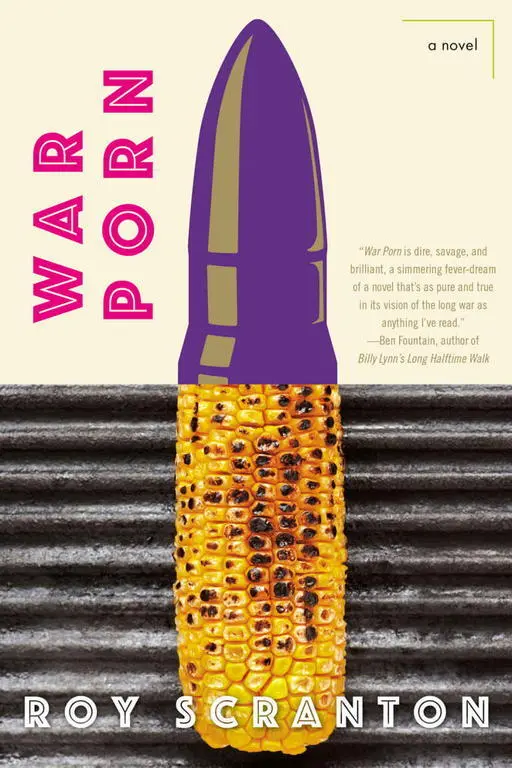
- Название:War Porn
- Автор:
- Издательство:Soho Press
- Жанр:
- Год:2016
- Город:New York
- ISBN:978-1-61695-715-5
- Рейтинг книги:5 / 5. Голосов: 1
-
Избранное:Добавить в избранное
- Отзывы:
-
Ваша оценка:
War Porn: краткое содержание, описание и аннотация
Предлагаем к чтению аннотацию, описание, краткое содержание или предисловие (зависит от того, что написал сам автор книги «War Porn»). Если вы не нашли необходимую информацию о книге — напишите в комментариях, мы постараемся отыскать её.
Videos, images, and narratives featuring graphic violence, often brought back from combat zones, viewed voyeuristically or for emotional gratification. Such media are often presented and circulated without context, though they may be used as evidence of war crimes. War porn is also, in Roy Scranton’s searing debut novel, a metaphor for the experience of war in the age of the War on Terror, the fracturing and fragmentation of perspective, time, and self that afflicts soldiers and civilians alike, and the global networks and face-to-face moments that suture our fragmented lives together. In
three lives fit inside one another like nesting dolls: a restless young woman at an end-of-summer barbecue in Utah; an American soldier in occupied Baghdad; and Qasim al-Zabadi, an Iraqi math professor, who faces the US invasion of his country with fear, denial, and perseverance. As
cuts from America to Iraq and back again, as home and hell merge, we come to see America through the eyes of the occupied, even as we see Qasim become a prisoner of the occupation. Through the looking glass of
, Scranton reveals the fragile humanity that connects Americans and Iraqis, torturers and the tortured, victors and their victims.
War Porn — читать онлайн бесплатно полную книгу (весь текст) целиком
Ниже представлен текст книги, разбитый по страницам. Система сохранения места последней прочитанной страницы, позволяет с удобством читать онлайн бесплатно книгу «War Porn», без необходимости каждый раз заново искать на чём Вы остановились. Поставьте закладку, и сможете в любой момент перейти на страницу, на которой закончили чтение.
Интервал:
Закладка:
Mohammed smiled, but not Othman. There was a sadness in his voice that slowly dissolved his friend’s smile, and brought Ratib back to the stretches of silence that followed the bombs in the south, after the wounded had been trucked away and the dead buried, when they waited for more death to come. The feeling of relief at having survived lent the dread a cutting edge, laced the bitterness with painful sweetness. “Please, beloved and righteous Mohammed, name of the prophet, by the grace of God and by the mercy of God and by the infinite compassion of God, go get your bottle. This may be our last night. The last night for Iraq.”
“There will always be Iraq.”
“Like there will always be Akkadians or Abbasids or Ottomans. A country is a day. Come. Let’s drink like men.”
“Ratib,” Mohammed said, “go upstairs to my office and in the filing cabinet, the tall gray one, open the bottom drawer. There, back behind some blueprints, you will find a bottle of oil to light our lamp tonight. The Johnnie Walker Black.”
“It’s not permitted that…”
“Ratib,” Mohammed snapped. “Your piety is commendable. Go get my bottle.”
Ratib fetched it, and the two older men began to drink. Eventually, after much cajoling, Ratib did too. In the meantime, Thurayya and Warda had returned from putting the children to bed and, seeing the bottle on the coffee table, went into the kitchen. The night passed slowly, the men drank slowly, sometimes going into the kitchen for water or chai or to speak with the women, and sometimes Warda or Thurayya would come into the living room to speak with the men. It was a quiet night, a night of conversations and stories of other wars, quiet but quickened by an unheard buzz. The radio played a low babble behind their talk, old patriotic songs and bullshit state bulletins. Just after midnight, as the men were becoming drowsy, Othman sat up with a start. Then they heard it: the distant chug of antiaircraft fire.
It went on for a while. Othman sat back down. The shooting stopped. Started. Stopped. A distant machine turning off and on, throwing metal into the sky.
Thurayya and Warda told the men good night and went upstairs to bed. Shortly after that, Mohammed told Othman to wake him if anything happened, then went upstairs himself. Eventually Ratib fell asleep in his chair. Only Othman was left, listening alone in the darkness. He had another drink, then another.
He woke, later, to the walls’ dull shaking. The world shuddered once, then again and again. Antiaircraft guns flacked in the distance. There were several more explosions, far but not that far, and more guns. Mohammed came downstairs and looked at Othman. The two men looked at Ratib, still asleep, and went swiftly upstairs to the roof. To the northeast, Baghdad was in flames.
A fireball lit the sky. Then came the boom.
“It’s all in the Karkh.”
“They must be going after the government buildings.”
Tracers cut the sky in loping arcs of red.
“I didn’t hear any planes.”
“No, you wouldn’t. They’re too high. Or stealth jets.”
Another fireball; they counted—one, two, three, boom. Red and yellow light flashed and shifted, the city danced with shadowed fire. They stayed and watched until the bombs then the AA guns stopped. In the east, the sky lightened to a smoky blue.
They went back downstairs and turned on the BBC. George W. Bush’s voice filled the room.
“My fellow citizens, at this hour American and coalition forces are in the early stages of military operations to disarm Iraq, to free its people, and to defend the world from grave danger. On my orders, coalition forces have begun striking selected targets of military importance to undermine Saddam Hussein’s ability to wage war. These are the opening stages of what will be a broad and concerted campaign…
“I want Americans and all the world to know that coalition forces will make every effort to spare innocent civilians from harm… Helping Iraqis achieve a united, stable, and free country will require our sustained commitment. We come to Iraq with respect for its citizens, for their great civilization, and for the religious faiths they practice. We have no ambition in Iraq, except to remove a threat and restore control of that country to its own people…
“Our nation enters this conflict reluctantly, yet our purpose is sure. The people of the United States and our friends and allies will not live at the mercy of an outlaw regime that threatens the peace with weapons of mass murder. We will meet that threat now… so that we do not have to meet it later with armies of firefighters and police and doctors on the streets of our cities… I assure you, this will not be a campaign of half-measures and we will accept no outcome but victory.
“My fellow citizens, the dangers to our country and the world will be overcome. We will pass through this time of peril and carry on the work of peace. We will defend our freedom. We will bring freedom to others. And we will prevail.
“May God bless our country and all who defend her.”
He lay in bed thinking, why them again? The two men, standing over him, one slowly waving his hammer.
“He’s not going to do what he said,” said one.
“He thinks he knows,” said the other.
A dull boom outside startled the men and they turned to the window. In the street, a line of Crusaders stood on guard, the blades of their swords flashing like needles, reflecting the fiery angels crossing the sky whose wings and hair burned gold, swooping and soaring. One broke off and shot jets of flame from his hands—a burst of white sparks, Crusaders tossed along the road like broken bottles, a crater. One of the iron men screamed, pointing his sword to the heavens, and leapt. An angel fell upon him, wrapping him in flames, but the leaping Crusader stabbed through the angel’s heart and the two, pinned, plummeted writhing to the ground with a crash.
Staring down from atop a minaret, her face impassive white split with black, silver robes flowing in the maelstrom wind, she watched. She turned slowly, her eyes passing over the city, and he could feel her watching him huddled there in his bed. He tried to push himself to his feet, but saw his hand was crippled, broken blue, a twisted bird’s claw.
He heard the dogs a moment before he saw them, a pack slavering down the alley at him. With his good hand he pushed himself up and fled, feeling her eyes on his neck.
He turned one corner, another, then another, through twisting streets of the old city, the dogs close behind, their shadows shuddering on the walls, another corner and another. He fell in through a bakery door.
“In the cow’s belly, we’re all milk,” the baker told him.
“I’m not milk, I’m water,” Qasim said back.
“We must pour milk into you.”
“No, no. I need water.”
“You’ll drink pig’s blood before you’re through.”
“I’ll drink dog’s blood.”
“Oh, the dogs will drink your blood.”
“I’m not a man. They won’t eat me.”
“They won’t spare you either. They’ll kill you and leave you.”
“I’ll run forever.”
“Your hand is running. That’s a runhand.”
Qasim clenched his blue birdhand in a fist.
“We must pour milk into you,” the baker said, hobbling around the counter and into the back. In the wall was a little door and the baker opened it and, bending over, entered. “Come, come,” he said, going into the darkness. Qasim followed.
He crouched in an endless tunnel of tearing wind. Machinery chugged somewhere, loud, behind the wailing. Down, down he went, until finally the tunnel opened in a series of small caves spiraling one around another. The spirals became sines, tubes, a line of interwoven waves, a spinning weave of light and shadow, until translucent gold in the darkness shone upon a door: The House.
Читать дальшеИнтервал:
Закладка:
Похожие книги на «War Porn»
Представляем Вашему вниманию похожие книги на «War Porn» списком для выбора. Мы отобрали схожую по названию и смыслу литературу в надежде предоставить читателям больше вариантов отыскать новые, интересные, ещё непрочитанные произведения.







Обсуждение, отзывы о книге «War Porn» и просто собственные мнения читателей. Оставьте ваши комментарии, напишите, что Вы думаете о произведении, его смысле или главных героях. Укажите что конкретно понравилось, а что нет, и почему Вы так считаете.