Roy Scranton - War Porn
Здесь есть возможность читать онлайн «Roy Scranton - War Porn» весь текст электронной книги совершенно бесплатно (целиком полную версию без сокращений). В некоторых случаях можно слушать аудио, скачать через торрент в формате fb2 и присутствует краткое содержание. Город: New York, Год выпуска: 2016, ISBN: 2016, Издательство: Soho Press, Жанр: prose_military, Современная проза, на английском языке. Описание произведения, (предисловие) а так же отзывы посетителей доступны на портале библиотеки ЛибКат.
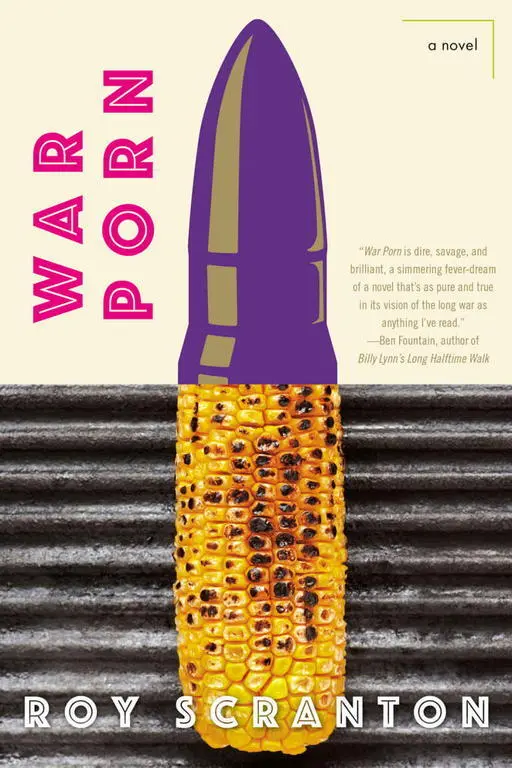
- Название:War Porn
- Автор:
- Издательство:Soho Press
- Жанр:
- Год:2016
- Город:New York
- ISBN:978-1-61695-715-5
- Рейтинг книги:5 / 5. Голосов: 1
-
Избранное:Добавить в избранное
- Отзывы:
-
Ваша оценка:
War Porn: краткое содержание, описание и аннотация
Предлагаем к чтению аннотацию, описание, краткое содержание или предисловие (зависит от того, что написал сам автор книги «War Porn»). Если вы не нашли необходимую информацию о книге — напишите в комментариях, мы постараемся отыскать её.
Videos, images, and narratives featuring graphic violence, often brought back from combat zones, viewed voyeuristically or for emotional gratification. Such media are often presented and circulated without context, though they may be used as evidence of war crimes. War porn is also, in Roy Scranton’s searing debut novel, a metaphor for the experience of war in the age of the War on Terror, the fracturing and fragmentation of perspective, time, and self that afflicts soldiers and civilians alike, and the global networks and face-to-face moments that suture our fragmented lives together. In
three lives fit inside one another like nesting dolls: a restless young woman at an end-of-summer barbecue in Utah; an American soldier in occupied Baghdad; and Qasim al-Zabadi, an Iraqi math professor, who faces the US invasion of his country with fear, denial, and perseverance. As
cuts from America to Iraq and back again, as home and hell merge, we come to see America through the eyes of the occupied, even as we see Qasim become a prisoner of the occupation. Through the looking glass of
, Scranton reveals the fragile humanity that connects Americans and Iraqis, torturers and the tortured, victors and their victims.
War Porn — читать онлайн бесплатно полную книгу (весь текст) целиком
Ниже представлен текст книги, разбитый по страницам. Система сохранения места последней прочитанной страницы, позволяет с удобством читать онлайн бесплатно книгу «War Porn», без необходимости каждый раз заново искать на чём Вы остановились. Поставьте закладку, и сможете в любой момент перейти на страницу, на которой закончили чтение.
Интервал:
Закладка:
A couple days later was the Fourth of July, and to celebrate they had a barbecue at the DFAC, hamburgers and hot dogs, and a Star Wars marathon in the compound’s decrepit movie theater. After dinner, as the sun went down, Healds and I and some other guys went up on the roof of our building and smoked.
The upper six floors were off-limits because of snipers. The first few times, we went cautiously, for souvenirs. Someone found a framed photo of Saddam. I got a hadji calendar and a picture of some guy getting an award. We also found what the Marines had left, a pile of shit, half-eaten MREs, and graffiti, FUCK IRAQ! and FIRST TO FIGHT!
Now we went up to watch the city: Sweeping cloverleaf interchanges, satellite dishes, pileups and traffic, six million souls watching DVDs and blogging, texting each other, hurrying through markets past sheep carcasses hung to bleed, spice sellers, bags of black, dried limes and reed baskets and old women haggling over okra, children running between stalls and down alleys, faces flickering in brass. Up out of the ancient garden of Sinbad’s Baghdad and the nightmare of Saddam’s Ba’athist dystopia grew the fiber-optic slums of tomorrowland, where shepherds on cell phones herded flocks down expressways and insurgents uploaded video beheadings, everything rising and falling as one, Hammurabi’s Code and Xboxes, the wheel and the Web, Ur to Persepolis to Sykes-Picot to CNN, a ruin outside of time, a twenty-first-century cyberpunk war-machine interzone.
We watched cars zoom by below while Kiowas whickered overhead. An RPG went off in the distance, yellow sparks shrieking up at the helicopters ceaselessly circling, and we cheered. Tracers rose and fell across the sky like burning neon.
“I can’t believe how much this place looks like L.A.,” Burnett said.
Foster flicked a butt over the side. “You up here last night?”
“Naw.”
“Wicked firefight.”
The sun bled magenta across the horizon and the lights of the shops and cafés carved tiny scallops in the purple night. Cars without headlights flew down the road, weaving crazily. No traffic lights, no cops, no streetlamps. We waited for collisions, explosions, gunshots.
“This stupid fucking place,” Burnett said. “I don’t know why we don’t just nuke it.”
“What, Burnett, you wanna miss this? This is your war, man.”
“Yeah. I wanted to meet interesting and stimulating people of an ancient culture and kill them.”
“Shut your fucking face, Pyle, you sick piece of shit. You do not deserve to survive in my Corps.”
“You ever notice Bullwinkle looks like Pyle?”
“Better watch out. He might shoot you in your underwear.”
“He better fucking kill me if he thinks he can take my underwear.”
“C’mon Burnett. I know you’re a secret hadji lover. You blow your wad every night dreaming of some fat-assed hadji bitch riding your cock all belelelelelelelelah.”
“See that bitch today in the blue jeans? Shit hot. Just like a fucking American girl.”
“Ass cheeks like melons. Honeydew melons.”
“That’s what I’m talking about, some sweet hadji ass.”
“Fuck that. Hadjis stink.”
“Shit, they wash up like normal people. Besides, you stink too.”
“Yeah, but I ain’t gonna fuck me.”
“Unless you get some hadji twat, you’re the only thing that’s fucking you. Just let yourself go for a few weeks till you’re really filthy. Then you won’t even notice.”
“Negative. They’re probably fucking diseased or some shit. Catch some freaky Mohammed clap.”
“The Black Syphilis.”
“Hell yeah. They got diseases here you ain’t even heard of. I heard the PA say watch out for leeshamaneesis. What the fuck’s that? We shoulda just fucking nuked this fucking fucked-up fuckhole from the fucking start. And then we come back and take the oil whenever we want.”
There was a flash in the distance.
“Oh shit you see that?”
“Looked like an IED.”
An Apache swung low over the gray cloud rising where the flash had gone off. We lit cigarettes as the last of the light faded, watching the Apache dip and swing like a giant angry wasp.
we are heroes in error;
what was said before is not important
The road bent away from the river and climbed a low berm. Oil glimmered purple in the sun in puddles, leaking through the berm’s sandy skin. To our left stood hovels wreathed in wires and clotheslines and a flock of raggedy children, shoeless, hooting and pointing. Far to the west lay the outskirts of Baghdad, smudged with haze. We turned past a wrecked BMP slouched inert on the shoulder.
“It’s right up here somewhere.”
We passed some blown-out tanks half hidden in the palms to our right, then hit a road leading around the village toward the city. The BC pointed and I turned and we drove by the husk of a building, just two ruined walls standing in the shimmer like sundial hands.
“It should be right here,” the BC said.
I scanned the earth for telltale fins, black mounds, glints of aluminum casing.
“Pull off over there.”
The BC and Lieutenant Krauss got out. C27 pulled aside and Staff Sergeant Smith joined them. I dismounted and stood smoking, watching the perimeter.
Two older hadjis in man-dresses walked toward us from the village. The flock of children from before overtook them, rushing at us.
“Ishta,” I shouted at the kids.
They jabbered back. “Mista, Mista! MRE!”
“Uskut,” I yelled. They laughed and capered.
We didn’t have a proper translator, but the manager of our hadji work team spoke a little English. The BC called him over and tried to ask the two villagers if they could help us find the ammo cache.
“Boom-boom,” Captain Yarrow said, gesturing with his hands.
The two villagers spoke. The team manager listened and nodded and smiled. “Is bombs no here,” he told Yarrow. “No bombs. People good, Bush good. Saddam bad.”
“No, not people’s bombs,” the BC said. “Old bombs. Saddam bombs. We’re here to clean them up. Tell them we’re here to take the old bombs away.”
“Oh yes, yes. Okay good. No problem.” The team manager turned back to the two men and they chatted back and forth.
“Mista!” one of the kids shouted at me. “You give me dollar!”
“Fuck off,” I said. “Ishta.”
They laughed and pushed each other toward me.
The team manager turned back to Captain Yarrow. “He say no bomb. Bomb bad. No bomb. He say Saddam bad, no bomb. He say al-Ameriki come, go bomb.”
“Go bomb?”
“Go bomb, bomb.” The team manager mimed hauling something off.
“Take bomb?”
“Yes, take bomb! No problem!”
“What about the tanks? Is there anything over by the tanks?”
“Tank?”
“The tanks.” Captain Yarrow hunched his shoulders and rocked his body back and forth. “Brrrrrrrrrum,” he growled, swinging his head side to side.
“Ah, tank, yes. No. Yes. No problem.”
The kids edged forward and I waved my rifle at them. They shrieked and scattered, then reformed in a mass. They laughed and pointed.
“Mista, you give me.”
“Mista, MRE.”
“Ishta,” I said.
“Ishta, ishta!” they shouted back.
“He say yes, bomb and tank, yes. There, there. No problem.”
“Great,” said Captain Yarrow. “Tell him thank you, and to keep his people back while we’re working. Tell him it’s very dangerous.”
We drove back up the road, where we found a small cache of tank and mortar rounds in the palms, hidden behind a berm. It took about two hours to clear everything. The kids kept running over and we had to keep chasing them off.
Driving down the road something exploded behind us, shaking our truck, then something else exploded and the radio squawked: “GRENADE GRENADE CRUSADER TWO-ZERO-THREE WHAT’S YOUR STATUS?”
Читать дальшеИнтервал:
Закладка:
Похожие книги на «War Porn»
Представляем Вашему вниманию похожие книги на «War Porn» списком для выбора. Мы отобрали схожую по названию и смыслу литературу в надежде предоставить читателям больше вариантов отыскать новые, интересные, ещё непрочитанные произведения.






Обсуждение, отзывы о книге «War Porn» и просто собственные мнения читателей. Оставьте ваши комментарии, напишите, что Вы думаете о произведении, его смысле или главных героях. Укажите что конкретно понравилось, а что нет, и почему Вы так считаете.