Roy Scranton - War Porn
Здесь есть возможность читать онлайн «Roy Scranton - War Porn» весь текст электронной книги совершенно бесплатно (целиком полную версию без сокращений). В некоторых случаях можно слушать аудио, скачать через торрент в формате fb2 и присутствует краткое содержание. Город: New York, Год выпуска: 2016, ISBN: 2016, Издательство: Soho Press, Жанр: prose_military, Современная проза, на английском языке. Описание произведения, (предисловие) а так же отзывы посетителей доступны на портале библиотеки ЛибКат.
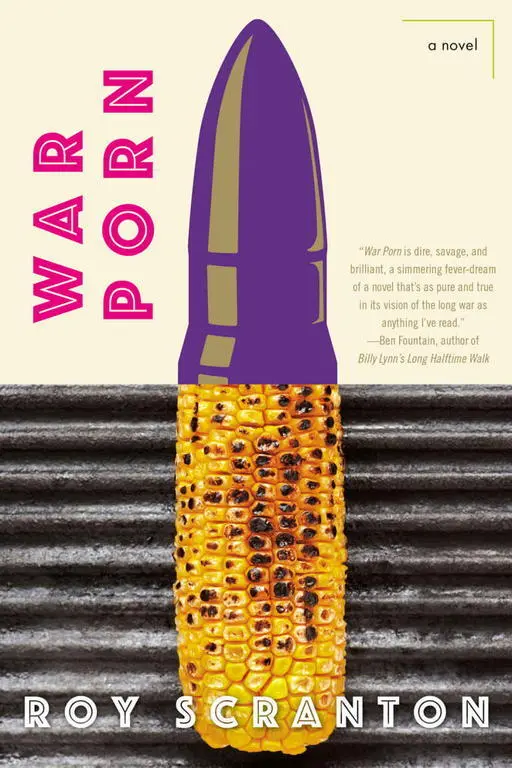
- Название:War Porn
- Автор:
- Издательство:Soho Press
- Жанр:
- Год:2016
- Город:New York
- ISBN:978-1-61695-715-5
- Рейтинг книги:5 / 5. Голосов: 1
-
Избранное:Добавить в избранное
- Отзывы:
-
Ваша оценка:
War Porn: краткое содержание, описание и аннотация
Предлагаем к чтению аннотацию, описание, краткое содержание или предисловие (зависит от того, что написал сам автор книги «War Porn»). Если вы не нашли необходимую информацию о книге — напишите в комментариях, мы постараемся отыскать её.
Videos, images, and narratives featuring graphic violence, often brought back from combat zones, viewed voyeuristically or for emotional gratification. Such media are often presented and circulated without context, though they may be used as evidence of war crimes. War porn is also, in Roy Scranton’s searing debut novel, a metaphor for the experience of war in the age of the War on Terror, the fracturing and fragmentation of perspective, time, and self that afflicts soldiers and civilians alike, and the global networks and face-to-face moments that suture our fragmented lives together. In
three lives fit inside one another like nesting dolls: a restless young woman at an end-of-summer barbecue in Utah; an American soldier in occupied Baghdad; and Qasim al-Zabadi, an Iraqi math professor, who faces the US invasion of his country with fear, denial, and perseverance. As
cuts from America to Iraq and back again, as home and hell merge, we come to see America through the eyes of the occupied, even as we see Qasim become a prisoner of the occupation. Through the looking glass of
, Scranton reveals the fragile humanity that connects Americans and Iraqis, torturers and the tortured, victors and their victims.
War Porn — читать онлайн бесплатно полную книгу (весь текст) целиком
Ниже представлен текст книги, разбитый по страницам. Система сохранения места последней прочитанной страницы, позволяет с удобством читать онлайн бесплатно книгу «War Porn», без необходимости каждый раз заново искать на чём Вы остановились. Поставьте закладку, и сможете в любой момент перейти на страницу, на которой закончили чтение.
Интервал:
Закладка:
This was the only time all day the city breathed softly, evoking in the pale, slanting light imagination’s Babylon, letting me feel for a moment like the poet I’d once been.
Later the temperature would top 115. Later I’d chamber a round and prepare to kill. Later the heat and stink of the day, the yelling faces, rancor, noise, and fury broiling and thrumming in waves off the blacktop would make me both want and fear needing a reason to pull my trigger, to feel my grip buck in my hands, to tear jagged red holes in men’s flesh.
But for a moment, I had white-gold serenity glazing still arcades. I prayed in the morning’s ease for grace, that I might find it somewhere out there over the wall and down shadowed alleys, under arabesques of purpled gold, beneath the hovering sun now glaring like a blooded eye.
Downstairs I showered in a makeshift stall between two ponchos. I put on the same sweat-stiff DCUs I’d worn the day before. I checked my combat load, made sure I had the BC’s MP3 speakers. I did daily maintenance: oil, coolant, transmission fluid, belts. Struts, CV joints, tires. I checked the undercarriage for leaks.
Healds, Porkchop, and I headed for breakfast, walking through the shattered central hall of the bombed-out six-story ruin that stood between us and the DFAC. Wires and collapsed supports hung from the ceiling like vines. Holes blasted in the floor dropped into stinking sub-basements full of soda cans and rot, pits yawned in dusty corridors littered with rock and paper, the scent of things long dead wafting up from below. Stories of crushed stone loomed overhead, gashed rebar jutting and bristling rust-red through tunnels of light burrowing into the sky, broken granite, twisted metal. Sometimes chips of stone clattered down rubble-choked stairs and we’d flinch, imagining the whole thing collapsing in on us.
We came through the shade into a flash of light outside the DFAC where three sergeants lounged smoking cigars. We cleared our rifles and went inside. We got our food and coffee, slathered our plates with Texas Pete, then sat in plastic chairs at plastic tables and watched Fox News on a widescreen TV.
Glory. The salt and pepper shakers, the napkins and plastic forks and Styrofoam plates, the bad food, the worse coffee, even the ketchup packets and juice boxes glowed sublime, transcendent, essential. I cherished it. I needed it. I relished those eggs and that coffee and the witless ballyhoo on the satellite news, dizzily feeling for a moment like a man in a world where people had opinions about events, a world of APRs and Dow Jones numbers and mortgages and “thinking outside the box,” a world where celebrities had breakdowns and we complained about cell-phone service and no one was trying to blow my fucking legs off.
A humvee burned, caught in the TV’s frame like a votive. Honorable Secretary Donald Rumsfeld came on and said we’d reached a turning point. He was followed by a man with mousse in his hair standing on the roof of the Palestine Hotel, then a commercial for Viagra.
The Hagakure reads: “The way of the samurai is found in death. When it comes to either/or, there is only the quick choice of death. It is not particularly difficult. Be determined and advance… If by setting one’s heart right every morning, one is able to live as though already dead, he gains freedom in the way.”
I checked my weapon, patted down my armor plates, reminded myself that I was a soldier and this was my fucking job and I would damn well try to die with a little dignity.
Beyond the gate, the roads were already thick with cars, the skies hazy with smog. The chaos out there, the crazy Arabic writing and abu-jabba jabber, the lawless traffic, the hidden danger and buzz and stray bullets and death looming from every overpass pressed down on my soul like a hot wind. On the streets, eyes scanning trash for loose wires, I sank into the standard daily manic paranoid torpor: trapped in a broiling box with big targets on the sides, damned to drive the same maze over and over till somebody killed me. We rolled down Canal Road, our escorts weaving in and out of traffic, our hemmets and Iraqi semis chugging behind.
“Whatcha wanna listen to?” Captain Yarrow yelled over the engine.
“Whattaya got?” I shouted back.
He waved his MP3 player at me. “All kinds of stuff,” he shouted.
I shrugged. He pushed a button. The Pet Shop Boys blasted from the speakers, singing “West End Girls.”
whenever possible, you should avoid kill zones
such as streets, alleys, and parks
Driving the edge of Sadr City through bumper-to-bumper afternoon jam, I heard Lieutenant Krauss behind me yell, “Weapon on the left.”
“What, where?” the BC shouted.
“Pistol. Pistol left side. Blue shirt. Pistol left.”
Captain Yarrow grabbed the hand mike and I looked left, taking the scene in a glance. First it was a mass of bodies on a corner then I picked out two people arguing, a blue shirt, a pistol. Captain Yarrow said something into the mike and Lieutenant Krauss shouted, “He’s aiming! He’s aiming!”
Then two loud bangs behind my head. Brass dinged off my Kevlar and fell burning down the back of my shirt.
In my periphery, movement: Iraqis scattered and dove to the ground.
“There he goes!” shouted Krauss and fired two more times. I scrunched my head into my shoulders like a turtle, closing the gap between my helmet and armor. His empty shells plinked off me.
More shooting, ours, into the crowd. Across the street I saw a woman in black jerk up and swing to the ground.
“Cease fire, cease fire!” Captain Yarrow shouted. “Keep driving! Keep driving!”
Our windows wide, we sucked down exhaust, refinery smoke, propane, and the reek of sun-baked sewage. Crowds and traffic, buildings looming, cars and stucco, and we come up out of the mess onto the expressway, flow at a dead stop. Honking cars clogged the lanes, bumpers scraping fenders, brown faces glaring. Up ahead we could see American soldiers blocking the road, gun trucks and air guards, some big Army goatfuck.
“IED?”
“Didn’t hear anything.”
“Maybe it hasn’t gone off.”
“Could be a checkpoint.”
“I think it’s an IED.”
Ahead on the left, Iraqis cut through a gap in the guardrail where a tank had rolled through. We moved slowly forward, filling the space opened by the fleeing cars.
“If it was a checkpoint, we’d be moving.”
An Iraqi car started backing toward us, angling for the gap, and I laid on the horn. The driver stuck his head out of his window and pointed where he wanted to go. I flipped him off and goosed forward, ramming his rear. His hands flew up in anger.
“Good job, Wilson.”
“You want me to go for that gap, sir?”
“No, we’ll wait it out.”
Twenty-five minutes later, broiling between the sun and the engine, I asked him again about the gap and he said yes. We edged over, nudging Iraqi cars out of the way with the brush guard, then swung around and took off back the way we came.
Captain Yarrow scanned the thick red and blue lines on his street map of Baghdad. He gave me directions across the 3ID bridge and into the Green Zone, but we got lost and wound up driving down a quiet, tree-lined boulevard along the Tigris. We passed a building spray-painted Iraqi Communist Workers’ Party and a looted bank. Iraqis ambled along like it was Unter den Linden: couples holding hands, businessmen talking, heads bowed like mendicants. The smell of the trees cut the stink of exhaust, and in the dappled shade, it seemed we’d fallen through a rabbit hole into some alternate Baghdad, an oasis of brotherhood and peace.
Then we came up on a bridge and into the burning sky. Refinery fires licked the horizon.
Читать дальшеИнтервал:
Закладка:
Похожие книги на «War Porn»
Представляем Вашему вниманию похожие книги на «War Porn» списком для выбора. Мы отобрали схожую по названию и смыслу литературу в надежде предоставить читателям больше вариантов отыскать новые, интересные, ещё непрочитанные произведения.








Обсуждение, отзывы о книге «War Porn» и просто собственные мнения читателей. Оставьте ваши комментарии, напишите, что Вы думаете о произведении, его смысле или главных героях. Укажите что конкретно понравилось, а что нет, и почему Вы так считаете.