William Gerhardie - Futility
Здесь есть возможность читать онлайн «William Gerhardie - Futility» весь текст электронной книги совершенно бесплатно (целиком полную версию без сокращений). В некоторых случаях можно слушать аудио, скачать через торрент в формате fb2 и присутствует краткое содержание. Год выпуска: 2012, Издательство: Melville House, Жанр: Классическая проза, на английском языке. Описание произведения, (предисловие) а так же отзывы посетителей доступны на портале библиотеки ЛибКат.
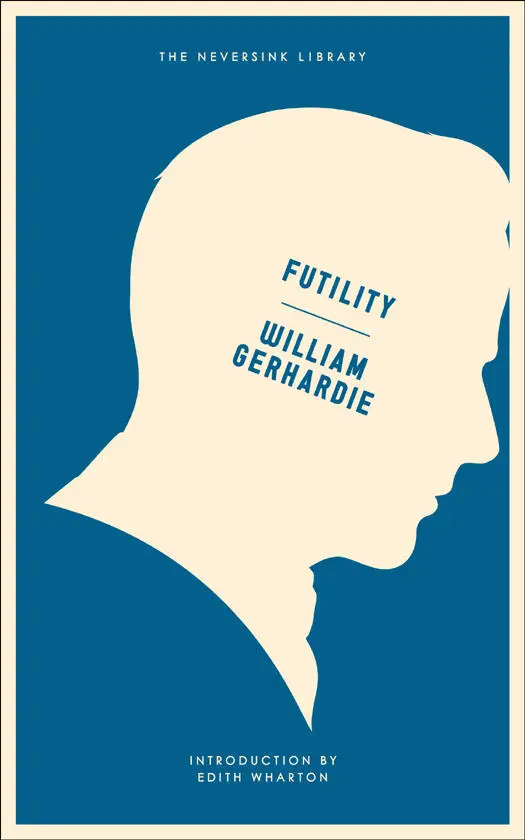
- Название:Futility
- Автор:
- Издательство:Melville House
- Жанр:
- Год:2012
- ISBN:нет данных
- Рейтинг книги:4 / 5. Голосов: 1
-
Избранное:Добавить в избранное
- Отзывы:
-
Ваша оценка:
Futility: краткое содержание, описание и аннотация
Предлагаем к чтению аннотацию, описание, краткое содержание или предисловие (зависит от того, что написал сам автор книги «Futility»). Если вы не нашли необходимую информацию о книге — напишите в комментариях, мы постараемся отыскать её.
one of the century's neglected masterpieces.
It tells the story of someone very similar to Gerhardie himself: a young Englishman raised in Russia who returns to St. Petersburg and falls in love with the daughter of a hilariously dysfunctional family-all played out with the armies of the Russian Revolution marching back and forth outside the parlor window.
Part British romantic comedy, part Russian social realism, and with a large cast of memorable characters, this astoundingly funny and poignant novel is the tale of people persisting in love and hope despite the odds.
Futility — читать онлайн бесплатно полную книгу (весь текст) целиком
Ниже представлен текст книги, разбитый по страницам. Система сохранения места последней прочитанной страницы, позволяет с удобством читать онлайн бесплатно книгу «Futility», без необходимости каждый раз заново искать на чём Вы остановились. Поставьте закладку, и сможете в любой момент перейти на страницу, на которой закончили чтение.
Интервал:
Закладка:
“Why can’t he break with the past? Why should the past always hold him? Why should he always bear the burden of these families? Andrei Andreiech! he hasn’t lived yet. For was that life? I want to help him, make him happy, rid him of these petty worries, these mean intrigues. I want to help, to help, to help. But how can I help?… I thought, all night I thought out solutions, and then I came to what seemed to me the one reasonable, the only just solution. I proposed that we should commit suicide together. But, Andrei Andreiech, he doesn’t seem to be very keen on it. Poor boy, with all these ugly worries he is becoming horribly materialistic.”
They took me that evening to see Zina’s people. They lived across the river, over on the Petersburg side, a very large family in a small flat. There were innumerable aunts and uncles, sisters-in-law, second cousins, and such-like relatives, and of course a collection of giggling flappers practising the piano; two ancient grandfathers — the oldest thing in veterans — who had outlived their welcome, whose deaths, in fact, were looked forward to with undisguised impatience and freely discussed at meals; and a middle-aged doctor, his own health no better for his profession, with only a poor practice to support that swarm; and Nikolai Vasilievich, the mine-owner, standing behind them all like a benediction.
In addition there was Uncle Kostia, who, from what I could see, was living on the resources of his younger brother, Zina’s father. Uncle Kostia was a writer. Yet, though he had attained middle age, Uncle Kostia had never published a line. His two departments were history and philosophy, and every one in the family had the greatest respect for Uncle Kostia and thought him very clever. Later I had occasion to observe Uncle Kostia at closer range. He would wake up extremely late and would then sit for hours on his bed, thinking. He did not communicate his thoughts to anybody else; but all the members of the family took it for granted that Uncle Kostia was very clever. Uncle Kostia rarely dressed and rarely washed. When at length he parted with his bed he would stroll about through all the rooms in his dressing-gown, and think. No one spoke to him because, for one thing, all were frightened of displaying their ignorance in conversation, for Uncle Kostia was very clever, and also, I think, because they were loth to interrupt the flow of Uncle Kostia’s thoughts. At length he would settle down at a writing-table near the window in his brother’s study, and then for a long time Uncle Kostia would rub his eyes. In a languid manner he would dip his pen into ink and his hand would proceed to sketch diagrams and flowers on the margin of his foolscap, and Uncle Kostia would stare long at the window. Perhaps a buzzing fly endeavouring to find an exit would arrest his flow of thoughts, or would promote them — who knows? — but Uncle Kostia would grow very still: and one by one the members of the family would leave the room on tiptoe, and the last one out would shut the door behind him noiselessly. For Uncle Kostia was writing. What he wrote no one knew; he had never breathed a word about it to anyone. All we knew was that Uncle Kostia was very clever. From what I could make out no one had ever seen a line of his writing. But that he thought a great deal there was no question. His life was spent in contemplation. But what it was he contemplated, equally no one knew.
Such was the family to which Nikolai Vasilievich extended his protectorate.
“He is such a really good man,” confided Zina’s mother, a grey-haired, God-fearing old lady. “And to be pursued by those two wicked women both bent on making his life miserable, these cold and heartless daughters who laugh at him … their own father! Andrei Andreiech, our lives are muddled up enough, God forgive us, and none of us knows where he is or how he stands or what he is about; but there are things that in our hearts we know we mustn’t do. And for his own daughters to go spying on their father, God forgive me, is the very limit. Just think of it, Andrei Andreiech, just think of it! Last Sunday, Zina tells me, she was about to meet Nikolai in the Summer Garden, and — can you imagine it? — his two daughters — I forget which two — with that Baron of theirs, followed them, pursued them wherever they went, giggling all the while as loud as they could, giggling.… Nikolai and Zina were finally compelled to board a tram-car to escape their pursuit. He wept when he came to me, Andrei Andreiech, and I have never seen Nikolai weep before. He said he hadn’t thought it possible of his daughters, Andrei Andreiech.”
After a somewhat sketchy dinner we all decided to go to the Saburov Theatre to see a new play. We proceeded accordingly in seven cabs and settled down in five boxes.
About half-way through the first act I perceived Nikolai give a start and then grow pale. I followed his gaze and then looked straight before me. In a box almost opposite our own sat Fanny Ivanovna, Sonia, Nina, Vera, Kniaz, and Baron Wunderhausen. For some absurd reason I, too, felt guilty and uncomfortable to the last degree, almost as if I had been caught red-handed in some disreputable act. Whether the silly play bored them and they were, like us, disgusted with the characteristic utterances of some well-to-do ex-student in the play holding forth on the disillusionment of life, or whether the sight of the prodigal Nicholas in his congenial surroundings was too much for Fanny Ivanovna; but they all left the theatre before the curtain fell on act two.
Nikolai Vasilievich seemed unusually morose as we drove home that night through the deserted streets of Petersburg. “The most perplexing thing about it all, Andrei Andreiech,” said he, “is … well, it’s like that fable of Krilov.” And he quoted the fable with that curious pride that Russians usually take in Krilov’s un-Russian (I think British) common sense, as he instanced the case of the load pulled jointly by the swan, the crab and the pike in their several characteristically individual directions with the distressing result — the moral! — that the load, the fabulist tells us, is to-day exactly where it was before they had started on their expedition. The paradox of Nikolai’s position was that he had fled from his many family responsibilities to this engaging flapper precisely because of the intolerable burden of so many responsibilities — and had incurred additional ones.
X
NOW WHEN I ASK MYSELF HOW I COULD HAVE SO hopelessly misgauged the situation, I find it difficult to give a clear account of it. I had wanted to help, to be a friend to all those helpless, charming and kind-hearted people.… Anyhow, it was my first experience of “intervention.”
That night I lay awake in bed, planning how I could straighten out the tangle. Was it not, I pondered, up to me, their mutual confidant, to see that these childish, fascinating people did not destroy each other’s lives in their muddle-headedness and inertia? The older people had all blundered. Nina had been on a mission to Moscow, and Nina had failed. They would trust me, I said, to act for the best. And was it not a worthy task to save these helpless creatures from so much misery and anguish? Well, of course it was. Suddenly I felt violently enthusiastic. I felt so violently enthusiastic that I jumped out of bed. I paced the floor that midnight hour, thinking with a Napoleonic concentration.
I felt, as my thoughts ran ahead of me, that the dramatis personae of this human drama was much too long to enable me to assign successfully to each character the part he was to play in his colleagues’ lives. I switched on the light over my writing-table and began to write. I wrote down their names in two columns. Then I perceived that the two columns did not serve my purpose; so I drew arrows and circles round the names and endeavoured to arrange them in sets and groups according to my own ideas as to how they should be mated. I began by mating Nina with myself. This was easy enough: it was obvious. I consented to make Baron Wunderhausen a present of Sonia. That was done. Obviously Kniaz would have to go on living on Nikolai Vasilievich till some employment could be found for him. I should have to go into this question later; examine the shares, see what possibilities they had of ever going up, and so on. Now so much was settled. Of course, Magda Nikolaevna must have her divorce. No useful purpose would be served by putting spokes in her wheel, by hindering her in her praiseworthy intention to marry Čečedek, that Austrian fellow, who was extraordinarily vealthy. They wanted all the money they could get. But the condition of this concession should be that Čečedek must agree to share the brunt of supporting the multitudinous families, dependents and hangers-on with Nikolai Vasilievich until such time at least as something more definite could be known about the mines. It might be advisable to sell the mines and re-purchase the mortgaged house in the Mohovaya. But that was a detail that could be settled later. I felt that I was getting on marvellously. Now that Nicholas and Magda were divorced (I could not help calling them by their diminutives, for I felt so much older and wiser than they, having taken them in hand), Nicholas must be prevailed upon to marry Fanny. This step would do much to relieve the tension and prevent bad blood between the two. It would secure Fanny’s prestige in her own eyes and would consolidate her position in regard to her people in Germany. Now, Fanny having been granted this very liberal concession, which after all was nothing short of her one real great ambition in life, she on her part should not be allowed to impede Zina’s passionate desire to live with Nicholas: a gratification, as a matter of fact, demanded by the overpowering love of two human beings; and Zina, who had always been prepared for anything from suicide upward, would not begrudge Fanny the formal and somewhat hollow superiority of wedlock; while Zina’s people, in the face of the considerable financial assistance that they would continue to receive at the hands of Nikolai, and Magda’s future husband would find that their objection carried little moral weight. There remained Vera. She should stay, provisionally, with Fanny Ivanovna and Nicholas, the latter spending as much time in Fanny’s household as might be deemed fit or practicable. Vera hated her father, and Eisenstein, poor as he was, would not be likely to demand his daughter. Now Eisenstein should not be left without a job. He must leave the Stock Exchange. That was absolutely necessary. His dental qualifications should be looked into; and he might — but that at any rate was not of the first importance — be made assistant to Zina’s father (though unfortunately the latter’s practice was all too small already). How to enlarge the practice could be settled afterwards. Uncle Kostia’s manuscripts would have to be examined, and possibly some of his deeper thoughts might be published with advantage. Now, having made these few preliminary arrangements, it was imperative to ensure the financial working of this new combine. Well, expenses must be cut down all round. Nicholas and Čečedek should not be taxed too heavily, for if they went bankrupt then the whole new structure would collapse like a pack of cards. I would set myself, at an early date, to examine very carefully the requirements of the various families and hangers-on.
Читать дальшеИнтервал:
Закладка:
Похожие книги на «Futility»
Представляем Вашему вниманию похожие книги на «Futility» списком для выбора. Мы отобрали схожую по названию и смыслу литературу в надежде предоставить читателям больше вариантов отыскать новые, интересные, ещё непрочитанные произведения.












Обсуждение, отзывы о книге «Futility» и просто собственные мнения читателей. Оставьте ваши комментарии, напишите, что Вы думаете о произведении, его смысле или главных героях. Укажите что конкретно понравилось, а что нет, и почему Вы так считаете.