Jan Slauerhoff - The Forbidden Kingdom
Здесь есть возможность читать онлайн «Jan Slauerhoff - The Forbidden Kingdom» весь текст электронной книги совершенно бесплатно (целиком полную версию без сокращений). В некоторых случаях можно слушать аудио, скачать через торрент в формате fb2 и присутствует краткое содержание. Год выпуска: 2013, Издательство: Pushkin Press, Жанр: Классическая проза, на английском языке. Описание произведения, (предисловие) а так же отзывы посетителей доступны на портале библиотеки ЛибКат.
- Название:The Forbidden Kingdom
- Автор:
- Издательство:Pushkin Press
- Жанр:
- Год:2013
- ISBN:нет данных
- Рейтинг книги:5 / 5. Голосов: 1
-
Избранное:Добавить в избранное
- Отзывы:
-
Ваша оценка:
The Forbidden Kingdom: краткое содержание, описание и аннотация
Предлагаем к чтению аннотацию, описание, краткое содержание или предисловие (зависит от того, что написал сам автор книги «The Forbidden Kingdom»). Если вы не нашли необходимую информацию о книге — напишите в комментариях, мы постараемся отыскать её.
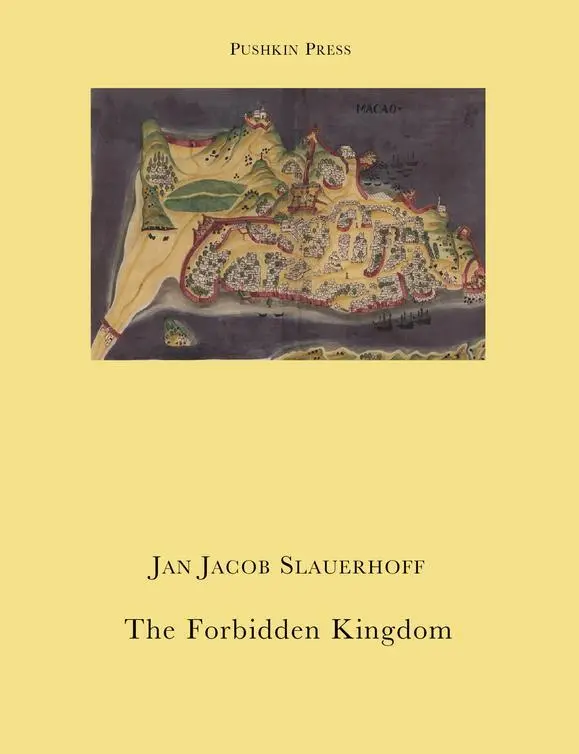
brings together the seemingly unrelated lives of a twentieth-century ship's radio operator and the sixteenth-century Portuguese poet-in-exile Luis Camoes.
Jacob Slauerhoff draws his reader into a dazzling world of exoticism, betrayal, and exile, where past and present merge and the possibility of death is never far away.
Born in The Netherlands in 1898, upon graduating from university
signed up as a ship's surgeon with the Dutch East India Company. He was at sea throughout his life, voyaging to the Far East, Latin America, and Africa.
The Forbidden Kingdom — читать онлайн бесплатно полную книгу (весь текст) целиком
Ниже представлен текст книги, разбитый по страницам. Система сохранения места последней прочитанной страницы, позволяет с удобством читать онлайн бесплатно книгу «The Forbidden Kingdom», без необходимости каждый раз заново искать на чём Вы остановились. Поставьте закладку, и сможете в любой момент перейти на страницу, на которой закончили чтение.
Интервал:
Закладка:
Still, the villages grew larger and more numerous, and had often grown together; one day there was no end to the houses, there was no longer any sign of the plain and finally the last remaining Chinese guide admitted that they had found their way into a town where he no longer knew the way. Behind the houses they saw a high black embankment, where the walled city must be. But how were they to find their way round it? In a kind of square Metelho gave the order to stop and sounded the assembly, but the trumpets were drowned by blaring and wailing flutes being blown inside the houses. Coelho, the commander of the embassy guard, had the ten musketeers he still had with him fire a few salvos in the air, expecting that the stragglers would hear and the people who were crowding in from every alley issuing into the square would rapidly retreat.
But from all sides this was met with explosions more violent than cannon fire, of which it at first reminded them; in panic they sought cover behind in the rubbish heaps which made the clay square a hilly terrain. But no one was hit and they saw that they had dirtied themselves for nothing, and were a laughing-stock for the population. Thousands of grinning faces and high-pitched screaming showed that the white barbarians’ fear had been noticed and that the fireworks, which would not have troubled a child of two, had terrified them. The furious Coelho now wanted to have his men fire into the crowd, but fortunately Metelho stopped him in time.
They stood indecisively bunched together: neither Metelho nor Coelho had any idea what to do. Camões yelled at them to advance into the widest of the streets, and later they could get their bearings with the compass. Coelho ordered him to be quiet, but Metelho seized on his advice: anything was better than standing still, and they advanced. The Chinese let them leave in silence, without attempting to surround them. The fireworks also stopped. They had been taken for demons and their departure was imagined to be the outcome of the wailing flutes and fireworks and who knows how many prayers. All windows and doors were closed, and only the smell of rotting food and large numbers of bodies squashed together proved that they were not passing through a city of the dead.
After three hours they encountered the high black rampart that they had seen in the distance a while ago. A deep dry moat went round it. At long intervals semicircular watchtowers protruded from the smooth wall; it was as if they were standing in front of one of their own castles, only ten times higher and infinitely larger. They halted by a group of bare trees. Twelve men were missing, four of whom returned in the course of the day; one told how he had been tortured, another that he had been pulled into a house by a woman, who had only released him after he had possessed her, while the other two were completely blank.
The next morning he wanted to set out and skirt the city, but the Chinese guide prevented him, saying that the city was vast and that he should send an embassy to the Mandarin and ask his permission to pass through it. The guide gestured towards one of the watchtowers, and a narrow gate opened above the bank of the moat. Coelho and two soldiers bravely went in. One of the chests of presents for the Emperor was unloaded.
It was three days before the wall opened again and the messengers were let out. The Mandarin’s answer was that the embassy would be escorted by Hu Nan as far as the shores of Lake Dongting, which was as far as his jurisdiction extended. But first the banner with its arrogant declaration must be lowered, since there were no countries that were not tributaries and subjects of the Emperor. Then the barbarians would be conducted through the streets, but they were unworthy to behold the glory of the eternal Hantan and would be led blindfolded through its streets and past its palaces. Otherwise they would have to go around the walls, which would take many, many days.
They held a council. The disaster cancelled out rank, and each man gave his opinion. In order to shorten the journey, most of them wanted to give in and allow themselves to be taken through the city, although this was humiliating. But Metelho and Camões and a few others stood firm; better remain outside the city than put yourself in their power blindfolded. Once within the walls, who could guarantee that they would ever re-emerge?
The minority won the day and the next day they proceeded slowly, preceded by four guides and followed by a large troop of soldiers along the wall. The distance between the towers was sometimes half a mile, sometimes a hundred metres. The wall was high everywhere, but at a place where it had half collapsed, they had a view of the city, which extended inwards as far as the eye could see.
Night fell, but they did not rest. The Portuguese hoped to be out in the plain by daybreak. Lanterns were alight on the tower and the commotion in the city did not die out even for an hour. As dawn rose the view was the same: on the one side scattered groups of houses, on the other the dry moat, the wall and the towers. Dazed and down-hearted, the Portuguese marched on; a flock caught between the mute guides ahead and the military escort behind. Suddenly Camões, now walking beside Metelho’s litter, stopped and let out a cry and picked up a scrap of cloth to which he had tied a stone. “Halt!” Metelho poked his head out of the litter, and then stood up.
“We’ll never get out of here. It’s as I thought. Last night in the dark, I threw this stone attached to this cloth down. We are being led round and round the city, in order to be impressed by its size. Take the guides hostage.”
The soldiers seized the guides, and the troop of Chinese charged to their rescue, but a few shots kept them at a distance; a full battle did not ensue.
Under threat of death, with a musket at their ear, the guides led them away from the city. The banner was unfurled again. They did not look back, and went faster and faster. Not until afternoon were they allowed to rest, since no one could go any further. The city, which had seemed so insurmountably huge and high, now lay on the horizon low and insignificant in the setting sun, and a large cloud could cover it all.
They now made directly towards the north; often there were no roads and they went straight across rocky plains, straight across soggy rice fields, at first a delicious feeling for battered feet, but soon unbearable when they had to pull their feet out of the mud at every step. Finally they reached a narrow river, which according to the guides was a tributary of the Yangtze, while others thought it flowed into Lake Dongting, but at any rate they could follow it. They set up camp; while the sick were allowed to rest, the others went in search of boats. After a week they returned with four narrow hulls, with room for no more than half the company. The rest marched along the banks. At first the boats made slow progress, because of the winding course and the slow flow, and those on foot had been at their camp for hours before they arrived. But soon the river became fast and straighter, the boats disappeared from sight and often it was the middle of the night before those on land caught up with them. Finally one night Camões and the ten soldiers on foot lost sight of the boats completely, even the next morning. Left to their fate, they stood on the bank of a huge yellow expanse of water. The other side could not be seen and there was no sign of the boats. They waited and waited. Had the boats crossed or capsized? Then they saw something black in the distance that drifted closer, and towards evening one of the soldiers swam out to it. It was one of the boats. Lost or left behind?
Again there was a dispute. Half of the soldiers embarked in order to find the embassy. They did not return. Camões felt a longing stir that he thought was dead. Again he was a free agent in the great kingdom. He could go where he wished. And he went back, taking a few others with him, either to reach Macao again, or to die in some distant desolate plain.
Читать дальшеИнтервал:
Закладка:
Похожие книги на «The Forbidden Kingdom»
Представляем Вашему вниманию похожие книги на «The Forbidden Kingdom» списком для выбора. Мы отобрали схожую по названию и смыслу литературу в надежде предоставить читателям больше вариантов отыскать новые, интересные, ещё непрочитанные произведения.








Обсуждение, отзывы о книге «The Forbidden Kingdom» и просто собственные мнения читателей. Оставьте ваши комментарии, напишите, что Вы думаете о произведении, его смысле или главных героях. Укажите что конкретно понравилось, а что нет, и почему Вы так считаете.