Jan Slauerhoff - The Forbidden Kingdom
Здесь есть возможность читать онлайн «Jan Slauerhoff - The Forbidden Kingdom» весь текст электронной книги совершенно бесплатно (целиком полную версию без сокращений). В некоторых случаях можно слушать аудио, скачать через торрент в формате fb2 и присутствует краткое содержание. Год выпуска: 2013, Издательство: Pushkin Press, Жанр: Классическая проза, на английском языке. Описание произведения, (предисловие) а так же отзывы посетителей доступны на портале библиотеки ЛибКат.
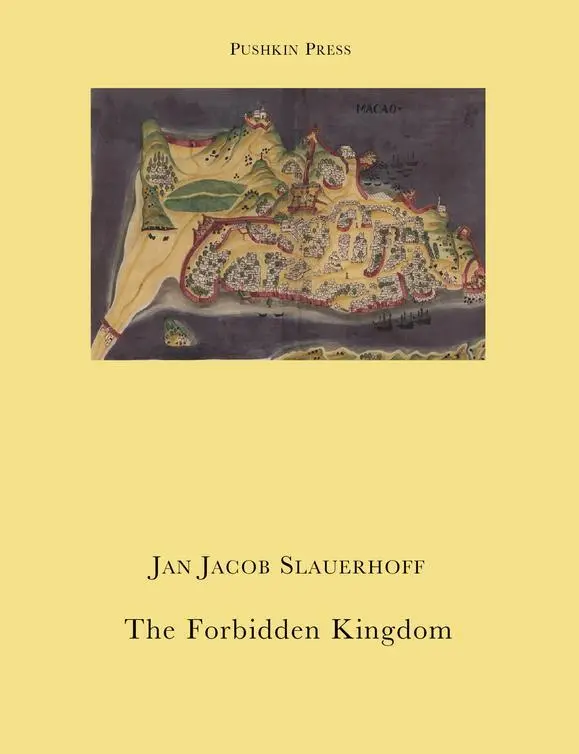
- Название:The Forbidden Kingdom
- Автор:
- Издательство:Pushkin Press
- Жанр:
- Год:2013
- ISBN:нет данных
- Рейтинг книги:5 / 5. Голосов: 1
-
Избранное:Добавить в избранное
- Отзывы:
-
Ваша оценка:
The Forbidden Kingdom: краткое содержание, описание и аннотация
Предлагаем к чтению аннотацию, описание, краткое содержание или предисловие (зависит от того, что написал сам автор книги «The Forbidden Kingdom»). Если вы не нашли необходимую информацию о книге — напишите в комментариях, мы постараемся отыскать её.
brings together the seemingly unrelated lives of a twentieth-century ship's radio operator and the sixteenth-century Portuguese poet-in-exile Luis Camoes.
Jacob Slauerhoff draws his reader into a dazzling world of exoticism, betrayal, and exile, where past and present merge and the possibility of death is never far away.
Born in The Netherlands in 1898, upon graduating from university
signed up as a ship's surgeon with the Dutch East India Company. He was at sea throughout his life, voyaging to the Far East, Latin America, and Africa.
The Forbidden Kingdom — читать онлайн бесплатно полную книгу (весь текст) целиком
Ниже представлен текст книги, разбитый по страницам. Система сохранения места последней прочитанной страницы, позволяет с удобством читать онлайн бесплатно книгу «The Forbidden Kingdom», без необходимости каждый раз заново искать на чём Вы остановились. Поставьте закладку, и сможете в любой момент перейти на страницу, на которой закончили чтение.
Интервал:
Закладка:
The sun was still shining briefly above the horizon, like a life lived in vain that is about to be extinguished and flares up again for a moment for one last time, as if the draught is blowing up from the grave and fans it before it is smothered. The wind began to worry at the palms and leafed through their ranks. I remember a paradise that I had wilfully abandoned, a garden sloping down to the sea, evergreen towards the ever-rustling sea, a cool abode containing sufficient for the frugal needs of one blissfully happy. What was I still doing there? I would be bored there now, since in the meantime I have been damned, but not according to the rules of the barren hopeless faith that had been introduced to the coasts of Northern Ireland by the dominant British (who have it so cushy here on earth that they can paint the hereafter in colours as ghastly as they wish). This faith deprived the indigent coast-dwellers of the only thing that, even as a delusion, could bring them a little joy. In southern and central Ireland people live drunkenly and happily, in the northwest soberly and disastrously.
No, being damned means being bored everywhere, except in the most wretched places. That explains the consuming yearning for polar regions, deserts and endless seas.
I walked on again with my head empty of thoughts. The next morning I was in Me…e…. The whole day long I walked along the quay, and at night I slept behind a few chests, woke feeling shattered, almost determined to return to S… where there was at least a bed, an open fire and silence. But again I walked along the quays; a big ship was about to depart, the cranes had already stopped working, but the gangplank had not yet been pulled up, and a body was carried ashore on a stretcher. I pushed forward and heard “They can’t sail now, radios have just been made compulsory. We can’t find anyone qualified.”
Radio? How long ago was it since I had sat in a narrow cabin with headphones on and my hand on the key? It was very difficult in my tattered clothing to get through to anyone in command, but once I unfolded a few sheets of paper from my pocket — carefully, as they were falling apart — and my identity and status became known, I was welcomed and signed up on the spot. So I again left my old life behind me and assumed my previous one. Forward, or rather backward, to the deserted kingdoms of the Far East with a longing equal to the hate with which I had once left them.
I did my work moderately well, slowly, sometimes missing an important instruction, a letter or figure for a stock market or weather report. News reports did not have to be recorded in those days, but the Captain still required me to do so. He was one of those unfortunates who are physically at sea but whose thoughts are at home and on land, and was keen on the most trivial items. So I concocted bank robberies, anniversaries and elopements. I sometimes had the urge to insert old facts and dates as if they were new, such as the rounding of the Cape in 1502, but I restrained myself.
The Captain, who had at first given me a warm welcome, soon became more measured and gruffer, passing me without greeting; we often ignored each other completely, the only two denizens of the upper deck.
The heat of the Red Sea didn’t bother me. The Indian Ocean, storm-free, indeed almost totally calm at this time of year, stretched to every horizon like a soft grey layer of molten metal. But I felt comfortable in those hot, indistinct distances, which as it were blurred my own existence. Not until we had passed Colombo did I again have a feeling of oppression, as if I were reverting to my old ways, which I thought I had abandoned for good.
Up to then my work had been passable, but from now on it became definitely inadequate, as if I were deaf. No, not deaf, but other sounds kept buzzing around the signals I had to take down; did they originate in my middle ear or in the ether? I don’t know, but my fictitious reports were now noticed, as well as the fact that I had taken down courses and weather reports completely wrongly.
As a result I was paid off in Singapore with the offer of a second-class passage back, which I refused; with considerable effort I obtained two weeks’ subsistence pay. With a chest and a suitcase I slunk into the cheapest, hottest hotel in Singapore, European only in name, and sweated my way through the afternoons beneath a mosquito screen so full of holes that I had to watch out for mosquitoes on all sides. Time passed, my money ran out, and with my last few dollars I went to a concert that I was mad keen to see: a violinist whom I had heard in Brighton in the good old days. This extravagance was my salvation. In the interval I bumped into a British passenger, for whom I had managed to send off a coded telegram, quite against the rules (I was still good at transmitting!). I was about to pass him with a brief greeting; I knew by experience the great contempt in which the British hold half-castes — they always took me for one, because of my complexion and my eyes — but he seemed to realize my plight, caught up with me and spoke to me. The next day he helped me regain my self-respect by inviting me to stay with him in the most fashionable hotel in Singapore and advanced me the money for a new suit. (I have always resisted the notion, but it’s true: good clothes and a good shave do more to raise one’s morale than a whole night spent reading Goethe or Confucius, to say nothing of the Bible.)
Two days later I had a post on a small coaster that scavenged for cargo between second-rate ports, that was a regular visitor to Ningbo, but never went to Shanghai or Manila, the two metropolises so yearned for by the carousing and drinking seaman. The officers had fully adapted to the situation; except for the second officer, who collected porcelain and actually took the trouble to spend his wages on worthless crockery in antique shops, and the third officer, who had taken it into his head to find a virgin and to that end scoured the houses and flower boats, no one set foot on shore. The Captain went to and from his office by rickshaw; during the day traders came on board with everything a seaman needed, and at night they came alongside in their sampans to rent out their daughters. For most of them the shore was unknown territory; they lived on their ship as on a tiny asteroid, where life was different. True, they ate, drank and breathed, but they scarcely spoke or walked about. As if even the small space left on deck among the cranes and hatches was too much, they all stuck in their cabins, in the winter by a paraffin stove and in summer without a fan, drinking hot grog whether cold or hot, since there was no ice on board and in the heat a hot drink is better than a lukewarm one. Some played cards without a break for days on end and at first I joined in the cards and the drinking; I was soon able to withdraw from the former, for the valid reason that I had lost my wages for months in advance, while I continued drinking until the day I noticed my hands were trembling as I operated my instruments and that the roaring in my ears was almost drowning out the signals.
At that point I gave up drink too, felt like a wet rag for a week, and drank coffee day and night. Finally I was over it. Now I ought to give up smoking too. But what is life worth if one isn’t addicted to some vice or other, especially on a dirty iron ship with nothing on it, not a bush, not a bird, that is evidence of some other life? Actually, sailing should mean living in a perpetual state of intoxication, and indeed all the others obeyed this moral law, but I had to stay in contact with the outside world, and could not afford to let myself fall into a swoon, while a helmsman, as long as his eyes are open, can distinguish lights and plot a course, and a stoker, a veteran of service in the tropics, ninety-nine percent of the time nodding off on his bench, can still tell from a slight variation in the pounding of the engine whether something is wrong. Perhaps I am doing these gentlemen an injustice, but they did me one too, so I ask no forgiveness.
Читать дальшеИнтервал:
Закладка:
Похожие книги на «The Forbidden Kingdom»
Представляем Вашему вниманию похожие книги на «The Forbidden Kingdom» списком для выбора. Мы отобрали схожую по названию и смыслу литературу в надежде предоставить читателям больше вариантов отыскать новые, интересные, ещё непрочитанные произведения.










Обсуждение, отзывы о книге «The Forbidden Kingdom» и просто собственные мнения читателей. Оставьте ваши комментарии, напишите, что Вы думаете о произведении, его смысле или главных героях. Укажите что конкретно понравилось, а что нет, и почему Вы так считаете.