Charles Dickens - The Pickwick Papers
Здесь есть возможность читать онлайн «Charles Dickens - The Pickwick Papers» весь текст электронной книги совершенно бесплатно (целиком полную версию без сокращений). В некоторых случаях можно слушать аудио, скачать через торрент в формате fb2 и присутствует краткое содержание. Жанр: Классическая проза, Юмористическая проза, на английском языке. Описание произведения, (предисловие) а так же отзывы посетителей доступны на портале библиотеки ЛибКат.
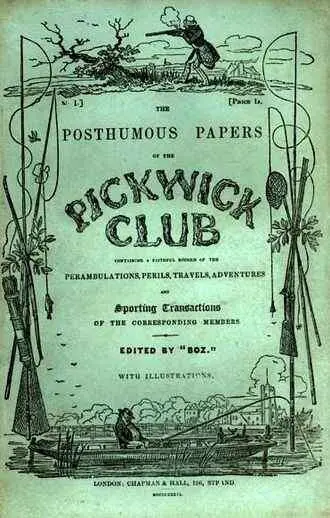
- Название:The Pickwick Papers
- Автор:
- Жанр:
- Год:неизвестен
- ISBN:нет данных
- Рейтинг книги:4 / 5. Голосов: 1
-
Избранное:Добавить в избранное
- Отзывы:
-
Ваша оценка:
The Pickwick Papers: краткое содержание, описание и аннотация
Предлагаем к чтению аннотацию, описание, краткое содержание или предисловие (зависит от того, что написал сам автор книги «The Pickwick Papers»). Если вы не нашли необходимую информацию о книге — напишите в комментариях, мы постараемся отыскать её.
Mr Samuel Pickwick is the founder and chairman of the absurd Pickwick Club which consists of Tupman, Snodgrass and Winkle who go through various amusing and often quite ridiculous adventures that are scantily interconnected and never amount to a complex sequence of events until perhaps Pickwick’s disastrous misunderstanding with Mrs Bardell.
The Pickwick Papers — читать онлайн бесплатно полную книгу (весь текст) целиком
Ниже представлен текст книги, разбитый по страницам. Система сохранения места последней прочитанной страницы, позволяет с удобством читать онлайн бесплатно книгу «The Pickwick Papers», без необходимости каждый раз заново искать на чём Вы остановились. Поставьте закладку, и сможете в любой момент перейти на страницу, на которой закончили чтение.
Интервал:
Закладка:
‘O’ mine, Sir?’ exclaimed Mr. Weller.
‘You recollect the gentleman very well, I dare say, Sam,’ replied Mr. Pickwick, ‘or else you are more unmindful of your old acquaintances than I think you are. Hush! not a word, Sam; not a syllable. Here he is.’
As Mr. Pickwick spoke, Jingle walked up. He looked less miserable than before, being clad in a half–worn suit of clothes, which, with Mr. Pickwick’s assistance, had been released from the pawnbroker’s. He wore clean linen too, and had had his hair cut. He was very pale and thin, however; and as he crept slowly up, leaning on a stick, it was easy to see that he had suffered severely from illness and want, and was still very weak. He took off his hat as Mr. Pickwick saluted him, and seemed much humbled and abashed at the sight of Sam Weller.
Following close at his heels, came Mr. Job Trotter, in the catalogue of whose vices, want of faith and attachment to his companion could at all events find no place. He was still ragged and squalid, but his face was not quite so hollow as on his first meeting with Mr. Pickwick, a few days before. As he took off his hat to our benevolent old friend, he murmured some broken expressions of gratitude, and muttered something about having been saved from starving.
‘Well, well,’ said Mr. Pickwick, impatiently interrupting him, ‘you can follow with Sam. I want to speak to you, Mr. Jingle. Can you walk without his arm?’
‘Certainly, sir — all ready — not too fast — legs shaky — head queer — round and round — earthquaky sort of feeling — very.’
‘Here, give me your arm,’ said Mr. Pickwick.
‘No, no,’ replied Jingle; ‘won’t indeed — rather not.’
‘Nonsense,’ said Mr. Pickwick; ‘lean upon me, I desire, Sir.’
Seeing that he was confused and agitated, and uncertain what to do, Mr. Pickwick cut the matter short by drawing the invalided stroller’s arm through his, and leading him away, without saying another word about it.
During the whole of this time the countenance of Mr. Samuel Weller had exhibited an expression of the most overwhelming and absorbing astonishment that the imagination can portray. After looking from Job to Jingle, and from Jingle to Job in profound silence, he softly ejaculated the words, ‘Well, I am damn’d!’ which he repeated at least a score of times; after which exertion, he appeared wholly bereft of speech, and again cast his eyes, first upon the one and then upon the other, in mute perplexity and bewilderment.
‘Now, Sam!’ said Mr. Pickwick, looking back.
‘I’m a–comin’, sir,’ replied Mr. Weller, mechanically following his master; and still he lifted not his eyes from Mr. Job Trotter, who walked at his side in silence. Job kept his eyes fixed on the ground for some time. Sam, with his glued to Job’s countenance, ran up against the people who were walking about, and fell over little children, and stumbled against steps and railings, without appearing at all sensible of it, until Job, looking stealthily up, said—
‘How do you do, Mr. Weller?’
‘It is him!’ exclaimed Sam; and having established Job’s identity beyond all doubt, he smote his leg, and vented his feelings in a long, shrill whistle.
‘Things has altered with me, sir,’ said Job.
‘I should think they had,’ exclaimed Mr. Weller, surveying his companion’s rags with undisguised wonder. ‘This is rayther a change for the worse, Mr. Trotter, as the gen’l’m’n said, wen he got two doubtful shillin’s and sixpenn’orth o’ pocket–pieces for a good half–crown.’
‘It is indeed,’ replied Job, shaking his head. ‘There is no deception now, Mr. Weller. Tears,’ said Job, with a look of momentary slyness — ‘tears are not the only proofs of distress, nor the best ones.’
‘No, they ain’t,’ replied Sam expressively.
‘They may be put on, Mr. Weller,’ said Job.
‘I know they may,’ said Sam; ‘some people, indeed, has ’em always ready laid on, and can pull out the plug wenever they likes.’
‘Yes,’ replied Job; ‘but these sort of things are not so easily counterfeited, Mr. Weller, and it is a more painful process to get them up.’ As he spoke, he pointed to his sallow, sunken cheeks, and, drawing up his coat sleeve, disclosed an arm which looked as if the bone could be broken at a touch, so sharp and brittle did it appear, beneath its thin covering of flesh.
‘Wot have you been a–doin’ to yourself?’ said Sam, recoiling.
‘Nothing,’ replied Job.
‘Nothin’!’ echoed Sam.
‘I have been doin’ nothing for many weeks past,’ said Job; and eating and drinking almost as little.’
Sam took one comprehensive glance at Mr. Trotter’s thin face and wretched apparel; and then, seizing him by the arm, commenced dragging him away with great violence.
‘Where are you going, Mr. Weller?’ said Job, vainly struggling in the powerful grasp of his old enemy. ‘Come on,’ said Sam; ‘come on!’ He deigned no further explanation till they reached the tap, and then called for a pot of porter, which was speedily produced.
‘Now,’ said Sam, ‘drink that up, ev’ry drop on it, and then turn the pot upside down, to let me see as you’ve took the medicine.’
‘But, my dear Mr. Weller,’ remonstrated Job.
‘Down vith it!’ said Sam peremptorily.
Thus admonished, Mr. Trotter raised the pot to his lips, and, by gentle and almost imperceptible degrees, tilted it into the air. He paused once, and only once, to draw a long breath, but without raising his face from the vessel, which, in a few moments thereafter, he held out at arm’s length, bottom upward. Nothing fell upon the ground but a few particles of froth, which slowly detached themselves from the rim, and trickled lazily down.
‘Well done!’ said Sam. ‘How do you find yourself arter it?’
‘Better, Sir. I think I am better,’ responded Job.
‘O’ course you air,’ said Sam argumentatively. ‘It’s like puttin’ gas in a balloon. I can see with the naked eye that you gets stouter under the operation. Wot do you say to another o’ the same dimensions?’
‘I would rather not, I am much obliged to you, Sir,’ replied Job — ‘much rather not.’
‘Vell, then, wot do you say to some wittles?’ inquired Sam.
‘Thanks to your worthy governor, Sir,’ said Mr. Trotter, ‘we have half a leg of mutton, baked, at a quarter before three, with the potatoes under it to save boiling.’
‘Wot! Has he been a–purwidin’ for you?’ asked Sam emphatically.
‘He has, Sir,’ replied Job. ‘More than that, Mr. Weller; my master being very ill, he got us a room — we were in a kennel before — and paid for it, Sir; and come to look at us, at night, when nobody should know. Mr. Weller,’ said Job, with real tears in his eyes, for once, ‘I could serve that gentleman till I fell down dead at his feet.’
‘I say!’ said Sam, ‘I’ll trouble you, my friend! None o’ that!’
Job Trotter looked amazed.
‘None o’ that, I say, young feller,’ repeated Sam firmly. ‘No man serves him but me. And now we’re upon it, I’ll let you into another secret besides that,’ said Sam, as he paid for the beer. ‘I never heerd, mind you, or read of in story–books, nor see in picters, any angel in tights and gaiters — not even in spectacles, as I remember, though that may ha’ been done for anythin’ I know to the contrairey — but mark my vords, Job Trotter, he’s a reg’lar thoroughbred angel for all that; and let me see the man as wenturs to tell me he knows a better vun.’ With this defiance, Mr. Weller buttoned up his change in a side pocket, and, with many confirmatory nods and gestures by the way, proceeded in search of the subject of discourse.
Читать дальшеИнтервал:
Закладка:
Похожие книги на «The Pickwick Papers»
Представляем Вашему вниманию похожие книги на «The Pickwick Papers» списком для выбора. Мы отобрали схожую по названию и смыслу литературу в надежде предоставить читателям больше вариантов отыскать новые, интересные, ещё непрочитанные произведения.








Обсуждение, отзывы о книге «The Pickwick Papers» и просто собственные мнения читателей. Оставьте ваши комментарии, напишите, что Вы думаете о произведении, его смысле или главных героях. Укажите что конкретно понравилось, а что нет, и почему Вы так считаете.