Charles Dickens - The Pickwick Papers
Здесь есть возможность читать онлайн «Charles Dickens - The Pickwick Papers» весь текст электронной книги совершенно бесплатно (целиком полную версию без сокращений). В некоторых случаях можно слушать аудио, скачать через торрент в формате fb2 и присутствует краткое содержание. Жанр: Классическая проза, Юмористическая проза, на английском языке. Описание произведения, (предисловие) а так же отзывы посетителей доступны на портале библиотеки ЛибКат.
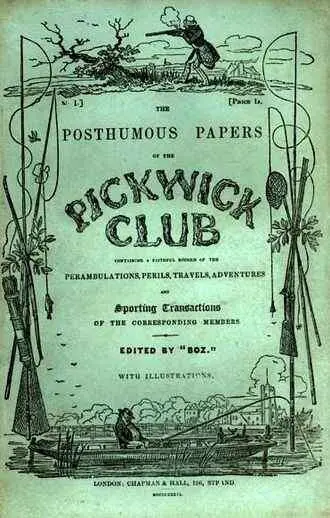
- Название:The Pickwick Papers
- Автор:
- Жанр:
- Год:неизвестен
- ISBN:нет данных
- Рейтинг книги:4 / 5. Голосов: 1
-
Избранное:Добавить в избранное
- Отзывы:
-
Ваша оценка:
The Pickwick Papers: краткое содержание, описание и аннотация
Предлагаем к чтению аннотацию, описание, краткое содержание или предисловие (зависит от того, что написал сам автор книги «The Pickwick Papers»). Если вы не нашли необходимую информацию о книге — напишите в комментариях, мы постараемся отыскать её.
Mr Samuel Pickwick is the founder and chairman of the absurd Pickwick Club which consists of Tupman, Snodgrass and Winkle who go through various amusing and often quite ridiculous adventures that are scantily interconnected and never amount to a complex sequence of events until perhaps Pickwick’s disastrous misunderstanding with Mrs Bardell.
The Pickwick Papers — читать онлайн бесплатно полную книгу (весь текст) целиком
Ниже представлен текст книги, разбитый по страницам. Система сохранения места последней прочитанной страницы, позволяет с удобством читать онлайн бесплатно книгу «The Pickwick Papers», без необходимости каждый раз заново искать на чём Вы остановились. Поставьте закладку, и сможете в любой момент перейти на страницу, на которой закончили чтение.
Интервал:
Закладка:
Nor was Mrs. Weller behind–hand in doing justice to the composition. The good lady began by protesting that she couldn’t touch a drop — then took a small drop — then a large drop — then a great many drops; and her feelings being of the nature of those substances which are powerfully affected by the application of strong waters, she dropped a tear with every drop of negus, and so got on, melting the feelings down, until at length she had arrived at a very pathetic and decent pitch of misery.
The elder Mr. Weller observed these signs and tokens with many manifestations of disgust, and when, after a second jug of the same, Mr. Stiggins began to sigh in a dismal manner, he plainly evinced his disapprobation of the whole proceedings, by sundry incoherent ramblings of speech, among which frequent angry repetitions of the word ‘gammon’ were alone distinguishable to the ear.
‘I’ll tell you wot it is, Samivel, my boy,’ whispered the old gentleman into his son’s ear, after a long and steadfast contemplation of his lady and Mr. Stiggins; ‘I think there must be somethin’ wrong in your mother–in–law’s inside, as vell as in that o’ the red–nosed man.’
‘Wot do you mean?’ said Sam.
‘I mean this here, Sammy,’ replied the old gentleman, ‘that wot they drink, don’t seem no nourishment to ’em; it all turns to warm water, and comes a–pourin’ out o’ their eyes. ‘Pend upon it, Sammy, it’s a constitootional infirmity.’
Mr. Weller delivered this scientific opinion with many confirmatory frowns and nods; which, Mrs. Weller remarking, and concluding that they bore some disparaging reference either to herself or to Mr. Stiggins, or to both, was on the point of becoming infinitely worse, when Mr. Stiggins, getting on his legs as well as he could, proceeded to deliver an edifying discourse for the benefit of the company, but more especially of Mr. Samuel, whom he adjured in moving terms to be upon his guard in that sink of iniquity into which he was cast; to abstain from all hypocrisy and pride of heart; and to take in all things exact pattern and copy by him (Stiggins), in which case he might calculate on arriving, sooner or later at the comfortable conclusion, that, like him, he was a most estimable and blameless character, and that all his acquaintances and friends were hopelessly abandoned and profligate wretches. Which consideration, he said, could not but afford him the liveliest satisfaction.
He furthermore conjured him to avoid, above all things, the vice of intoxication, which he likened unto the filthy habits of swine, and to those poisonous and baleful drugs which being chewed in the mouth, are said to filch away the memory. At this point of his discourse, the reverend and red–nosed gentleman became singularly incoherent, and staggering to and fro in the excitement of his eloquence, was fain to catch at the back of a chair to preserve his perpendicular.
Mr. Stiggins did not desire his hearers to be upon their guard against those false prophets and wretched mockers of religion, who, without sense to expound its first doctrines, or hearts to feel its first principles, are more dangerous members of society than the common criminal; imposing, as they necessarily do, upon the weakest and worst informed, casting scorn and contempt on what should be held most sacred, and bringing into partial disrepute large bodies of virtuous and well–conducted persons of many excellent sects and persuasions. But as he leaned over the back of the chair for a considerable time, and closing one eye, winked a good deal with the other, it is presumed that he thought all this, but kept it to himself.
During the delivery of the oration, Mrs. Weller sobbed and wept at the end of the paragraphs; while Sam, sitting cross–legged on a chair and resting his arms on the top rail, regarded the speaker with great suavity and blandness of demeanour; occasionally bestowing a look of recognition on the old gentleman, who was delighted at the beginning, and went to sleep about half–way.
‘Brayvo; wery pretty!’ said Sam, when the red–nosed man having finished, pulled his worn gloves on, thereby thrusting his fingers through the broken tops till the knuckles were disclosed to view. ‘Wery pretty.’
‘I hope it may do you good, Samuel,’ said Mrs. Weller solemnly.
‘I think it vill, mum,’ replied Sam.
‘I wish I could hope that it would do your father good,’ said Mrs. Weller.
‘Thank’ee, my dear,’ said Mr. Weller, senior. ‘How do you find yourself arter it, my love?’
‘Scoffer!’ exclaimed Mrs. Weller.
‘Benighted man!’ said the Reverend Mr. Stiggins.
‘If I don’t get no better light than that ‘ere moonshine o’ yourn, my worthy creetur,’ said the elder Mr. Weller, ‘it’s wery likely as I shall continey to be a night coach till I’m took off the road altogether. Now, Mrs. We, if the piebald stands at livery much longer, he’ll stand at nothin’ as we go back, and p’raps that ‘ere harm–cheer ’ull be tipped over into some hedge or another, with the shepherd in it.’
At this supposition, the Reverend Mr. Stiggins, in evident consternation, gathered up his hat and umbrella, and proposed an immediate departure, to which Mrs. Weller assented. Sam walked with them to the lodge gate, and took a dutiful leave.
‘A–do, Samivel,’ said the old gentleman.
‘Wot’s a–do?’ inquired Sammy.
‘Well, good–bye, then,’ said the old gentleman.
‘Oh, that’s wot you’re aimin’ at, is it?’ said Sam. ‘Good–bye!’
‘Sammy,’ whispered Mr. Weller, looking cautiously round; ‘my duty to your gov’nor, and tell him if he thinks better o’ this here bis’ness, to com–moonicate vith me. Me and a cab’net–maker has dewised a plan for gettin’ him out. A pianner, Samivel — a pianner!’ said Mr. Weller, striking his son on the chest with the back of his hand, and falling back a step or two.
‘Wot do you mean?’ said Sam.
‘A pianner–forty, Samivel,’ rejoined Mr. Weller, in a still more mysterious manner, ‘as he can have on hire; vun as von’t play, Sammy.’
‘And wot ’ud be the good o’ that?’ said Sam.
‘Let him send to my friend, the cabinet–maker, to fetch it back, Sammy,’ replied Mr. Weller. ‘Are you avake, now?’
‘No,’ rejoined Sam.
‘There ain’t no vurks in it,’ whispered his father. ‘It ’ull hold him easy, vith his hat and shoes on, and breathe through the legs, vich his holler. Have a passage ready taken for ‘Merriker. The ‘Merrikin gov’ment will never give him up, ven vunce they find as he’s got money to spend, Sammy. Let the gov’nor stop there, till Mrs. Bardell’s dead, or Mr. Dodson and Fogg’s hung (wich last ewent I think is the most likely to happen first, Sammy), and then let him come back and write a book about the ‘Merrikins as’ll pay all his expenses and more, if he blows ’em up enough.’
Mr. Weller delivered this hurried abstract of his plot with great vehemence of whisper; and then, as if fearful of weakening the effect of the tremendous communication by any further dialogue, he gave the coachman’s salute, and vanished.
Sam had scarcely recovered his usual composure of countenance, which had been greatly disturbed by the secret communication of his respected relative, when Mr. Pickwick accosted him.
‘Sam,’ said that gentleman.
‘Sir,’ replied Mr. Weller.
‘I am going for a walk round the prison, and I wish you to attend me. I see a prisoner we know coming this way, Sam,’ said Mr. Pickwick, smiling.
‘Wich, Sir?’ inquired Mr. Weller; ‘the gen’l’m’n vith the head o’ hair, or the interestin’ captive in the stockin’s?’
‘Neither,’ rejoined Mr. Pickwick. ‘He is an older friend of yours, Sam.’
Читать дальшеИнтервал:
Закладка:
Похожие книги на «The Pickwick Papers»
Представляем Вашему вниманию похожие книги на «The Pickwick Papers» списком для выбора. Мы отобрали схожую по названию и смыслу литературу в надежде предоставить читателям больше вариантов отыскать новые, интересные, ещё непрочитанные произведения.




Обсуждение, отзывы о книге «The Pickwick Papers» и просто собственные мнения читателей. Оставьте ваши комментарии, напишите, что Вы думаете о произведении, его смысле или главных героях. Укажите что конкретно понравилось, а что нет, и почему Вы так считаете.