Герман Мелвилл - Typee
Здесь есть возможность читать онлайн «Герман Мелвилл - Typee» весь текст электронной книги совершенно бесплатно (целиком полную версию без сокращений). В некоторых случаях можно слушать аудио, скачать через торрент в формате fb2 и присутствует краткое содержание. Год выпуска: 2014, Издательство: epubBooks Classics, Жанр: Классическая проза, на английском языке. Описание произведения, (предисловие) а так же отзывы посетителей доступны на портале библиотеки ЛибКат.
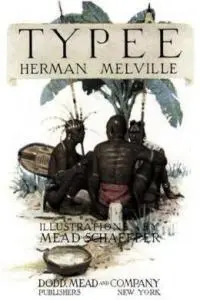
- Название:Typee
- Автор:
- Издательство:epubBooks Classics
- Жанр:
- Год:2014
- ISBN:нет данных
- Рейтинг книги:4 / 5. Голосов: 1
-
Избранное:Добавить в избранное
- Отзывы:
-
Ваша оценка:
Typee: краткое содержание, описание и аннотация
Предлагаем к чтению аннотацию, описание, краткое содержание или предисловие (зависит от того, что написал сам автор книги «Typee»). Если вы не нашли необходимую информацию о книге — напишите в комментариях, мы постараемся отыскать её.
Typee — читать онлайн бесплатно полную книгу (весь текст) целиком
Ниже представлен текст книги, разбитый по страницам. Система сохранения места последней прочитанной страницы, позволяет с удобством читать онлайн бесплатно книгу «Typee», без необходимости каждый раз заново искать на чём Вы остановились. Поставьте закладку, и сможете в любой момент перейти на страницу, на которой закончили чтение.
Интервал:
Закладка:
It was not, however, alone the murder of the stranger that overcame me with gloom. I shuddered at the idea of the subsequent fate his inanimate body might have met with. Was the same doom reserved for me? Was I destined to perish like him—like him, perhaps, to be devoured, and my head to be preserved as a fearful memento of the event? My imagination ran riot in these horrid speculations, and I felt certain that the worst possible evils would befall me. But whatever were my misgivings, I studiously concealed them from the islanders, as well as the full extent of the discovery I had made.
Although the assurances which the Typees had often given me, that they never ate human flesh, had not convinced me that such was the case, yet, having been so long a time in the valley without witnessing anything which indicated the existence of the practice, I began to hope that it was an event of very rare occurrence, and that I should be spared the horror of witnessing it during my stay among them: but, alas! these hopes were soon destroyed.
It is a singular fact, that in all our accounts of cannibal tribes we have seldom received the testimony of an eye–witness to the revolting practice. The horrible conclusion has almost always been derived from the second–hand evidence of Europeans, or else from the admissions of the savages themselves, after they have in some degree become civilized. The Polynesians are aware of the detestation in which Europeans hold this custom, and therefore invariably deny its existence, and, with the craft peculiar to savages, endeavour to conceal every trace of it.
But to my story.
About a week after my discovery of the contents of the mysterious packages, I happened to be at the Ti, when another war–alarm was sounded, and the natives, rushing to their arms, sallied out to resist a second incursion of the Happar invaders. The same scene was again repeated, only that on this occasion I heard at least fifteen reports of muskets from the mountains during the time that the skirmish lasted. An hour or two after its termination, loud pæans chanted through the valley announced the approach of the victors. I stood with Kory–Kory leaning against the railing of the pi–pi, awaiting their advance, when a tumultuous crowd of islanders emerged with wild clamours from the neighbouring groves. In the midst of them marched four men, one preceding the other at regular intervals of eight or ten feet, with poles of a corresponding length, extending from shoulder to shoulder, to which were lashed with thongs of bark three long narrow bundles, carefully wrapped in ample coverings of freshly plucked palm–leaves, tacked together with slivers of bamboo. Here and there upon these green winding–sheets might be seen the stains of blood, while the warriors who carried the frightful burdens displayed upon their naked limbs similar sanguinary marks. The shaven head of the foremost had a deep gash upon it, and the clotted gore which had flowed from the wound remained in dry patches around it. The savage seemed to be sinking under the weight he bore. The bright tattooing upon his body was covered with blood and dust; his inflamed eyes rolled in their sockets, and his whole appearance denoted extraordinary suffering and exertion; yet, sustained by some powerful impulse, he continued to advance, while the throng around him with wild cheers sought to encourage him. The other three men were marked about the arms and breasts with several slight wounds, which they somewhat ostentatiously displayed.
These four individuals, having been the most active in the late encounter, claimed the honour of bearing the bodies of their slain enemies to the Ti. Such was the conclusion I drew from my own observations, and, as far as I could understand, from the explanation which Kory–Kory gave me.
The royal Mehevi walked by the side of these heroes. He carried in one hand a musket, from the barrel of which was suspended a small canvas pouch of powder, and in the other he grasped a short javelin, which he held before him and regarded with fierce exultation. This javelin he had wrested from a celebrated champion of the Happars, who had ignominiously fled, and was pursued by his foes beyond the summit of the mountain.
When within a short distance of the Ti, the warrior with the wounded head, who proved to be Narmonee, tottered forward two or three steps, and fell helplessly to the ground; but not before another had caught the end of the pole from his shoulder, and placed it upon his own.
The excited throng of islanders, who surrounded the person of the king and the dead bodies of the enemy, approached the spot where I stood, brandishing their rude implements of warfare, many of which were bruised and broken, and uttering continual shouts of triumph. When the crowd drew up opposite the Ti, I set myself to watch their proceedings most attentively; but scarcely had they halted when my servitor, who had left my side for an instant, touched my arm, and proposed our returning to Marheyo’s house. To this I objected; but, to my surprise, Kory–Kory reiterated his request, and with an unusual vehemence of manner. Still, however, I refused to comply, and was retreating before him, as in his importunity he pressed upon me, when I felt a heavy hand laid upon my shoulder, and turning round, encountered the bulky form of Mow–Mow, a one–eyed chief, who had just detached himself from the crowd below, and had mounted the rear of the pi–pi upon which we stood. His cheek had been pierced by the point of a spear, and the wound imparted a still more frightful expression to his hideously tattooed face, already deformed by the loss of an eye. The warrior, without uttering a syllable, pointed fiercely in the direction of Marheyo’s house, while Kory–Kory, at the same time presenting his back, desired me to mount.
I declined this offer, but intimated my willingness to withdraw, and moved slowly along the piazza, wondering what could be the cause of this unusual treatment. A few minutes’ consideration convinced me that the savages were about to celebrate some hideous rite in connexion with their peculiar customs, and at which they were determined I should not be present. I descended from the pi–pi, and attended by Kory–Kory, who on this occasion did not show his usual commiseration for my lameness, but seemed only anxious to hurry me on, walked away from the place. As I passed through the noisy throng, which by this time completely environed the Ti, I looked with fearful curiosity at the three packages, which now were deposited upon the ground; but although I had no doubt as to their contents, still their thick coverings prevented my actually detecting the form of a human body.
The next morning, shortly after sunrise, the same thundering sounds which had awakened me from sleep on the second day of the Feast of Calabashes, assured me that the savages were on the eve of celebrating another, and, as I fully believed, a horrible solemnity.
All the inmates of the house, with the exception of Marheyo, his son, and Tinor, after assuming their gala dresses, departed in the direction of the Taboo Groves.
Although I did not anticipate a compliance with my request, still, with a view of testing the truth of my suspicions, I proposed to Kory–Kory that, according to our usual custom in the morning, we should take a stroll to the Ti: he positively refused; and when I renewed the request, he evinced his determination to prevent my going there; and, to divert my mind from the subject, he offered to accompany me to the stream. We accordingly went, and bathed. On our coming back to the house, I was surprised to find that all its inmates had returned, and were lounging upon the mats as usual, although the drums still sounded from the groves.
The rest of the day I spent with Kory–Kory and Fayaway, wandering about a part of the valley situated in an opposite direction from the Ti, and whenever I so much as looked towards that building, although it was hidden from view by intervening trees, and at the distance of more than a mile, my attendant would exclaim, “Taboo, taboo!”
Читать дальшеИнтервал:
Закладка:
Похожие книги на «Typee»
Представляем Вашему вниманию похожие книги на «Typee» списком для выбора. Мы отобрали схожую по названию и смыслу литературу в надежде предоставить читателям больше вариантов отыскать новые, интересные, ещё непрочитанные произведения.







Обсуждение, отзывы о книге «Typee» и просто собственные мнения читателей. Оставьте ваши комментарии, напишите, что Вы думаете о произведении, его смысле или главных героях. Укажите что конкретно понравилось, а что нет, и почему Вы так считаете.