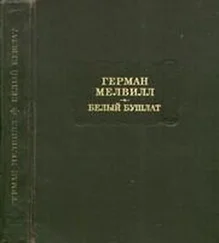
Герман Мелвилл - Typee
Здесь есть возможность читать онлайн «Герман Мелвилл - Typee» весь текст электронной книги совершенно бесплатно (целиком полную версию без сокращений). В некоторых случаях можно слушать аудио, скачать через торрент в формате fb2 и присутствует краткое содержание. Год выпуска: 2014, Издательство: epubBooks Classics, Жанр: Классическая проза, на английском языке. Описание произведения, (предисловие) а так же отзывы посетителей доступны на портале библиотеки ЛибКат.

- Название:Typee
- Автор:
- Издательство:epubBooks Classics
- Жанр:
- Год:2014
- ISBN:нет данных
- Рейтинг книги:4 / 5. Голосов: 1
-
Избранное:Добавить в избранное
- Отзывы:
-
Ваша оценка:
Typee: краткое содержание, описание и аннотация
Предлагаем к чтению аннотацию, описание, краткое содержание или предисловие (зависит от того, что написал сам автор книги «Typee»). Если вы не нашли необходимую информацию о книге — напишите в комментариях, мы постараемся отыскать её.
Typee — читать онлайн бесплатно полную книгу (весь текст) целиком
Ниже представлен текст книги, разбитый по страницам. Система сохранения места последней прочитанной страницы, позволяет с удобством читать онлайн бесплатно книгу «Typee», без необходимости каждый раз заново искать на чём Вы остановились. Поставьте закладку, и сможете в любой момент перейти на страницу, на которой закончили чтение.
Интервал:
Закладка:
Sadly discursive as I have already been, I must still further entreat the reader’s patience, as I am about to string together, without any attempt at order, a few odds and ends of things not hitherto mentioned, but which are either curious in themselves, or peculiar to the Typees.
There was one singular custom, observed in old Marheyo’s domestic establishment, which often excited my surprise. Every night, before retiring, the inmates of the house gathered together on the mats, and squatting upon their haunches, after the universal practice of these islanders, would commence a low, dismal, and monotonous chant, accompanying the voice with the instrumental melody produced by two small half–rotten sticks tapped slowly together, a pair of which were held in the hands of each person present. Thus would they employ themselves for an hour or two, sometimes longer. Lying in the gloom which wrapped the farther end of the house, I could not avoid looking at them, although the spectacle suggested nothing but unpleasant reflections. The flickering rays of the “armor” nut just served to reveal their savage lineaments, without dispelling the darkness that hovered about them.
Sometimes when, after falling into a kind of doze, and awaking suddenly in the midst of these doleful chantings, my eye would fall upon the wild–looking group engaged in their strange occupation, with their naked tattooed limbs, and shaven heads disposed in a circle, I was almost tempted to believe that I gazed upon a set of evil beings in the act of working a frightful incantation.
What was the meaning or purpose of this custom, whether it was practised merely as a diversion, or whether it was a religious exercise, a sort of family prayers, I never could discover.
The sounds produced by the natives on these occasions were of a most singular description; and had I not actually been present, I never would have believed that such curious noises could have been produced by human beings.
To savages, generally, is imputed a guttural articulation. This, however, is not always the case, especially among the inhabitants of the Polynesian Archipelago. The labial melody with which the Typee girls carry on an ordinary conversation, giving a musical prolongation to the final syllable of every sentence, and chirping out some of the words with a liquid, bird–like accent, was singularly pleasing.
The men, however, are not quite so harmonious in their utterance; and when excited upon any subject, would work themselves up into a sort of wordy paroxysm, during which all descriptions of rough–sided sounds were projected from their mouths, with a force and rapidity which was absolutely astonishing.
Although these savages are remarkably fond of chanting, still they appear to have no idea whatever of singing, at least as the art is practised among other nations.
I never shall forget the first time I happened to roar out a stave in the presence of the noble Mehevi. It was a stanza from the “Bavarian Broom–seller.” His Typean majesty, with all his court, gazed upon me in amazement, as if I had displayed some preternatural faculty which Heaven had denied to them. The king was delighted with the verse; but the chorus fairly transported him. At his solicitation, I sang it again and again, and nothing could be more ludicrous than his vain attempts to catch the air and the words. The royal savage seemed to think that by screwing all the features of his face into the end of his nose, he might possibly succeed in the undertaking, but it failed to answer the purpose; and in the end he gave it up, and consoled himself by listening to my repetition of the sounds fifty times over.
Previous to Mehevi’s making the discovery, I had never been aware that there was anything of the nightingale about me; but I was now promoted to the place of court minstrel, in which capacity I was afterwards perpetually called upon to officiate.
Besides the sticks and the drums, there are no other musical instruments among the Typees, except one which might appropriately be denominated a nasal flute. It is somewhat longer than an ordinary fife, is made of a beautiful scarlet–coloured reed, and has four or five stops, with a large hole near one end, which latter is held just beneath the left nostril. The other nostril being closed by a peculiar movement of the muscles about the nose, the breath is forced into the tube, and produces a soft dulcet sound, which is varied by the fingers running at random over the stops. This is a favourite recreation with the females, and one in which Fayaway greatly excelled. Awkward as such an instrument may appear, it was, in Fayaway’s delicate little hands, one of the most graceful I have ever seen. A young lady in the act of tormenting a guitar, strung about her neck by a couple of yards of blue ribbon, is not half so engaging.
Singing was not the only means I possessed of diverting the royal Mehevi and his easy–going subjects. Nothing afforded them more pleasure than to see me go through the attitudes of a pugilistic encounter. As not one of the natives had soul enough in him to stand up like a man, and allow me to hammer away at him, for my own personal gratification and that of the king, I was necessitated to fight with an imaginary enemy, whom I invariably made to knock under to my superior prowess. Sometimes, when this sorely battered shadow retreated precipitately towards a group of the savages, and, following him up, I rushed among them, dealing my blows right and left, they would disperse in all directions, much to the enjoyment of Mehevi, the chiefs, and themselves.
The noble art of self–defence appeared to be regarded by them as the peculiar gift of the white man; and I make little doubt but that they supposed armies of Europeans were drawn up provided with nothing else but bony fists and stout hearts, with which they set to in column, and pummelled one another at the word of command.
One day, in company with Kory–Kory, I had repaired to the stream for the purpose of bathing, when I observed a woman sitting upon a rock in the midst of the current, and watching with the liveliest interest the gambols of something, which at first I took to be an uncommonly large species of frog that was sporting in the water near her. Attracted by the novelty of the sight, I waded towards the spot where she sat, and could hardly credit the evidence of my senses when I beheld a little infant, the period of whose birth could not have extended back many days, paddling about as if it had just risen to the surface, after being hatched into existence at the bottom. Occasionally the delighted parent reached out her hand towards it, when the little thing, uttering a faint cry, and striking out its tiny limbs, would sidle for the rock, and the next moment be clasped to its mother’s bosom. This was repeated again and again, the baby remaining in the stream about a minute at a time. Once or twice it made wry faces at swallowing a mouthful of water, and choked and spluttered as if on the point of strangling. At such times, however, the mother snatched it up, and by a process scarcely to be mentioned obliged it to eject the fluid. For several weeks afterward I observed the woman bringing her child down to the stream regularly every day, in the cool of the morning and evening, and treating it to a bath. No wonder that the South Sea islanders are so amphibious a race, when they are thus launched into the water as soon as they see the light. I am convinced that it is as natural for a human being to swim as it is for a duck. And yet, in civilized communities, how many able–bodied individuals die, like so many drowning kittens, from the occurrence of the most trivial accidents!
Читать дальшеИнтервал:
Закладка:
Похожие книги на «Typee»
Представляем Вашему вниманию похожие книги на «Typee» списком для выбора. Мы отобрали схожую по названию и смыслу литературу в надежде предоставить читателям больше вариантов отыскать новые, интересные, ещё непрочитанные произведения.







Обсуждение, отзывы о книге «Typee» и просто собственные мнения читателей. Оставьте ваши комментарии, напишите, что Вы думаете о произведении, его смысле или главных героях. Укажите что конкретно понравилось, а что нет, и почему Вы так считаете.