Теодор Драйзер - The Genius
Здесь есть возможность читать онлайн «Теодор Драйзер - The Genius» весь текст электронной книги совершенно бесплатно (целиком полную версию без сокращений). В некоторых случаях можно слушать аудио, скачать через торрент в формате fb2 и присутствует краткое содержание. Год выпуска: 2014, Издательство: epubBooks Classics, Жанр: Классическая проза, на английском языке. Описание произведения, (предисловие) а так же отзывы посетителей доступны на портале библиотеки ЛибКат.
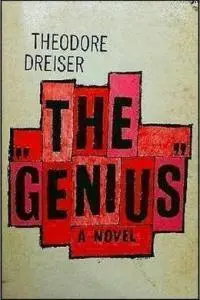
- Название:The Genius
- Автор:
- Издательство:epubBooks Classics
- Жанр:
- Год:2014
- ISBN:нет данных
- Рейтинг книги:4 / 5. Голосов: 1
-
Избранное:Добавить в избранное
- Отзывы:
-
Ваша оценка:
The Genius: краткое содержание, описание и аннотация
Предлагаем к чтению аннотацию, описание, краткое содержание или предисловие (зависит от того, что написал сам автор книги «The Genius»). Если вы не нашли необходимую информацию о книге — напишите в комментариях, мы постараемся отыскать её.
The Genius — читать онлайн бесплатно полную книгу (весь текст) целиком
Ниже представлен текст книги, разбитый по страницам. Система сохранения места последней прочитанной страницы, позволяет с удобством читать онлайн бесплатно книгу «The Genius», без необходимости каждый раз заново искать на чём Вы остановились. Поставьте закладку, и сможете в любой момент перейти на страницу, на которой закончили чтение.
Интервал:
Закладка:
"You might see his secretary if he isn't busy," suggested the clerk who handled his card gingerly.
Eugene was for the moment undetermined what to do but decided that maybe the secretary could help him. He asked that his card might be taken to him and that no explanation be demanded of him except by the secretary in person. The latter came out after a while, an under secretary of perhaps twenty–eight years of age, short and stout. He was bland and apparently good natured.
"What is it I can do for you?" he asked.
Eugene had been formulating his request in his mind—some method of putting it briefly and simply.
"I came up to see Mr. Wilson," he said, "to see if he would not send me out as a day–laborer of some kind in connection with some department of the road. I am an artist by profession and I am suffering from neurasthenia. All the doctors I have consulted have recommended that I get a simple, manual position of some kind and work at it until I am well. I know of an instance in which Mr. Wilson, assisted, in this way, Mr. Savin the author, and I thought he might be willing to interest himself in my case."
At the sound of Henry Savin's name the under–secretary pricked up his ears. He had, fortunately, read one of his books, and this together with Eugene's knowledge of the case, his personal appearance, a certain ring of sincerity in what he was saying, caused him to be momentarily interested.
"There is no position in connection with any clerical work which the president could give you, I am sure," he replied. "All of these things are subject to a system of promotion. It might be that he could place you with one of the construction gangs in one of the departments under a foreman. I don't know. It's very hard work, though. He might consider your case." He smiled commiseratingly. "I question whether you're strong enough to do anything of that sort. It takes a pretty good man to wield a pick or a shovel."
"I don't think I had better worry about that now," replied Eugene in return, smiling wearily. "I'll take the work and see if it won't help me. I think I need it badly enough."
He was afraid the under–secretary would repent of his suggestion and refuse him entirely.
"Can you wait a little while?" asked the latter curiously. He had the idea that Eugene was someone of importance, for he had suggested as a parting argument that he could give a number of exceptional references.
"Certainly," said Eugene, and the secretary went his way, coming back in half an hour to hand him an enveloped letter.
"We have the idea," he said quite frankly waiving any suggestion of the president's influence in the matter and speaking for himself and the secretary–in–chief, with whom he had agreed that Eugene ought to be assisted, "that you had best apply to the engineering department. Mr. Hobsen, the chief–engineer, can arrange for you. This letter I think will get you what you want."
Eugene's heart bounded. He looked at the superscription and saw it addressed to Mr. Woodruff Hobsen, Chief Engineer, and putting it in his pocket without stopping to read it, but thanking the under–secretary profusely, went out. In the hall at a safe distance he stopped and opened it, finding that it spoke of him familiarly as "Mr. Eugene Witla, an artist, temporarily incapacitated by neurasthenia," and went on to say that he was "desirous of being appointed to some manual toil in some construction corps. The president's office recommends this request to your favor."
When he read this he knew it meant a position. It roused curious feelings as to the nature and value of stratification. As a laborer he was nothing: as an artist he could get a position as a laborer. After all, his ability as an artist was worth something. It obtained him this refuge. He hugged it joyously, and a few moments later handed it to an under–secretary in the Chief–Engineer's office. Without being seen by anyone in authority he was in return given a letter to Mr. William Haverford, "Engineer of Maintenance of Way," a pale, anæmic gentleman of perhaps forty years of age, who, as Eugene learned from him when he was eventually ushered into his presence a half hour later, was a captain of thirteen thousand men. The latter read the letter from the Engineer's office curiously. He was struck by Eugene's odd mission and his appearance as a man. Artists were queer. This was like one. Eugene reminded him of himself a little in his appearance.
"An artist," he said interestedly. "So you want to work as a day laborer?" He fixed Eugene with clear, coal–black eyes looking out of a long, pear–shaped face. Eugene noticed that his hands were long and thin and white and that his high, pale forehead was crowned by a mop of black hair.
"Neurasthenia. I've heard a great deal about that of late, but have never been troubled that way myself. I find that I derive considerable benefit when I am nervous from the use of a rubber exerciser. You have seen them perhaps?"
"Yes," Eugene replied, "I have. My case is much too grave for that, I think. I have traveled a great deal. But it doesn't seem to do me any good. I want work at something manual, I fancy—something at which I have to work. Exercise in a room would not help me. I think I need a complete change of environment. I will be much obliged if you will place me in some capacity."
"Well, this will very likely be it," suggested Mr. Haverford blandly. "Working as a day–laborer will certainly not strike you as play. To tell you the truth, I don't think you can stand it." He reached for a glass–framed map showing the various divisions of the railroad stretching from New England to Chicago and St. Louis, and observed quietly. "I could send you to a great many places, Pennsylvania, New York, Ohio, Michigan, Canada." His finger roved idly about. "I have thirteen thousand men in my department and they are scattered far and wide."
Eugene marveled. Such a position! Such authority! This pale, dark man sitting as an engineer at a switch board directing so large a machine.
"You have a large force," he said simply. Mr. Haverford smiled wanly.
"I think, if you will take my advice, you will not go in a construction corps right away. You can hardly do manual labor. There is a little carpenter shop which we have at Speonk, not very far outside the city, which I should think would answer your needs admirably. A little creek joins the Hudson there and it's out on a point of land, the shop is. It's summer now, and to put you in a broiling sun with a gang of Italians would be a little rough. Take my advice and go here. It will be hard enough. After you are broken in and you think you want a change I can easily arrange it for you. The money may not make so much difference to you but you may as well have it. It will be fifteen cents an hour. I will give you a letter to Mr. Litlebrown, our division engineer, and he will see that you are properly provided for."
Eugene bowed. Inwardly he smiled at the thought that the money would not be acceptable to him. Anything would be acceptable. Perhaps this would be best. It was near the city. The description of the little carpenter shop out on the neck of land appealed to him. It was, as he found when he looked at the map of the immediate division to which this belonged, almost within the city limits. He could live in New York—the upper portion of it anyhow.
Again there was a letter, this time to Mr. Henry C. Litlebrown, a tall, meditative, philosophic man whom Eugene found two days later in the division offices at Yonkers, who in turn wrote a letter to Mr. Joseph Brooks, Superintendent of Buildings, at Mott Haven, whose secretary finally gave Eugene a letter to Mr. Jack Stix, foreman carpenter at Speonk. This letter, when presented on a bright Friday afternoon, brought him the advice to come Monday at seven A. M., and so Eugene saw a career as a day laborer stretching very conspicuously before him.
Читать дальшеИнтервал:
Закладка:
Похожие книги на «The Genius»
Представляем Вашему вниманию похожие книги на «The Genius» списком для выбора. Мы отобрали схожую по названию и смыслу литературу в надежде предоставить читателям больше вариантов отыскать новые, интересные, ещё непрочитанные произведения.






Обсуждение, отзывы о книге «The Genius» и просто собственные мнения читателей. Оставьте ваши комментарии, напишите, что Вы думаете о произведении, его смысле или главных героях. Укажите что конкретно понравилось, а что нет, и почему Вы так считаете.