Теодор Драйзер - The Genius
Здесь есть возможность читать онлайн «Теодор Драйзер - The Genius» весь текст электронной книги совершенно бесплатно (целиком полную версию без сокращений). В некоторых случаях можно слушать аудио, скачать через торрент в формате fb2 и присутствует краткое содержание. Год выпуска: 2014, Издательство: epubBooks Classics, Жанр: Классическая проза, на английском языке. Описание произведения, (предисловие) а так же отзывы посетителей доступны на портале библиотеки ЛибКат.
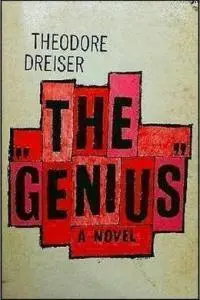
- Название:The Genius
- Автор:
- Издательство:epubBooks Classics
- Жанр:
- Год:2014
- ISBN:нет данных
- Рейтинг книги:4 / 5. Голосов: 1
-
Избранное:Добавить в избранное
- Отзывы:
-
Ваша оценка:
The Genius: краткое содержание, описание и аннотация
Предлагаем к чтению аннотацию, описание, краткое содержание или предисловие (зависит от того, что написал сам автор книги «The Genius»). Если вы не нашли необходимую информацию о книге — напишите в комментариях, мы постараемся отыскать её.
The Genius — читать онлайн бесплатно полную книгу (весь текст) целиком
Ниже представлен текст книги, разбитый по страницам. Система сохранения места последней прочитанной страницы, позволяет с удобством читать онлайн бесплатно книгу «The Genius», без необходимости каждый раз заново искать на чём Вы остановились. Поставьте закладку, и сможете в любой момент перейти на страницу, на которой закончили чтение.
Интервал:
Закладка:
"Right oh," added MacHugh, catching the spirit of Smite's generous attitude. "Them's my sentiments. When d'you expect to get married really, Eugene?"
"Oh I haven't fixed the time exactly. About November first, I should say. I hope you won't say anything about it though, either of you. I don't want to go through any explanations."
"We won't, but it's tough, you old walrus. Why the hell didn't you give us time to think it over? You're a fine jellyfish, you are."
He poked him reprimandingly in the ribs.
"There isn't anyone any more sorry than I am," said Eugene. "I hate to leave here, I do. But we won't lose track of each other. I'll still be around here."
"Where do you expect to live? Here in the city?" asked MacHugh, still a little gloomy.
"Sure. Right here in Washington Square. Remember that Dexter studio Weaver was telling about? The one in the third floor at sixty–one? That's it."
"You don't say!" exclaimed Smite. "You're in right. How'd you get that?"
Eugene explained.
"Well, you sure are a lucky man," observed MacHugh. "Your wife ought to like that. I suppose there'll be a cozy corner for an occasional strolling artist?"
"No farmers, no sea–faring men, no artistic hacks—nothing!" declared Eugene dramatically.
"You to Hell," said Smite. "When Mrs. Witla sees us—"
"She'll wish she'd never come to New York," put in Eugene.
"She'll wish she'd seen us first," said MacHugh.
Book II
The Struggle
Chapter I
The marriage ceremony between Eugene and Angela was solemnized at Buffalo on November second. As planned, Marietta was with them. They would go, the three of them, to the Falls, and to West Point, where the girls would see their brother David, and then Marietta would return to tell the family about it. Naturally, under the circumstances, it was a very simple affair, for there were no congratulations to go through with and no gifts—at least immediately—to consider and acknowledge. Angela had explained to her parents and friends that it was quite impossible for Eugene to come West at this time. She knew that he objected to a public ceremony where he would have to run the gauntlet of all her relatives, and so she was quite willing to meet him in the East and be married there. Eugene had not troubled to take his family into his confidence as yet. He had indicated on his last visit home that he might get married, and that Angela was the girl in question, but since Myrtle was the only one of his family who had seen her and she was now in Ottumwa, Iowa, they could not recall anything about her. Eugene's father was a little disappointed, for he expected to hear some day that Eugene had made a brilliant match. His boy, whose pictures were in the magazines so frequently and whose appearance was so generally distinguished, ought in New York, where opportunities abounded, to marry an heiress at least. It was all right of course if Eugene wanted to marry a girl from the country, but it robbed the family of a possible glory.
The spirit of this marriage celebration, so far as Eugene was concerned, was hardly right. There was the consciousness, always with him, of his possibly making a mistake; the feeling that he was being compelled by circumstances and his own weakness to fulfil an agreement which might better remain unfulfilled. His only urge was his desire, in the gratification of which he might find compensation, for saving Angela from an unhappy spinsterhood. It was a thin reed to lean on; there could be no honest satisfaction in it. Angela was sweet, devoted, painstaking in her attitude toward life, toward him, toward everything with which she came in contact, but she was not what he had always fancied his true mate would be—the be all and the end all of his existence. Where was the divine fire which on this occasion should have animated him; the lofty thoughts of future companionship; that intense feeling he had first felt about her when he had called on her at her aunt's house in Chicago? Something had happened. Was it that he had cheapened his ideal by too close contact with it? Had he taken a beautiful flower and trailed it in the dust? Was passion all there was to marriage? Or was it that true marriage was something higher—a union of fine thoughts and feelings? Did Angela share his with him? Angela did have exalted feelings and moods at times. They were not sensibly intellectual—but she seemed to respond to the better things in music and to some extent in literature. She knew nothing about art, but she was emotionally responsive to many fine things. Why was not this enough to make life durable and comfortable between them? Was it not really enough? After he had gone over all these points, there was still the thought that there was something wrong in this union. Despite his supposedly laudable conduct in fulfilling an obligation which, in a way, he had helped create or created, he was not happy. He went to his marriage as a man goes to fulfil an uncomfortable social obligation. It might turn out that he would have an enjoyable and happy life and it might turn out very much otherwise. He could not face the weight and significance of the social theory that this was for life—that if he married her today he would have to live with her all the rest of his days. He knew that was the generally accepted interpretation of marriage, but it did not appeal to him. Union ought in his estimation to be based on a keen desire to live together and on nothing else. He did not feel the obligation which attaches to children, for he had never had any and did not feel the desire for any. A child was a kind of a nuisance. Marriage was a trick of Nature's by which you were compelled to carry out her scheme of race continuance. Love was a lure; desire a scheme of propagation devised by the way. Nature, the race spirit, used you as you would use a work–horse to pull a load. The load in this case was race progress and man was the victim. He did not think he owed anything to nature, or to this race spirit. He had not asked to come here. He had not been treated as generously as he might have been since he arrived. Why should he do what nature bid?
When he met Angela he kissed her fondly, for of course the sight of her aroused the feeling of desire which had been running in his mind so keenly for some time. Since last seeing Angela he had touched no woman, principally because the right one had not presented herself and because the memories and the anticipations in connection with Angela were so close. Now that he was with her again the old fire came over him and he was eager for the completion of the ceremony. He had seen to the marriage license in the morning,—and from the train on which Angela and Marietta arrived they proceeded in a carriage direct to the Methodist preacher. The ceremony which meant so much to Angela meant practically nothing to him. It seemed a silly formula—this piece of paper from the marriage clerk's office and this instructed phraseology concerning "love, honor and cherish." Certainly he would love, honor and cherish if it were possible—if not, then not. Angela, with the marriage ring on her finger and the words "with this ring I thee wed" echoing in her ears, felt that all her dreams had come true. Now she was, really, truly, Mrs. Eugene Witla. She did not need to worry about drowning herself, or being disgraced, or enduring a lonely, commiserated old age. She was the wife of an artist—a rising one, and she was going to live in New York. What a future stretched before her! Eugene loved her after all. She imagined she could see that. His slowness in marrying her was due to the difficulty of establishing himself properly. Otherwise he would have done it before. They drove to the Iroquois hotel and registered as man and wife, securing a separate room for Marietta. The latter pretending an urgent desire to bathe after her railroad journey, left them, promising to be ready in time for dinner. Eugene and Angela were finally alone.
Читать дальшеИнтервал:
Закладка:
Похожие книги на «The Genius»
Представляем Вашему вниманию похожие книги на «The Genius» списком для выбора. Мы отобрали схожую по названию и смыслу литературу в надежде предоставить читателям больше вариантов отыскать новые, интересные, ещё непрочитанные произведения.




Обсуждение, отзывы о книге «The Genius» и просто собственные мнения читателей. Оставьте ваши комментарии, напишите, что Вы думаете о произведении, его смысле или главных героях. Укажите что конкретно понравилось, а что нет, и почему Вы так считаете.