Теодор Драйзер - The Genius
Здесь есть возможность читать онлайн «Теодор Драйзер - The Genius» весь текст электронной книги совершенно бесплатно (целиком полную версию без сокращений). В некоторых случаях можно слушать аудио, скачать через торрент в формате fb2 и присутствует краткое содержание. Год выпуска: 2014, Издательство: epubBooks Classics, Жанр: Классическая проза, на английском языке. Описание произведения, (предисловие) а так же отзывы посетителей доступны на портале библиотеки ЛибКат.
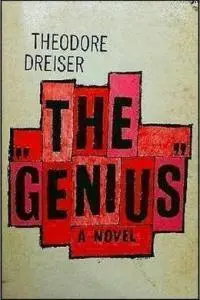
- Название:The Genius
- Автор:
- Издательство:epubBooks Classics
- Жанр:
- Год:2014
- ISBN:нет данных
- Рейтинг книги:4 / 5. Голосов: 1
-
Избранное:Добавить в избранное
- Отзывы:
-
Ваша оценка:
The Genius: краткое содержание, описание и аннотация
Предлагаем к чтению аннотацию, описание, краткое содержание или предисловие (зависит от того, что написал сам автор книги «The Genius»). Если вы не нашли необходимую информацию о книге — напишите в комментариях, мы постараемся отыскать её.
The Genius — читать онлайн бесплатно полную книгу (весь текст) целиком
Ниже представлен текст книги, разбитый по страницам. Система сохранения места последней прочитанной страницы, позволяет с удобством читать онлайн бесплатно книгу «The Genius», без необходимости каждый раз заново искать на чём Вы остановились. Поставьте закладку, и сможете в любой момент перейти на страницу, на которой закончили чтение.
Интервал:
Закладка:
To Eugene, who at this time was in a great state of mental doldrums—blue, dispirited, disheartened, inclined to see only evil and destructive forces—this might well come with peculiar significance, if it came at all. He was one of those men who from their birth are metaphysically inclined. All his life he had been speculating on the subtleties of mortal existence, reading Spencer, Kant, Spinoza, at odd moments, and particularly such men as Darwin, Huxley, Tyndall, Lord Avebury, Alfred Russel Wallace, and latterly Sir Oliver Lodge and Sir William Crookes, trying to find out by the inductive, naturalistic method just what life was. He had secured inklings at times, he thought, by reading such things as Emerson's "Oversoul," "The Meditations of Marcus Aurelius," and Plato. God was a spirit, he thought, as Christ had said to the woman at the well in Samaria, but whether this spirit concerned itself with mortal affairs, where was so much suffering and contention, was another matter. Personally he had never believed so—or been at all sure. He had always been moved by the Sermon on the Mount; the beauty of Christ's attitude toward the troubles of the world, the wonder of the faith of the old prophets in insisting that God is God, that there are no other Gods before him, and that he would repay iniquity with disfavor. Whether he did or not was an open question with him. This question of sin had always puzzled him—original sin. Were there laws which ante–dated human experience, which were in God—The Word—before it was made flesh? If so, what were these laws? Did they concern matrimony—some spiritual union which was older than life itself? Did they concern stealing? What was stealing outside of life? Where was it before man began? Or did it only begin with man? Ridiculous! It must relate to something in chemistry and physics, which had worked out in life. A sociologist—a great professor in one of the colleges had once told him that he did not believe in success or failure, sin, or a sense of self–righteousness except as they were related to built–up instincts in the race—instincts related solely to the self–preservation and the evolution of the race. Beyond that was nothing. Spiritual morality? Bah! He knew nothing about it.
Such rank agnosticism could not but have had its weight with Eugene. He was a doubter ever. All life, as I have said before, went to pieces under his scalpel, and he could not put it together again logically, once he had it cut up. People talked about the sanctity of marriage, but, heavens, marriage was an evolution! He knew that. Someone had written a two–volume treatise on it—"The History of Human Marriage," or something like that and in it animals were shown to have mated only for so long as it took to rear the young, to get them to the point at which they could take care of themselves. And wasn't this really what was at the basis of modern marriage? He had read in this history, if he recalled aright, that the only reason marriage had come to be looked upon as sacred, and for life, was the length of time it took to rear the human young. It took so long that the parents were old, safely so, before the children were launched into the world. Then why separate?
But it was the duty of everybody to raise children.
Ah! there had been the trouble. He had been bothered by that. The home centered around that. Children! Race reproduction! Pulling this wagon of evolution! Was every man who did not inevitably damned? Was the race spirit against him? Look at the men and women who didn't—who couldn't. Thousands and thousands. And those who did always thought those who didn't were wrong. The whole American spirit he had always felt to be intensely set in this direction—the idea of having children and rearing them, a conservative work–a–day spirit. Look at his father. And yet other men were so shrewd that they preyed on this spirit, moving factories to where this race spirit was the most active, so that they could hire the children cheaply, and nothing happened to them, or did something happen?
However, Myrtle continued to plead with him to look into this new interpretation of the Scriptures, claiming that it was true, that it would bring him into an understanding of spirit which would drive away all these mortal ills, that it was above all mortal conception—spiritual over all, and so he thought about that. She told him that if it was right that he should cease to live with Angela, it would come to pass, and that if it was not, it would not; but anyhow and in any event in this truth there would be peace and happiness to him. He should do what was right ("seek ye first the Kingdom of God"), and then all these things would be added unto him.
And it seemed terribly silly at first to Eugene for him to be listening at all to any such talk, but later it was not so much so. There were long arguments and appeals, breakfast and dinner, or Sunday dinners at Myrtle's apartment, arguments with Bangs and Myrtle concerning every phase of the Science teaching, some visits to the Wednesday experience and testimony meetings of their church, at which Eugene heard statements concerning marvelous cures which he could scarcely believe, and so on. So long as the testimonies confined themselves to complaints which might be due to nervous imagination, he was satisfied that their cures were possibly due to religious enthusiasm, which dispelled their belief in something which they did not have, but when they were cured of cancer, consumption, locomotor–ataxia, goitres, shortened limbs, hernia—he did not wish to say they were liars, they seemed too sincere to do that, but he fancied they were simply mistaken. How could they, or this belief, or whatever it was, cure cancer? Good Lord! He went on disbelieving in this way, and refusing also to read the book until one Wednesday evening when he happened to be at the Fourth Church of Christ Scientist in New York that a man stood up beside him in his own pew and said:
"I wish to testify to the love and mercy of God in my case, for I was hopelessly afflicted not so very long ago and one of the vilest men I think it is possible to be. I was raised in a family where the Bible was read night and morning—my father was a hidebound Presbyterian—and I was so sickened by the manner in which it was forced down my throat and the inconsistencies which I thought I saw existing between Christian principle and practice, even in my own home, that I said to myself I would conform as long as I was in my father's house and eating his bread, but when I got out I would do as I pleased. I was in my father's house after that a number of years, until I was seventeen, and then I went to a large city, Cincinnati, but the moment I was away and free I threw aside all my so–called religious training and set out to do what I thought was the most pleasant and gratifying thing for me to do. I wanted to drink, and I did, though I was really never a very successful drinker." Eugene smiled. "I wanted to gamble, and I did, but I was never a very clever gambler. Still I did gamble a bit. My great weakness was women, and here I hope none will be offended, I know they will not be, for there may be others who need my testimony badly. I pursued women as I would any other lure. They were really all that I desired—their bodies. My lust was terrible. It was such a dominant thought with me that I could not look at any good–looking woman except, as the Bible says, to lust after her. I was vile. I became diseased. I was carried into the First Church of Christ Scientist in Chicago, after I had spent all my money and five years of my time on physicians and specialists, suffering from locomotor ataxia, dropsy and kidney disease. I had previously been healed of some other things by ordinary medicine.
"If there is anyone within the sound of my voice who is afflicted as I was, I want him to listen to me.
Читать дальшеИнтервал:
Закладка:
Похожие книги на «The Genius»
Представляем Вашему вниманию похожие книги на «The Genius» списком для выбора. Мы отобрали схожую по названию и смыслу литературу в надежде предоставить читателям больше вариантов отыскать новые, интересные, ещё непрочитанные произведения.




Обсуждение, отзывы о книге «The Genius» и просто собственные мнения читателей. Оставьте ваши комментарии, напишите, что Вы думаете о произведении, его смысле или главных героях. Укажите что конкретно понравилось, а что нет, и почему Вы так считаете.