Теодор Драйзер - The Genius
Здесь есть возможность читать онлайн «Теодор Драйзер - The Genius» весь текст электронной книги совершенно бесплатно (целиком полную версию без сокращений). В некоторых случаях можно слушать аудио, скачать через торрент в формате fb2 и присутствует краткое содержание. Год выпуска: 2014, Издательство: epubBooks Classics, Жанр: Классическая проза, на английском языке. Описание произведения, (предисловие) а так же отзывы посетителей доступны на портале библиотеки ЛибКат.
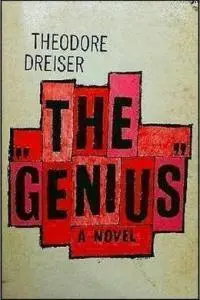
- Название:The Genius
- Автор:
- Издательство:epubBooks Classics
- Жанр:
- Год:2014
- ISBN:нет данных
- Рейтинг книги:4 / 5. Голосов: 1
-
Избранное:Добавить в избранное
- Отзывы:
-
Ваша оценка:
The Genius: краткое содержание, описание и аннотация
Предлагаем к чтению аннотацию, описание, краткое содержание или предисловие (зависит от того, что написал сам автор книги «The Genius»). Если вы не нашли необходимую информацию о книге — напишите в комментариях, мы постараемся отыскать её.
The Genius — читать онлайн бесплатно полную книгу (весь текст) целиком
Ниже представлен текст книги, разбитый по страницам. Система сохранения места последней прочитанной страницы, позволяет с удобством читать онлайн бесплатно книгу «The Genius», без необходимости каждый раз заново искать на чём Вы остановились. Поставьте закладку, и сможете в любой момент перейти на страницу, на которой закончили чтение.
Интервал:
Закладка:
"It is positively."
"Then I must be going."
"Good–bye," he said solemnly.
"Good–bye," she answered, white faced, her eyes staring.
She went out and Eugene took up the telephone; but he remembered that Suzanne had warned him not to call, but to depend on her. So he put it down again.
Chapter XV
The fire and pathos of Mrs. Dale's appeal should have given Eugene pause. He thought once of going after her and making a further appeal, saying that he would try and get a divorce eventually and marry Suzanne, but he remembered that peculiar insistency of Suzanne on the fact that she did not want to get married. Somehow, somewhere, somewhy, she had formulated this peculiar ideal or attitude, which whatever the world might think of it, was possible of execution, providing he and she were tactful enough. It was not such a wild thing for two people to want to come together in this way, if they chose, he thought. Why was it? Heaven could witness there were enough illicit and peculiar relationships in this world to prevent society from becoming excited about one more, particularly when it was to be conducted in so circumspect and subtle a way. He and Suzanne did not intend to blazon their relationship to the world. As a distinguished artist, not active, but acknowledged and accomplished, he was entitled to a studio life. He and Suzanne could meet there. Nothing would be thought of it. Why had she insisted on telling her mother? It could all have been done without that. There was another peculiar ideal of hers, her determination to tell the truth under all circumstances. And yet she had really not told it. She had deceived her mother a long time about him simply by saying nothing. Was this some untoward trick of fate's, merely devised to harm him? Surely not. And yet Suzanne's headstrong determination seemed almost a fatal mistake now. He sat down brooding over it. Was this a terrific blunder? Would he be sorry? All his life was in the balance. Should he turn back?
No! No! No! Never! It was not to be. He must go on. He must! He must! So he brooded.
The next of Mrs. Dale's resources was not quite so unavailing as the others, though it was almost so. She had sent for Dr. Latson Woolley, her family physician—an old school practitioner of great repute, of rigid honor and rather Christian principles himself, but also of a wide intellectual and moral discernment, so far as others were concerned.
"Well, Mrs. Dale," he observed, when he was ushered into her presence in the library on the ground floor, and extending his hand cordially, though wearily, "what can I do for you this morning?"
"Oh, Dr. Woolley," she began directly, "I am in so much trouble. It isn't a case of sickness. I wish it were. It is something so much worse. I have sent for you because I know I can rely on your judgment and sympathy. It concerns my daughter, Suzanne."
"Yes, yes," he grunted, in a rather crusty voice, for his vocal cords were old, and his eyes looked out from under shaggy, gray eyebrows which somehow bespoke a world of silent observation. "What's the matter with her? What has she done now that she ought not to do?"
"Oh, doctor," exclaimed Mrs. Dale nervously, for the experiences of the last few days had almost completely dispelled her normal composure, "I don't know how to tell you, really. I don't know how to begin. Suzanne, my dear precious Suzanne, in whom I have placed so much faith and reliance has, has―"
"Well, tell me," interrupted Dr. Woolley laconically.
When she had told him the whole story, and answered some of his incisive questions, he said:
"Well, I am thinking you have a good deal to be grateful for. She might have yielded without your knowledge and told you afterwards—or not at all."
"Not at all. Oh, doctor! My Suzanne!"
"Mrs. Dale, I looked after you and your mother before you and Suzanne. I know something about human nature and your family characteristics. Your husband was a very determined man, as you will remember. Suzanne may have some of his traits in her. She is a very young girl, you want to remember, very robust and vigorous. How old is this Witla man?"
"About thirty–eight or nine, doctor."
"Um! I suspected as much. The fatal age. It's a wonder you came through that period as safely as you did. You're nearly forty, aren't you?"
"Yes, doctor, but you're the only one that knows it."
"I know, I know. It's the fatal age. You say he is in charge of the United Magazines Corporation. I have probably heard of him. I know of Mr. Colfax of that company. Is he very emotional in his temperament?"
"I had never thought so before this."
"Well, he probably is. Thirty–eight to thirty–nine and eighteen or nineteen—bad combination. Where is Suzanne?"
"Upstairs in her room, I fancy."
"It might not be a bad thing if I talked to her myself a little, though I don't believe it will do any good."
Mrs. Dale disappeared and was gone for nearly three–quarters of an hour. Suzanne was stubborn, irritable, and to all preliminary entreaties insisted that she would not. Why should her mother call in outsiders, particularly Dr. Woolley, whom she knew and liked. She suspected at once when her mother said Dr. Woolley wanted to see her that it had something to do with her case, and demanded to know why. Finally, after much pleading, she consented to come down, though it was with the intention of showing her mother how ridiculous all her excitement was.
The old doctor who had been meditating upon the inexplicable tangle, chemical and physical, of life—the blowing hither and thither of diseases, affections, emotions and hates of all kinds, looked up quizzically as Suzanne entered.
"Well, Suzanne," he said genially, rising and walking slowly toward her, "I'm glad to see you again. How are you this morning?"
"Pretty well, doctor, how are you?"
"Oh, as you see, as you see, a little older and a little fussier, Suzanne, making other people's troubles my own. Your mother tells me you have fallen in love. That's an interesting thing to do, isn't it?"
"You know, doctor," said Suzanne defiantly, "I told mama that I don't care to discuss this, and I don't think she has any right to try to make me. I don't want to and I won't. I think it is all in rather poor taste."
"Poor taste, Suzanne?" asked Mrs. Dale. "Do you call our discussion of what you want to do poor taste, when the world will think that what you want to do is terrible when you do it?"
"I told you, mama, that I was not coming down here to discuss this thing, and I'm not!" said Suzanne, turning to her mother and ignoring Dr. Woolley. "I'm not going to stay. I don't want to offend Dr. Woolley, but I'm not going to stay and have you argue this all over again."
She turned to go.
"There, there, Mrs. Dale, don't interrupt," observed Dr. Woolley, holding Suzanne by the very tone of his voice. "I think myself that very little is to be gained by argument. Suzanne is convinced that what she is planning to do is to her best interest. It may be. We can't always tell. I think the best thing that could be discussed, if anything at all in this matter can be discussed, is the matter of time. It is my opinion that before doing this thing that Suzanne wants to do, and which may be all right, for all I know, it would be best if she would take a little time. I know nothing of Mr. Witla. He may be a most able and worthy man. Suzanne ought to give herself a little time to think, though. I should say three months, or six months. A great many after effects hang on this decision, as you know," he said, turning to Suzanne. "It may involve responsibilities you are not quite ready to shoulder. You are only eighteen or nineteen, you know. You might have to give up dancing and society, and travel, and a great many things, and devote yourself to being a mother and ministering to your husband's needs. You expect to live with him permanently, don't you?"
Читать дальшеИнтервал:
Закладка:
Похожие книги на «The Genius»
Представляем Вашему вниманию похожие книги на «The Genius» списком для выбора. Мы отобрали схожую по названию и смыслу литературу в надежде предоставить читателям больше вариантов отыскать новые, интересные, ещё непрочитанные произведения.




Обсуждение, отзывы о книге «The Genius» и просто собственные мнения читателей. Оставьте ваши комментарии, напишите, что Вы думаете о произведении, его смысле или главных героях. Укажите что конкретно понравилось, а что нет, и почему Вы так считаете.