Теодор Драйзер - The Genius
Здесь есть возможность читать онлайн «Теодор Драйзер - The Genius» весь текст электронной книги совершенно бесплатно (целиком полную версию без сокращений). В некоторых случаях можно слушать аудио, скачать через торрент в формате fb2 и присутствует краткое содержание. Год выпуска: 2014, Издательство: epubBooks Classics, Жанр: Классическая проза, на английском языке. Описание произведения, (предисловие) а так же отзывы посетителей доступны на портале библиотеки ЛибКат.
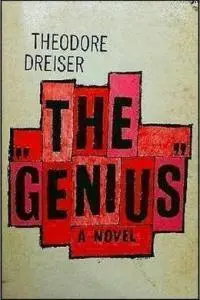
- Название:The Genius
- Автор:
- Издательство:epubBooks Classics
- Жанр:
- Год:2014
- ISBN:нет данных
- Рейтинг книги:4 / 5. Голосов: 1
-
Избранное:Добавить в избранное
- Отзывы:
-
Ваша оценка:
The Genius: краткое содержание, описание и аннотация
Предлагаем к чтению аннотацию, описание, краткое содержание или предисловие (зависит от того, что написал сам автор книги «The Genius»). Если вы не нашли необходимую информацию о книге — напишите в комментариях, мы постараемся отыскать её.
The Genius — читать онлайн бесплатно полную книгу (весь текст) целиком
Ниже представлен текст книги, разбитый по страницам. Система сохранения места последней прочитанной страницы, позволяет с удобством читать онлайн бесплатно книгу «The Genius», без необходимости каждый раз заново искать на чём Вы остановились. Поставьте закладку, и сможете в любой момент перейти на страницу, на которой закончили чтение.
Интервал:
Закладка:
"You mustn't," she pleaded. "I think we are being watched."
He left her, and on the way home in the auto he whispered: "I shall be on the west veranda tonight. Will you come?"
"I don't know, I'll try."
He walked leisurely to that place later when all was still, and sat down to wait. Gradually the great house quieted. It was one and one–thirty, and then nearly two before the door opened. A figure slipped out, the lovely form of Suzanne, dressed as she had been at the ball, a veil of lace over her hair.
"I'm so afraid," she said, "I scarcely know what I am doing. Are you sure no one will see us?"
"Let us walk down the path to the field." It was the same way they had taken in the early spring when he had met her here before. In the west hung low a waning moon, yellow, sickle shaped, very large because of the hour.
"Do you remember when we were here before?"
"Yes."
"I loved you then. Did you care for me?"
"No."
They walked on under the trees, he holding her hand.
"Oh, this night, this night," he said, the strain of his intense emotion wearying him.
They came out from under the trees at the end of the path. There was a sense of August dryness in the air. It was warm, sensuous. About were the sounds of insects, faint bumblings, cracklings. A tree toad chirped, or a bird cried.
"Come to me, Suzanne," he said at last when they emerged into the full light of the moon at the end of the path and paused. "Come to me." He slipped his arm about her.
"No," she said. "No."
"Look at me, Suzanne," he pleaded; "I want to tell you how much I love you. Oh, I have no words. It seems ridiculous to try to tell you. Tell me that you love me, Suzanne. Tell me now. I am crazy with love of you. Tell me."
"No," she said, "I can't."
"Kiss me!"
"No!"
He drew her to him and turned her face up by her chin in spite of her. "Open your eyes," he pleaded. "Oh, God! That this should come to me! Now I could die. Life can hold no more. Oh, Flower Face! Oh, Silver Feet! Oh, Myrtle Bloom! Divine Fire! How perfect you are. How perfect! And to think you love me!"
He kissed her eagerly.
"Kiss me, Suzanne. Tell me that you love me. Tell me. Oh, how I love that name, Suzanne. Whisper to me you love me."
"No."
"But you do."
"No."
"Look at me, Suzanne. Flower face. Myrtle Bloom. For God's sake, look at me! You love me."
"Oh, yes, yes, yes," she sobbed of a sudden, throwing her arm around his neck. "Oh, yes, yes."
"Don't cry," he pleaded. "Oh, sweet, don't cry. I am mad for love of you, mad. Kiss me now, one kiss. I am staking my soul on your love. Kiss me!"
He pressed his lips to hers, but she burst away, terror–stricken.
"Oh, I am so frightened," she exclaimed all at once. "Oh, what shall I do? I am so afraid. Oh, please, please. Something terrifies me. Something scares me. Oh, what am I going to do? Let me go back."
She was white and trembling. Her hands were nervously clasping and unclasping.
Eugene smoothed her arm soothingly. "Be still, Suzanne," he said. "Be still. I shall say no more. You are all right. I have frightened you. We will go back. Be calm. You are all right."
He recovered his own poise with an effort because of her obvious terror, and led her back under the trees. To reassure her he drew his cigar case from his pocket and pretended to select a cigar. When he saw her calming, he put it back.
"Are you quieter now, sweet?" he asked, tenderly.
"Yes, but let us go back."
"Listen. I will only go as far as the edge. You go alone. I will watch you safely to the door."
"Yes," she said peacefully.
"And you really love me, Suzanne?"
"Oh, yes, but don't speak of it. Not tonight. You will frighten me again. Let us go back."
They strolled on. Then he said: "One kiss, sweet, in parting. One. Life has opened anew for me. You are the solvent of my whole being. You are making me over into something different. I feel as though I had never lived until now. Oh, this experience! It is such a wonderful thing to have done—to have lived through, to have changed as I have changed. You have changed me so completely, made me over into the artist again. From now on I can paint again. I can paint you." He scarcely knew what he was saying. He felt as though he were revealing himself to himself as in an apocalyptic vision.
She let him kiss her, but she was too frightened and wrought to even breathe right. She was intense, emotional, strange. She did not really understand what it was that he was talking about.
"Tomorrow," he said, "at the wood's edge. Tomorrow. Sweet dreams. I shall never know peace any more without your love."
And he watched her eagerly, sadly, bitterly, ecstatically, as she walked lightly from him, disappearing like a shadow through the dark and silent door.
Chapter VII
It would be impossible to describe even in so detailed an account as this the subtleties, vagaries, beauties and terrors of the emotions which seized upon him, and which by degrees began also to possess Suzanne, once he became wholly infatuated with her. Mrs. Dale, was, after a social fashion, one of Eugene's best friends. She had since she had first come to know him spread his fame far and wide as an immensely clever publisher and editor, an artist of the greatest power, and a man of lovely and delightful ideas and personal worth. He knew from various conversations with her that Suzanne was the apple of her eye. He had heard her talk, had, in fact, discussed with her the difficulties of rearing a simple mannered, innocent–minded girl in present day society. She had confided to him that it had been her policy to give Suzanne the widest liberty consistent with good–breeding and current social theories. She did not want to make her bold or unduly self–reliant, and yet she wanted her to be free and natural. Suzanne, she was convinced, from long observation and many frank conversations, was innately honest, truthful and clean–minded. She did not understand her exactly, for what mother can clearly understand any child; but she thought she read her well enough to know that she was in some indeterminate way forceful and able, like her father, and that she would naturally gravitate to what was worth while in life.
Had she any talent? Mrs. Dale really did not know. The girl had vague yearnings toward something which was anything but social in its quality. She did not care anything at all for most of the young men and women she met. She went about a great deal, but it was to ride and drive. Games of chance did not interest her. Drawing–room conversations were amusing to her, but not gripping. She liked interesting characters, able books, striking pictures. She had been particularly impressed with those of Eugene's; she had seen and had told her mother that they were wonderful. She loved poetry of high order, and was possessed of a boundless appetite for the ridiculous and the comic. An unexpected faux pas was apt to throw her into uncontrollable fits of laughter and the funny page selections of the current newspaper artists, when she could obtain them, amused her intensely. She was a student of character, and of her own mother, and was beginning to see clearly what were the motives that were prompting her mother in her attitude toward herself, quite as clearly as that person did herself and better. At bottom she was more talented than her mother, but in a different way. She was not, as yet, as self–controlled, or as understanding of current theories and beliefs as her mother, but she was artistic, emotional, excitable, in an intellectual way, and capable of high flights of fancy and of intense and fine appreciations. Her really sensuous beauty was nothing to her. She did not value it highly. She knew she was beautiful, and that men and boys were apt to go wild about her, but she did not care. They must not be so silly, she thought. She did not attempt to attract them in any way. On the contrary, she avoided every occasion of possible provocation. Her mother had told her plainly how susceptible men were, how little their promises meant, how careful she must be of her looks and actions. In consequence, she went her way as gaily and yet as inoffensively as she could, trying to avoid the sadness of entrancing anyone hopelessly and wondering what her career was to be. Then Eugene appeared.
Читать дальшеИнтервал:
Закладка:
Похожие книги на «The Genius»
Представляем Вашему вниманию похожие книги на «The Genius» списком для выбора. Мы отобрали схожую по названию и смыслу литературу в надежде предоставить читателям больше вариантов отыскать новые, интересные, ещё непрочитанные произведения.




Обсуждение, отзывы о книге «The Genius» и просто собственные мнения читателей. Оставьте ваши комментарии, напишите, что Вы думаете о произведении, его смысле или главных героях. Укажите что конкретно понравилось, а что нет, и почему Вы так считаете.