Arnold Bennett - The Old Wives' Tale
Здесь есть возможность читать онлайн «Arnold Bennett - The Old Wives' Tale» весь текст электронной книги совершенно бесплатно (целиком полную версию без сокращений). В некоторых случаях можно слушать аудио, скачать через торрент в формате fb2 и присутствует краткое содержание. Год выпуска: 2005, ISBN: 2005, Издательство: Kessinger Publishing, Жанр: Классическая проза, на английском языке. Описание произведения, (предисловие) а так же отзывы посетителей доступны на портале библиотеки ЛибКат.
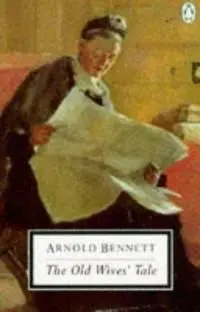
- Название:The Old Wives' Tale
- Автор:
- Издательство:Kessinger Publishing
- Жанр:
- Год:2005
- ISBN:9781417903672
- Рейтинг книги:5 / 5. Голосов: 1
-
Избранное:Добавить в избранное
- Отзывы:
-
Ваша оценка:
The Old Wives' Tale: краткое содержание, описание и аннотация
Предлагаем к чтению аннотацию, описание, краткое содержание или предисловие (зависит от того, что написал сам автор книги «The Old Wives' Tale»). Если вы не нашли необходимую информацию о книге — напишите в комментариях, мы постараемся отыскать её.
The Old Wives' Tale — читать онлайн бесплатно полную книгу (весь текст) целиком
Ниже представлен текст книги, разбитый по страницам. Система сохранения места последней прочитанной страницы, позволяет с удобством читать онлайн бесплатно книгу «The Old Wives' Tale», без необходимости каждый раз заново искать на чём Вы остановились. Поставьте закладку, и сможете в любой момент перейти на страницу, на которой закончили чтение.
Интервал:
Закладка:
The sale of the Mericarp estate had a particular interest for respectable stake-in-the-town persons. It would indicate to what extent, if at all, 'this football' was ruining Bursley. Constance mentioned to Cyril that she fancied she might like to go to the sale, and as it was dated for one of Cyril's off-nights Cyril said that he fancied he might like to go too. So they went together; Samuel used to attend property sales, but he had never taken his wife to one. Constance and Cyril arrived at the Tiger shortly after seven o'clock, and were directed to a room furnished and arranged as for a small public meeting of philanthropists. A few gentlemen were already present, but not the instigating trustees, solicitors, and auctioneers. It appeared that 'six-thirty for seven o'clock precisely' meant seven-fifteen. Constance took a Windsor chair in the corner nearest the door, and motioned Cyril to the next chair; they dared not speak; they moved on tiptoe; Cyril inadvertently dragged his chair along the floor, and produced a scrunching sound; he blushed, as though he had desecrated a church, and his mother made a gesture of horror. The remainder of the company glanced at the corner, apparently pained by this negligence. Some of them greeted Constance, but self- consciously, with a sort of shamed air; it might have been that they had all nefariously gathered together there for the committing of a crime. Fortunately Constance's widowhood had already lost its touching novelty, so that the greetings, if self- conscious, were at any rate given without unendurable commiseration and did not cause awkwardness.
When the official world arrived, fussy, bustling, bearing documents and a hammer, the general feeling of guilty shame was intensified. Useless for the auctioneer to try to dissipate the gloom by means of bright gestures and quick, cheerful remarks to his supporters! Cyril had an idea that the meeting would open with a hymn, until the apparition of a tapster with wine showed him his error. The auctioneer very particularly enjoined the tapster to see to it that no one lacked for his thirst, and the tapster became self-consciously energetic. He began by choosing Constance for service. In refusing wine, she blushed; then the fellow offered a glass to Cyril, who went scarlet, and mumbled 'No' with a lump in his throat; when the tapster's back was turned, he smiled sheepishly at his mother. The majority of the company accepted and sipped. The auctioneer sipped and loudly smacked, and said: "Ah!"
Mr. Critchlow came in.
And the auctioneer said again: "Ah! I'm always glad when the tenants come. That's always a good sign."
He glanced round for approval of this sentiment. But everybody seemed too stiff to move. Even the auctioneer was self-conscious.
"Waiter! Offer wine to Mr. Critchlow!" he exclaimed bullyingly, as if saying: "Man! what on earth are you thinking of, to neglect Mr. Critchlow?"
"Yes, sir; yes, sir," said the waiter, who was dispensing wine as fast as a waiter can.
The auction commenced.
Seizing the hammer, the auctioneer gave a short biography of William Clews Mericarp, and, this pious duty accomplished, called upon a solicitor to read the conditions of sale. The solicitor complied and made a distressing exhibition of self-consciousness. The conditions of sale were very lengthy, and apparently composed in a foreign tongue; and the audience listened to this elocution with a stoical pretence of breathless interest.
Then the auctioneer put up all that extensive and commodious messuage and shop situate and being No. 4, St. Luke's Square. Constance and Cyril moved their limbs surreptitiously, as though being at last found out. The auctioneer referred to John Baines and to Samuel Povey, with a sense of personal loss, and then expressed his pleasure in the presence of 'the ladies;' he meant Constance, who once more had to blush.
"Now, gentlemen," said the auctioneer, "what do you say for these famous premises? I think I do not exaggerate when I use the word 'famous.'"
Some one said a thousand pounds, in the terrorized voice of a delinquent.
"A thousand pounds," repeated the auctioneer, paused, sipped, and smacked.
"Guineas," said another voice self-accused of iniquity.
"A thousand and fifty," said the auctioneer.
Then there was a long interval, an interval that tightened the nerves of the assembly.
"Now, ladies and gentlemen," the auctioneer adjured.
The first voice said sulkily: "Eleven hundred."
And thus the bids rose to fifteen hundred, lifted bit by bit, as it were, by the magnetic force of the auctioneer's personality. The man was now standing up, in domination. He bent down to the solicitor's head; they whispered together.
"Gentlemen," said the auctioneer, "I am happy to inform you that the sale is now open." His tone translated better than words his calm professional beatitude. Suddenly in a voice of wrath he hissed at the waiter: "Waiter, why don't you serve these gentlemen?"
"Yes, sir; yes, sir."
The auctioneer sat down and sipped at leisure, chatting with his clerk and the solicitor and the solicitor's clerk.
When he rose it was as a conqueror. "Gentlemen, fifteen hundred is bid. Now, Mr. Critchlow."
Mr. Critchlow shook his head. The auctioneer threw a courteous glance at Constance, who avoided it.
After many adjurations, he reluctantly raised his hammer, pretended to let it fall, and saved it several times.
And then Mr. Critchlow said: "And fifty."
"Fifteen hundred and fifty is bid," the auctioneer informed the company, electrifying the waiter once more. And when he had sipped he said, with feigned sadness: "Come, gentlemen, you surely don't mean to let this magnificent lot go for fifteen hundred and fifty pounds?"
But they did mean that.
The hammer fell, and the auctioneer's clerk and the solicitor's clerk took Mr. Critchlow aside and wrote with him.
Nobody was surprised when Mr. Critchlow bought Lot No. 2, his own shop.
Constance whispered then to Cyril that she wished to leave. They left, with unnatural precautions, but instantly regained their natural demeanour in the dark street.
"Well, I never! Well, I never!" she murmured outside, astonished and disturbed.
She hated the prospect of Mr. Critchlow as a landlord. And yet she could not persuade herself to leave the place, in spite of decisions.
The sale demonstrated that football had not entirely undermined the commercial basis of society in Bursley; only two Lots had to be withdrawn.
II
On Thursday afternoon of the same week the youth whom Constance had ended by hiring for the manipulation of shutters and other jobs unsuitable for fragile women, was closing the shop. The clock had struck two. All the shutters were up except the last one, in the midst of the doorway. Miss Insull and her mistress were walking about the darkened interior, putting dust-sheets well over the edges of exposed goods; the other assistants had just left. The bull-terrier had wandered into the shop as he almost invariably did at closing time--for he slept there, an efficient guard--and had lain down by the dying stove; though not venerable, he was stiffening into age.
"You can shut," said Miss Insull to the youth.
But as the final shutter was ascending to its position, Mr. Critchlow appeared on the pavement.
"Hold on, young fellow!" Mr. Critchlow commanded, and stepped slowly, lifting up his long apron, over the horizontal shutter on which the perpendicular shutters rested in the doorway.
"Shall you be long, Mr. Critchlow?" the youth asked, posing the shutter. "Or am I to shut?"
"Shut, lad," said Mr. Critchlow, briefly. "I'll go out by th' side door."
"Here's Mr. Critchlow!" Miss Insull called out to Constance, in a peculiar tone. And a flush, scarcely perceptible, crept very slowly over her dark features. In the twilight of the shop, lit only by a few starry holes in the shutters, and by the small side- window, not the keenest eye could have detected that flush.
Читать дальшеИнтервал:
Закладка:
Похожие книги на «The Old Wives' Tale»
Представляем Вашему вниманию похожие книги на «The Old Wives' Tale» списком для выбора. Мы отобрали схожую по названию и смыслу литературу в надежде предоставить читателям больше вариантов отыскать новые, интересные, ещё непрочитанные произведения.








Обсуждение, отзывы о книге «The Old Wives' Tale» и просто собственные мнения читателей. Оставьте ваши комментарии, напишите, что Вы думаете о произведении, его смысле или главных героях. Укажите что конкретно понравилось, а что нет, и почему Вы так считаете.