Arnold Bennett - The Old Wives' Tale
Здесь есть возможность читать онлайн «Arnold Bennett - The Old Wives' Tale» весь текст электронной книги совершенно бесплатно (целиком полную версию без сокращений). В некоторых случаях можно слушать аудио, скачать через торрент в формате fb2 и присутствует краткое содержание. Год выпуска: 2005, ISBN: 2005, Издательство: Kessinger Publishing, Жанр: Классическая проза, на английском языке. Описание произведения, (предисловие) а так же отзывы посетителей доступны на портале библиотеки ЛибКат.
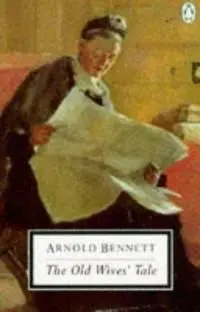
- Название:The Old Wives' Tale
- Автор:
- Издательство:Kessinger Publishing
- Жанр:
- Год:2005
- ISBN:9781417903672
- Рейтинг книги:5 / 5. Голосов: 1
-
Избранное:Добавить в избранное
- Отзывы:
-
Ваша оценка:
The Old Wives' Tale: краткое содержание, описание и аннотация
Предлагаем к чтению аннотацию, описание, краткое содержание или предисловие (зависит от того, что написал сам автор книги «The Old Wives' Tale»). Если вы не нашли необходимую информацию о книге — напишите в комментариях, мы постараемся отыскать её.
The Old Wives' Tale — читать онлайн бесплатно полную книгу (весь текст) целиком
Ниже представлен текст книги, разбитый по страницам. Система сохранения места последней прочитанной страницы, позволяет с удобством читать онлайн бесплатно книгу «The Old Wives' Tale», без необходимости каждый раз заново искать на чём Вы остановились. Поставьте закладку, и сможете в любой момент перейти на страницу, на которой закончили чтение.
Интервал:
Закладка:
Mr. Critchlow gazed hard at the boy, then nodded his head several times rapidly, as though to say: "Here's another fool in the making! So the generations follow one another!" He made no answer to the salutation, and departed.
Cyril ran round to his mother's corner, pitching his bag on to the showroom stairs as he passed them. Taking off his hat, he kissed her, and she unbuttoned his overcoat with her cold hands.
"What's old Methuselah after?" he demanded.
"Hush!" Constance softly corrected him. "He came in to tell me the trial had started."
"Oh, I knew that! A boy bought a paper and I saw it. I say, mother, will father be in the paper?" And then in a different tone: "I say, mother, what is there for tea?"
When his stomach had learnt exactly what there was for tea, the boy began to show an immense and talkative curiosity in the trial. He would not set himself to his home-lessons. "It's no use, mother," he said, "I can't." They returned to the shop together, and Cyril would go every moment to the door to listen for the cry of a newsboy. Presently he hit upon the idea that perhaps newsboys might be crying the special edition of the Signal in the market- place, in front of the Town Hall, to the neglect of St. Luke's Square. And nothing would satisfy him but he must go forth and see. He went, without his overcoat, promising to run. The shop waited with a strange anxiety. Cyril had created, by his restless movements to and fro, an atmosphere of strained expectancy. It seemed now as if the whole town stood with beating heart, fearful of tidings and yet burning to get them. Constance pictured Stafford, which she had never seen, and a court of justice, which she had never seen, and her husband and Daniel in it. And she waited.
Cyril ran in. "No!" he announced breathlessly. "Nothing yet."
"Don't take cold, now you're hot," Constance advised.
But he would keep near the door. Soon he ran off again.
And perhaps fifteen seconds after he had gone, the strident cry of a Signal boy was heard in the distance, faint and indistinct at first, then clearer and louder.
"There's a paper!" said the apprentice.
"Sh!" said Constance, listening.
"Sh!" echoed Miss Insull.
"Yes, it is!" said Constance. "Miss Insull, just step out and get a paper. Here's a halfpenny."
The halfpenny passed quickly from one thimbled hand to another. Miss Insull scurried.
She came in triumphantly with the sheet, which Constance tremblingly took. Constance could not find the report at first. Miss Insull pointed to it, and read--
"'Summing up!' Lower down, lower down! 'After an absence of thirty-five minutes the jury found the prisoner guilty of murder, with a recommendation to mercy. The judge assumed the black cap and pronounced sentence of death, saying that he would forward the recommendation to the proper quarter.'"
Cyril returned. "Not yet!" he was saying--when he saw the paper lying on the counter. His crest fell.
Long after the shop was shut, Constance and Cyril waited in the parlour for the arrival of the master of the house. Constance was in the blackest despair. She saw nothing but death around her. She thought: misfortunes never come singly. Why did not Samuel come? All was ready for him, everything that her imagination could suggest, in the way of food, remedies, and the means of warmth. Amy was not allowed to go to bed, lest she might be needed. Constance did not even hint that Cyril should go to bed. The dark, dreadful minutes ticked themselves off on the mantelpiece until only five minutes separated Constance from the moment when she would not know what to do next. It was twenty-five minutes past eleven. If at half-past Samuel did not appear, then he could not come that night, unless the last train from Stafford was inconceivably late.
The sound of a carriage! It ceased at the door. Mother and son sprang up.
Yes, it was Samuel! She beheld him once more. And the sight of his condition, moral and physical, terrified her. His great strapping son and Amy helped him upstairs. "Will he ever come down those stairs again?" This thought lanced Constance's heart. The pain was come and gone in a moment, but it had surprised her tranquil commonsense, which was naturally opposed to, and gently scornful of, hysterical fears. As she puffed, with her stoutness, up the stairs, that bland cheerfulness of hers cost her an immense effort of will. She was profoundly troubled; great disasters seemed to be slowly approaching her from all quarters.
Should she send for the doctor? No. To do so would only be a concession to the panic instinct. She knew exactly what was the matter with Samuel: a severe cough persistently neglected, no more. As she had expressed herself many times to inquirers, "He's never been what you may call ill." Nevertheless, as she laid him in bed and possetted him, how frail and fragile he looked! And he was so exhausted that he would not even talk about the trial.
"If he's not better to-morrow I shall send for the doctor!" she said to herself. As for his getting up, she swore she would keep him in bed by force if necessary.
IV
The next morning she was glad and proud that she had not yielded to a scare. For he was most strangely and obviously better. He had slept heavily, and she had slept a little. True that Daniel was condemned to death! Leaving Daniel to his fate, she was conscious of joy springing in her heart. How absurd to have asked herself: "Will he ever come down those stairs again?"!
A message reached her from the forgotten shop during the morning, that Mr. Lawton had called to see Mr. Povey. Already Samuel had wanted to arise, but she had forbidden it in the tone of a woman who is dangerous, and Samuel had been very reasonable. He now said that Mr. Lawton must be asked up. She glanced round the bedroom. It was 'done'; it was faultlessly correct as a sick chamber. She agreed to the introduction into it of the man from another sphere, and after a preliminary minute she left the two to talk together. This visit of young Lawton's was a dramatic proof of Samuel's importance, and of the importance of the matter in hand. The august occasion demanded etiquette, and etiquette said that a wife should depart from her husband when he had to transact affairs beyond the grasp of a wife.
The idea of a petition to the Home Secretary took shape at this interview, and before the day was out it had spread over the town and over the Five Towns, and it was in the Signal. The Signal spoke of Daniel Povey as 'the condemned man.' And the phrase startled the whole district into an indignant agitation for his reprieve. The district woke up to the fact that a Town Councillor, a figure in the world, an honest tradesman of unspotted character, was cooped solitary in a little cell at Stafford, waiting to be hanged by the neck till he was dead. The district determined that this must not and should not be. Why! Dan Povey had actually once been Chairman of the Bursley Society for the Prosecution of Felons, that association for annual eating and drinking, whose members humorously called each other 'felons'! Impossible, monstrous, that an ex-chairman of the 'Felons' should be a sentenced criminal!
However, there was nothing to fear. No Home Secretary would dare to run counter to the jury's recommendation and the expressed wish of the whole district. Besides, the Home Secretary's nephew was M.P. for the Knype division. Of course a verdict of guilty had been inevitable. Everybody recognized that now. Even Samuel and all the hottest partisans of Daniel Povey recognized it. They talked as if they had always foreseen it, directly contradicting all that they had said on only the previous day. Without any sense of any inconsistency or of shame, they took up an absolutely new position. The structure of blind faith had once again crumbled at the assault of realities, and unhealthy, un-English truths, the statement of which would have meant ostracism twenty-four hours earlier, became suddenly the platitudes of the Square and the market-place.
Читать дальшеИнтервал:
Закладка:
Похожие книги на «The Old Wives' Tale»
Представляем Вашему вниманию похожие книги на «The Old Wives' Tale» списком для выбора. Мы отобрали схожую по названию и смыслу литературу в надежде предоставить читателям больше вариантов отыскать новые, интересные, ещё непрочитанные произведения.








Обсуждение, отзывы о книге «The Old Wives' Tale» и просто собственные мнения читателей. Оставьте ваши комментарии, напишите, что Вы думаете о произведении, его смысле или главных героях. Укажите что конкретно понравилось, а что нет, и почему Вы так считаете.