Arnold Bennett - The Old Wives' Tale
Здесь есть возможность читать онлайн «Arnold Bennett - The Old Wives' Tale» весь текст электронной книги совершенно бесплатно (целиком полную версию без сокращений). В некоторых случаях можно слушать аудио, скачать через торрент в формате fb2 и присутствует краткое содержание. Год выпуска: 2005, ISBN: 2005, Издательство: Kessinger Publishing, Жанр: Классическая проза, на английском языке. Описание произведения, (предисловие) а так же отзывы посетителей доступны на портале библиотеки ЛибКат.
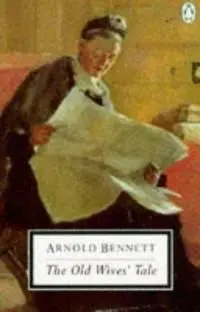
- Название:The Old Wives' Tale
- Автор:
- Издательство:Kessinger Publishing
- Жанр:
- Год:2005
- ISBN:9781417903672
- Рейтинг книги:5 / 5. Голосов: 1
-
Избранное:Добавить в избранное
- Отзывы:
-
Ваша оценка:
The Old Wives' Tale: краткое содержание, описание и аннотация
Предлагаем к чтению аннотацию, описание, краткое содержание или предисловие (зависит от того, что написал сам автор книги «The Old Wives' Tale»). Если вы не нашли необходимую информацию о книге — напишите в комментариях, мы постараемся отыскать её.
The Old Wives' Tale — читать онлайн бесплатно полную книгу (весь текст) целиком
Ниже представлен текст книги, разбитый по страницам. Система сохранения места последней прочитанной страницы, позволяет с удобством читать онлайн бесплатно книгу «The Old Wives' Tale», без необходимости каждый раз заново искать на чём Вы остановились. Поставьте закладку, и сможете в любой момент перейти на страницу, на которой закончили чтение.
Интервал:
Закладка:
Further information Mr. Povey had culled from Amy, and there could remain no doubt that Cyril had been providing his chums with the utensils of smoking, the till supplying the means. He had told Amy that the things which he secreted in the cellar had been presented to him by blood-brothers. But Mr. Povey did not believe that. Anyhow, he had marked every silver coin in the till for three nights, and had watched the till in the mornings from behind the merino-pile; and the florin on the parlour-table spoke of his success as a detective.
Constance felt guilty on behalf of Cyril. As Mr. Povey outlined his case she could not free herself from an entirely irrational sensation of sin; at any rate of special responsibility. Cyril seemed to be her boy and not Samuel's boy at all. She avoided her husband's glance. This was very odd.
Then Cyril returned, and his parents composed their faces and he deposited, next to the florin, a sham meerschaum pipe in a case, a tobacco-pouch, a cigar of which one end had been charred but the other not cut, and a half-empty packet of cigarettes without a label.
Nothing could be hid from Mr. Povey. The details were distressing.
"So Cyril is a liar and a thief, to say nothing of this smoking!" Mr. Povey concluded.
He spoke as if Cyril had invented strange and monstrous sins. But deep down in his heart a little voice was telling him, as regards the smoking, that HE had set the example. Mr. Baines had never smoked. Mr. Critchlow never smoked. Only men like Daniel smoked.
Thus far Mr. Povey had conducted the proceedings to his own satisfaction. He had proved the crime. He had made Cyril confess. The whole affair lay revealed. Well--what next? Cyril ought to have dissolved in repentance; something dramatic ought to have occurred. But Cyril simply stood with hanging, sulky head, and gave no sign of proper feeling.
Mr. Povey considered that, until something did happen, he must improve the occasion.
"Here we have trade getting worse every day," said he (it was true), "and you are robbing your parents to make a beast of yourself, and corrupting your companions! I wonder your mother never smelt you!"
"I never dreamt of such a thing!" said Constance, grievously.
Besides, a young man clever enough to rob a till is usually clever enough to find out that the secret of safety in smoking is to use cachous and not to keep the stuff in your pockets a minute longer than you can help.
"There's no knowing how much money you have stolen," said Mr. Povey. "A thief!"
If Cyril had stolen cakes, jam, string, cigars, Mr. Povey would never have said 'thief' as he did say it. But money! Money was different. And a till was not a cupboard or a larder. A till was a till. Cyril had struck at the very basis of society.
"And on your mother's birthday!" Mr. Povey said further.
"There's one thing I can do!" he said. "I can burn all this. Built on lies! How dared you?"
And he pitched into the fire--not the apparatus of crime, but the water-colour drawing of a moss-rose and the straws and the blue ribbon for bows at the corners.
"How dared you?" he repeated.
"You never gave me any money," Cyril muttered.
He thought the marking of coins a mean trick, and the dragging-in of bad trade and his mother's birthday roused a familiar devil that usually slept quietly in his breast.
"What's that you say?" Mr. Povey almost shouted.
"You never gave me any money," the devil repeated in a louder tone than Cyril had employed.
(It was true. But Cyril 'had only to ask' and he would have received all that was good for him.)
Mr. Povey sprang up. Mr. Povey also had a devil. The two devils gazed at each other for an instant; and then, noticing that Cyril's head was above Mr. Povey's, the elder devil controlled itself. Mr. Povey had suddenly had as much drama as he wanted.
"Get away to bed!" said he with dignity.
Cyril went, defiantly.
"He's to have nothing but bread and water, mother," Mr. Povey finished. He was, on the whole, pleased with himself.
Later in the day Constance reported, tearfully, that she had been up to Cyril and that Cyril had wept. Which was to Cyril's credit. But all felt that life could never be the same again. During the remainder of existence this unspeakable horror would lift its obscene form between them. Constance had never been so unhappy. Occasionally, when by herself, she would rebel for a brief moment, as one rebels in secret against a mummery which one is obliged to treat seriously. "After all," she would whisper, "suppose he HAS taken a few shillings out of the till! What then? What does it matter?" But these moods of moral insurrection against society and Mr. Povey were very transitory. They were come and gone in a flash.
CHAPTER V
ANOTHER CRIME
I
One night--it was late in the afternoon of the same year, about six months after the tragedy of the florin--Samuel Povey was wakened up by a hand on his shoulder and a voice that whispered: "Father!"
The thief and the liar was standing in his night-shirt by the bed. Samuel's sleepy eyes could just descry him in the thick gloom.
"What--what?" questioned the father, gradually coming to consciousness. "What are you doing there?"
"I didn't want to wake mother up," the boy whispered. "There's someone been throwing dirt or something at our windows, and has been for a long time."
"Eh, what?"
Samuel stared at the dim form of the thief and liar. The boy was tall, not in the least like a little boy; and yet, then, he seemed to his father as quite a little boy, a little 'thing' in a night- shirt, with childish gestures and childish inflections, and a childish, delicious, quaint anxiety not to disturb his mother, who had lately been deprived of sleep owing to an illness of Amy's which had demanded nursing. His father had not so perceived him for years. In that instant the conviction that Cyril was permanently unfit for human society finally expired in the father's mind. Time had already weakened it very considerably. The decision that, be Cyril what he might, the summer holiday must be taken as usual, had dealt it a fearful blow. And yet, though Samuel and Constance had grown so accustomed to the companionship of a criminal that they frequently lost memory of his guilt for long periods, nevertheless the convention of his leprosy had more or less persisted with Samuel until that moment: when it vanished with strange suddenness, to Samuel's conscious relief.
There was a rain of pellets on the window.
"Hear that?" demanded Cyril, whispering dramatically. "And it's been like that on my window too."
Samuel arose. "Go back to your room!" he ordered in the same dramatic whisper; but not as father to son--rather as conspirator to conspirator.
Constance slept. They could hear her regular breathing.
Barefooted, the elderly gowned figure followed the younger, and one after the other they creaked down the two steps which separated Cyril's room from his parents'.
"Shut the door quietly!" said Samuel.
Cyril obeyed.
And then, having lighted Cyril's gas, Samuel drew the blind, unfastened the catch of the window, and began to open it with many precautions of silence. All the sashes in that house were difficult to manage. Cyril stood close to his father, shivering without knowing that he shivered, astonished only that his father had not told him to get back into bed at once. It was, beyond doubt, the proudest hour of Cyril's career. In addition to the mysterious circumstances of the night, there was in the situation that thrill which always communicates itself to a father and son when they are afoot together upon an enterprise unsuspected by the woman from whom their lives have no secrets.
Samuel put his head out of the window.
Читать дальшеИнтервал:
Закладка:
Похожие книги на «The Old Wives' Tale»
Представляем Вашему вниманию похожие книги на «The Old Wives' Tale» списком для выбора. Мы отобрали схожую по названию и смыслу литературу в надежде предоставить читателям больше вариантов отыскать новые, интересные, ещё непрочитанные произведения.








Обсуждение, отзывы о книге «The Old Wives' Tale» и просто собственные мнения читателей. Оставьте ваши комментарии, напишите, что Вы думаете о произведении, его смысле или главных героях. Укажите что конкретно понравилось, а что нет, и почему Вы так считаете.