Arnold Bennett - The Old Wives' Tale
Здесь есть возможность читать онлайн «Arnold Bennett - The Old Wives' Tale» весь текст электронной книги совершенно бесплатно (целиком полную версию без сокращений). В некоторых случаях можно слушать аудио, скачать через торрент в формате fb2 и присутствует краткое содержание. Год выпуска: 2005, ISBN: 2005, Издательство: Kessinger Publishing, Жанр: Классическая проза, на английском языке. Описание произведения, (предисловие) а так же отзывы посетителей доступны на портале библиотеки ЛибКат.
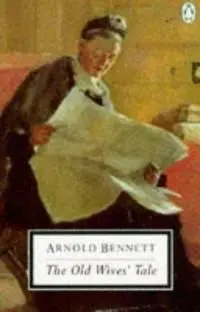
- Название:The Old Wives' Tale
- Автор:
- Издательство:Kessinger Publishing
- Жанр:
- Год:2005
- ISBN:9781417903672
- Рейтинг книги:5 / 5. Голосов: 1
-
Избранное:Добавить в избранное
- Отзывы:
-
Ваша оценка:
The Old Wives' Tale: краткое содержание, описание и аннотация
Предлагаем к чтению аннотацию, описание, краткое содержание или предисловие (зависит от того, что написал сам автор книги «The Old Wives' Tale»). Если вы не нашли необходимую информацию о книге — напишите в комментариях, мы постараемся отыскать её.
The Old Wives' Tale — читать онлайн бесплатно полную книгу (весь текст) целиком
Ниже представлен текст книги, разбитый по страницам. Система сохранения места последней прочитанной страницы, позволяет с удобством читать онлайн бесплатно книгу «The Old Wives' Tale», без необходимости каждый раз заново искать на чём Вы остановились. Поставьте закладку, и сможете в любой момент перейти на страницу, на которой закончили чтение.
Интервал:
Закладка:
The Governors had recently made the discovery that a sports department was necessary to a good school, and had rented a field for cricket, football, and rounders up at Bleakridge, an innovation which demonstrated that the town was moving with the rapid times. In June this field was open after school hours till eight p.m. as well as on Saturdays. The Squire learnt that Cyril had a talent for cricket, and Cyril wished to practise in the evenings, and was quite ready to bind himself with Bible oaths to rise at no matter what hour in the morning for the purpose of home lessons. He scarcely expected his father to say 'Yes' as his father never did say 'Yes,' but he was obliged to ask. Samuel nonplussed him by replying that on fine evenings, when he could spare time from the shop, he would go up to Bleakridge with his son. Cyril did not like this in the least. Still, it might be tried. One evening they went, actually, in the new steam-car which had superseded the old horse-cars, and which travelled all the way to Longshaw, a place that Cyril had only heard of. Samuel talked of the games played in the Five Towns in his day, of the Titanic sport of prison-bars, when the team of one 'bank' went forth to the challenge of another 'bank,' preceded by a drum-and-fife band, and when, in the heat of the chase, a man might jump into the canal to escape his pursuer; Samuel had never played at cricket.
Samuel, with a very young grandson of Fan (deceased), sat in dignity on the grass and watched his cricketer for an hour and a half (while Constance kept an eye on the shop and superintended its closing). Samuel then conducted Cyril home again. Two days later the father of his own accord offered to repeat the experience. Cyril refused. Disagreeable insinuations that he was a baby in arms had been made at school in the meantime.
Nevertheless, in other directions Cyril sometimes surprisingly conquered. For instance, he came home one day with the information that a dog that was not a bull-terrier was not worth calling a dog. Fan's grandson had been carried off in earliest prime by a chicken-bone that had pierced his vitals, and Cyril did indeed persuade his father to buy a bull-terrier. The animal was a superlative of forbidding ugliness, but father and son vied with each other in stern critical praise of his surpassing beauty, and Constance, from good nature, joined in the pretence. He was called Lion, and the shop, after one or two untoward episodes, was absolutely closed to him.
But the most striking of Cyril's successes had to do with the question of the annual holiday. He spoke of the sea soon after becoming a schoolboy. It appeared that his complete ignorance of the sea prejudicially affected him at school. Further, he had always loved the sea; he had drawn hundreds of three-masted ships with studding-sails set, and knew the difference between a brig and a brigantine. When he first said: "I say, mother, why can't we go to Llandudno instead of Buxton this year?" his mother thought he was out of his senses. For the idea of going to any place other than Buxton was inconceivable! Had they not always been to Buxton? What would their landlady say? How could they ever look her in the face again? Besides ... well ...! They went to Llandudno, rather scared, and hardly knowing how the change had come about. But they went. And it was the force of Cyril's will, Cyril the theoretic cypher, that took them.
III
The removal of the Endowed School to more commodious premises in the shape of Shawport Hall, an ancient mansion with fifty rooms and five acres of land round about it, was not a change that quite pleased Samuel or Constance. They admitted the hygienic advantages, but Shawport Hall was three-quarters of a mile distant from St. Luke's Square--in the hollow that separates Bursley from its suburb of Hillport; whereas the Wedgwood Institution was scarcely a minute away. It was as if Cyril, when he set off to Shawport Hall of a morning, passed out of their sphere of influence. He was leagues off, doing they knew not what. Further, his dinner-hour was cut short by the extra time needed for the journey to and fro, and he arrived late for tea; it may be said that he often arrived very late for tea; the whole machinery of the meal was disturbed. These matters seemed to Samuel and Constance to be of tremendous import, seemed to threaten the very foundations of existence. Then they grew accustomed to the new order, and wondered sometimes, when they passed the Wedgwood Institution and the insalubrious Cock Yard--once sole playground of the boys--that the school could ever have 'managed' in the narrow quarters once allotted to it.
Cyril, though constantly successful at school, a rising man, an infallible bringer-home of excellent reports, and a regular taker of prizes, became gradually less satisfactory in the house. He was 'kept in' occasionally, and although his father pretended to hold that to be kept in was to slur the honour of a spotless family, Cyril continued to be kept in; a hardened sinner, lost to shame. But this was not the worst. The worst undoubtedly was that Cyril was 'getting rough.' No definite accusation could be laid against him; the offence was general, vague, everlasting; it was in all he did and said, in every gesture and movement. He shouted, whistled, sang, stamped, stumbled, lunged. He omitted such empty rites as saying 'Yes' or 'Please,' and wiping his nose. He replied gruffly and nonchalantly to polite questions, or he didn't reply until the questions were repeated, and even then with a 'lost' air that was not genuine. His shoelaces were a sad sight, and his finger-nails no sight at all for a decent woman; his hair was as rough as his conduct; hardly at the pistol's point could he be forced to put oil on it. In brief, he was no longer the nice boy that he used to be. He had unmistakably deteriorated. Grievous! But what can you expect when YOUR boy is obliged, month after month and year after year, to associate with other boys? After all, he was a GOOD boy, said Constance, often to herself and now and then to Samuel. For Constance, his charm was eternally renewed. His smile, his frequent ingenuousness, his funny self-conscious gesture when he wanted to 'get round' her--these characteristics remained; and his pure heart remained; she could read that in his eyes. Samuel was inimical to his tastes for sports and his triumphs therein. But Constance had pride in all that. She liked to feel him and to gaze at him, and to smell that faint, uncleanly odour of sweat that hung in his clothes.
In this condition he reached the advanced age of thirteen. And his parents, who despite their notion of themselves as wide-awake parents were a simple pair, never suspected that his heart, conceived to be still pure, had become a crawling, horrible mass of corruption.
One day the head-master called at the shop. Now, to see a head- master walking about the town during school-hours is a startling spectacle, and is apt to give you the same uncanny sensation as when, alone in a room, you think you see something move which ought not to move. Mr. Povey was startled. Mr. Povey had a thumping within his breast as he rubbed his hands and drew the head-master to the private corner where his desk was. "What can I do for you to-day?" he almost said to the head-master. But he did not say it. The boot was emphatically not on that leg. The head- master talked to Mr. Povey, in tones carefully low, for about a quarter of an hour, and then he closed the interview. Mr. Povey escorted him across the shop, and the head-master said with ordinary loudness: "Of course it's nothing. But my experience is that it's just as well to be on the safe side, and I thought I'd tell you. Forewarned is forearmed. I have other parents to see." They shook hands at the door. Then Mr. Povey stepped out on to the pavement and, in front of the whole Square, detained an unwilling head-master for quite another minute.
Читать дальшеИнтервал:
Закладка:
Похожие книги на «The Old Wives' Tale»
Представляем Вашему вниманию похожие книги на «The Old Wives' Tale» списком для выбора. Мы отобрали схожую по названию и смыслу литературу в надежде предоставить читателям больше вариантов отыскать новые, интересные, ещё непрочитанные произведения.









Обсуждение, отзывы о книге «The Old Wives' Tale» и просто собственные мнения читателей. Оставьте ваши комментарии, напишите, что Вы думаете о произведении, его смысле или главных героях. Укажите что конкретно понравилось, а что нет, и почему Вы так считаете.