Arnold Bennett - The Old Wives' Tale
Здесь есть возможность читать онлайн «Arnold Bennett - The Old Wives' Tale» весь текст электронной книги совершенно бесплатно (целиком полную версию без сокращений). В некоторых случаях можно слушать аудио, скачать через торрент в формате fb2 и присутствует краткое содержание. Год выпуска: 2005, ISBN: 2005, Издательство: Kessinger Publishing, Жанр: Классическая проза, на английском языке. Описание произведения, (предисловие) а так же отзывы посетителей доступны на портале библиотеки ЛибКат.
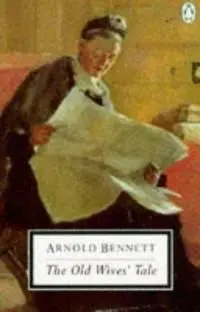
- Название:The Old Wives' Tale
- Автор:
- Издательство:Kessinger Publishing
- Жанр:
- Год:2005
- ISBN:9781417903672
- Рейтинг книги:5 / 5. Голосов: 1
-
Избранное:Добавить в избранное
- Отзывы:
-
Ваша оценка:
The Old Wives' Tale: краткое содержание, описание и аннотация
Предлагаем к чтению аннотацию, описание, краткое содержание или предисловие (зависит от того, что написал сам автор книги «The Old Wives' Tale»). Если вы не нашли необходимую информацию о книге — напишите в комментариях, мы постараемся отыскать её.
The Old Wives' Tale — читать онлайн бесплатно полную книгу (весь текст) целиком
Ниже представлен текст книги, разбитый по страницам. Система сохранения места последней прочитанной страницы, позволяет с удобством читать онлайн бесплатно книгу «The Old Wives' Tale», без необходимости каждый раз заново искать на чём Вы остановились. Поставьте закладку, и сможете в любой момент перейти на страницу, на которой закончили чтение.
Интервал:
Закладка:
Constance blandly offered herself to the child, with the unconscious primitive savagery of a young mother, and as the baby fed, thoughts of her own mother flitted to and fro ceaselessly like vague shapes over the deep sea of content which filled her mind. This illness of her mother's was abnormal, and the baby was now, for the first time perhaps, entirely normal in her consciousness. The baby was something which could be disturbed, not something which did disturb. What a change! What a change that had seemed impossible until its full accomplishment!
For months before the birth, she had glimpsed at nights and in other silent hours the tremendous upset. She had not allowed herself to be silly in advance; by temperament she was too sagacious, too well balanced for that; but she had had fitful instants of terror, when solid ground seemed to sink away from her, and imagination shook at what faced her. Instants only! Usually she could play the comedy of sensible calmness to almost perfection. Then the appointed time drew nigh. And still she smiled, and Samuel smiled. But the preparations, meticulous, intricate, revolutionary, belied their smiles. The intense resolve to keep Mrs. Baines, by methods scrupulous or unscrupulous, away from Bursley until all was over, belied their smiles. And then the first pains, sharp, shocking, cruel, heralds of torture! But when they had withdrawn, she smiled, again, palely. Then she was in bed, full of the sensation that the whole house was inverted and disorganized, hopelessly. And the doctor came into the room. She smiled at the doctor apologetically, foolishly, as if saying: "We all come to it. Here I am." She was calm without. Oh, but what a prey of abject fear within! "I am at the edge of the precipice," her thought ran; "in a moment I shall be over." And then the pains--not the heralds but the shattering army, endless, increasing in terror as they thundered across her. Yet she could think, quite clearly: "Now I'm in the middle of it. This is it, the horror that I have not dared to look at. My life's in the balance. I may never get up again. All has at last come to pass. It seemed as if it would never come, as if this thing could not happen to me. But at last it has come to pass!"
Ah! Some one put the twisted end of a towel into her hand again-- she had loosed it; and she pulled, pulled, enough to break cables. And then she shrieked. It was for pity. It was for some one to help her, at any rate to take notice of her. She was dying. Her soul was leaving her. And she was alone, panic-stricken, in the midst of a cataclysm a thousand times surpassing all that she had imagined of sickening horror. "I cannot endure this," she thought passionately. "It is impossible that I should be asked to endure this!" And then she wept; beaten, terrorized, smashed and riven. No commonsense now! No wise calmness now! No self-respect now! Why, not even a woman now! Nothing but a kind of animalized victim! And then the supreme endless spasm, during which she gave up the ghost and bade good-bye to her very self.
She was lying quite comfortable in the soft bed; idle, silly: happiness forming like a thin crust over the lava of her anguish and her fright. And by her side was the soul that had fought its way out of her, ruthlessly; the secret disturber revealed to the light of morning. Curious to look at! Not like any baby that she had ever seen; red, creased, brutish! But--for some reason that she did not examine--she folded it in an immense tenderness.
Sam was by the bed, away from her eyes. She was so comfortable and silly that she could not move her head nor even ask him to come round to her eyes. She had to wait till he came.
In the afternoon the doctor returned, and astounded her by saying that hers had been an ideal confinement. She was too weary to rebuke him for a senseless, blind, callous old man. But she knew what she knew. "No one will ever guess," she thought, "no one ever can guess, what I've been through! Talk as you like. I KNOW, now."
Gradually she had resumed cognizance of her household, perceiving that it was demoralized from top to bottom, and that when the time came to begin upon it she would not be able to settle where to begin, even supposing that the baby were not there to monopolize her attention. The task appalled her. Then she wanted to get up. Then she got up. What a blow to self-confidence! She went back to bed like a little scared rabbit to its hole, glad, glad to be on the soft pillows again. She said: "Yet the time must come when I shall be downstairs, and walking about and meeting people, and cooking and superintending the millinery." Well, it did come-- except that she had to renounce the millinery to Miss Insull--but it was not the same. No, different! The baby pushed everything else on to another plane. He was a terrific intruder; not one minute of her old daily life was left; he made no compromise whatever. If she turned away her gaze from him he might pop off into eternity and leave her.
And now she was calmly and sensibly giving him suck in presence of Miss Insull. She was used to his importance, to the fragility of his organism, to waking twice every night, to being fat. She was strong again. The convulsive twitching that for six months had worried her repose, had quite disappeared. The state of being a mother was normal, and the baby was so normal that she could not conceive the house without him.
All in ten months!
When the baby was installed in his cot for the night, she came downstairs and found Miss Insull and Samuel still working, and Larder than ever, but at addition sums now. She sat down, leaving the door open at the foot of the stairs. She had embroidery in hand: a cap. And while Miss Insull and Samuel combined pounds, shillings, and pence, whispering at great speed, she bent over the delicate, intimate, wasteful handiwork, drawing the needle with slow exactitude. Then she would raise her head and listen.
"Excuse me," said Miss Insull, "I think I hear baby crying."
"And two are eight and three are eleven. He must cry," said Mr. Povey, rapidly, without looking up.
The baby's parents did not make a practice of discussing their domestic existence even with Miss Insull; but Constance had to justify herself as a mother.
"I've made perfectly sure he's comfortable," said Constance. "He's only crying because he fancies he's neglected. And we think he can't begin too early to learn."
"How right you are!" said Miss Insull. "Two and carry three."
That distant, feeble, querulous, pitiful cry continued obstinately. It continued for thirty minutes. Constance could not proceed with her work. The cry disintegrated her will, dissolved her hard sagacity.
Without a word she crept upstairs, having carefully deposed the cap on her rocking-chair.
Mr. Povey hesitated a moment and then bounded up after her, startling Fan. He shut the door on Miss Insull, but Fan was too quick for him. He saw Constance with her hand on the bedroom door.
"My dear girl," he protested, holding himself in. "Now what ARE you going to do?"
"I'm just listening," said Constance.
"Do be reasonable and come downstairs."
He spoke in a low voice, scarcely masking his nervous irritation, and tiptoed along the corridor towards her and up the two steps past the gas-burner. Fan followed, wagging her tail expectant.
"Suppose he's not well?" Constance suggested.
"Pshaw!" Mr. Povey exclaimed contemptuously. "You remember what happened last night and what you said!"
They argued, subduing their tones to the false semblance of good- will, there in the closeness of the corridor. Fan, deceived, ceased to wag her tail and then trotted away. The baby's cry, behind the door, rose to a mysterious despairing howl, which had such an effect on Constance's heart that she could have walked through fire to reach the baby. But Mr. Povey's will held her. And she rebelled, angry, hurt, resentful. Commonsense, the ideal of mutual forbearance, had winged away from that excited pair. It would have assuredly ended in a quarrel, with Samuel glaring at her in black fury from the other side of a bottomless chasm, had not Miss Insull most surprisingly burst up the stairs.
Читать дальшеИнтервал:
Закладка:
Похожие книги на «The Old Wives' Tale»
Представляем Вашему вниманию похожие книги на «The Old Wives' Tale» списком для выбора. Мы отобрали схожую по названию и смыслу литературу в надежде предоставить читателям больше вариантов отыскать новые, интересные, ещё непрочитанные произведения.









Обсуждение, отзывы о книге «The Old Wives' Tale» и просто собственные мнения читателей. Оставьте ваши комментарии, напишите, что Вы думаете о произведении, его смысле или главных героях. Укажите что конкретно понравилось, а что нет, и почему Вы так считаете.