Arnold Bennett - The Old Wives' Tale
Здесь есть возможность читать онлайн «Arnold Bennett - The Old Wives' Tale» весь текст электронной книги совершенно бесплатно (целиком полную версию без сокращений). В некоторых случаях можно слушать аудио, скачать через торрент в формате fb2 и присутствует краткое содержание. Год выпуска: 2005, ISBN: 2005, Издательство: Kessinger Publishing, Жанр: Классическая проза, на английском языке. Описание произведения, (предисловие) а так же отзывы посетителей доступны на портале библиотеки ЛибКат.
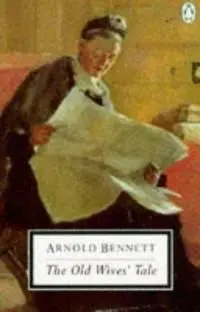
- Название:The Old Wives' Tale
- Автор:
- Издательство:Kessinger Publishing
- Жанр:
- Год:2005
- ISBN:9781417903672
- Рейтинг книги:5 / 5. Голосов: 1
-
Избранное:Добавить в избранное
- Отзывы:
-
Ваша оценка:
The Old Wives' Tale: краткое содержание, описание и аннотация
Предлагаем к чтению аннотацию, описание, краткое содержание или предисловие (зависит от того, что написал сам автор книги «The Old Wives' Tale»). Если вы не нашли необходимую информацию о книге — напишите в комментариях, мы постараемся отыскать её.
The Old Wives' Tale — читать онлайн бесплатно полную книгу (весь текст) целиком
Ниже представлен текст книги, разбитый по страницам. Система сохранения места последней прочитанной страницы, позволяет с удобством читать онлайн бесплатно книгу «The Old Wives' Tale», без необходимости каждый раз заново искать на чём Вы остановились. Поставьте закладку, и сможете в любой момент перейти на страницу, на которой закончили чтение.
Интервал:
Закладка:
At dinner they had a small table to themselves in a corner. The short lady wore a white shawl over her shoulders. Her almost apologetic manner during the meal confirmed the view that she must be a very simple person, unused to the world and its ways. The other continued to be imperial. She ordered half-a-bottle of wine and drank two glasses. She stared about her quite self- unconsciously, whereas the little woman divided her glances between her companion and her plate. They did not talk much. Immediately after dinner they retired. "Widows in easy circumstances" was the verdict; but the contrast between the pair held puzzles that piqued the inquisitive.
Sophia had conquered again. Once more Sophia had resolved to accomplish a thing and she had accomplished it. Events had fallen out thus. The advertisement for a general servant in the Signal had been a disheartening failure. A few answers were received, but of an entirely unsatisfactory character. Constance, a great deal more than Sophia, had been astounded by the bearing and the demands of modern servants. Constance was in despair. If Constance had not had an immense pride she would have been ready to suggest to Sophia that Amy should be asked to 'stay on.' But Constance would have accepted a modern impudent wench first. It was Maria Critchlow who got Constance out of her difficulty by giving her particulars of a reliable servant who was about to leave a situation in which she had stayed for eight years. Constance did not imagine that a servant recommended by Maria Critchlow would suit her, but, being in a quandary, she arranged to see the servant, and both she and Sophia were very pleased with the girl-- Rose Bennion by name. The mischief was that Rose would not be free until about a month after Amy had left. Rose would have left her old situation, but she had a fancy to go and spend a fortnight with a married sister at Manchester before settling into new quarters. Constance and Sophia felt that this caprice of Rose's was really very tiresome and unnecessary. Of course Amy might have been asked to 'stay on' just for a month. Amy would probably have volunteered to do so had she been aware of the circumstances. She was not, however, aware of the circumstances. And Constance was determined not to be beholden to Amy for anything. What could the sisters do? Sophia, who conducted all the interviews with Rose and other candidates, said that it would be a grave error to let Rose slip. Besides, they had no one to take her place, no one who could come at once.
The dilemma was appalling. At least, it seemed appalling to Constance, who really believed that no mistress had ever been so 'awkwardly fixed.' And yet, when Sophia first proposed her solution, Constance considered it to be a quite impossible solution. Sophia's idea was that they should lock up the house and leave it on the same day as Amy left it, to spend a few weeks in some holiday resort. To begin with, the idea of leaving the house empty seemed to Constance a mad idea. The house had never been left empty. And then--going for a holiday in April! Constance had never been for a holiday except in the month of August. No! The project was beset with difficulties and dangers which could not be overcome nor provided against. For example, "We can't come back to a dirty house," said Constance. "And we can't have a strange servant coming here before us." To which Sophia had replied: "Then what SHALL you do?" And Constance, after prodigious reflection on the frightful pass to which destiny had brought her, had said that she supposed she would have to manage with a charwoman until Rose's advent. She asked Sophia if she remembered old Maggie. Sophia, of course, perfectly remembered. Old Maggie was dead, as well as the drunken, amiable Hollins, but there was a young Maggie (wife of a bricklayer) who went out charing in the spare time left from looking after seven children. The more Constance meditated upon young Maggie, the more was she convinced that young Maggie would meet the case. Constance felt she could trust young Maggie.
This expression of trust in Maggie was Constance's undoing. Why should they not go away, and arrange with Maggie to come to the house a few days before their return, to clean and ventilate? The weight of reason overbore Constance. She yielded unwillingly, but she yielded. It was the mention of Buxton that finally moved her. She knew Buxton. Her old landlady at Buxton was dead, and Constance had not visited the place since before Samuel's death; nevertheless its name had a reassuring sound to her ears, and for sciatica its waters and climate were admitted to be the best in England. Gradually Constance permitted herself to be embarked on this perilous enterprise of shutting up the house for twenty-five days. She imparted the information to Amy, who was astounded. Then she commenced upon her domestic preparations. She wrapped Samuel's Family Bible in brown paper; she put Cyril's straw-framed copy of Sir Edwin Landseer away in a drawer, and she took ten thousand other precautions. It was grotesque; it was farcical; it was what you please. And when, with the cab at the door and the luggage on the cab, and the dogs chained together, and Maria Critchlow waiting on the pavement to receive the key, Constance put the key into the door on the outside, and locked up the empty house, Constance's face was tragic with innumerable apprehensions. And Sophia felt that she had performed a miracle. She had.
On the whole the sisters were well received in the hotel, though they were not at an age which commands popularity. In the criticism which was passed upon them--the free, realistic and relentless criticism of private hotels--Sophia was at first set down as overbearing. But in a few days this view was modified, and Sophia rose in esteem. The fact was that Sophia's behaviour changed after forty-eight hours. The Rutland Hotel was very good. It was so good as to disturb Sophia's profound beliefs that there was in the world only one truly high-class pension, and that nobody could teach the creator of that unique pension anything about the art of management. The food was excellent; the attendance in the bedrooms was excellent (and Sophia knew how difficult of attainment was excellent bedroom attendance); and to the eye the interior of the Rutland presented a spectacle far richer than the Pension Frensham could show. The standard of comfort was higher. The guests had a more distinguished appearance. It is true that the prices were much higher. Sophia was humbled. She had enough sense to adjust her perspective. Further, she found herself ignorant of many matters which by the other guests were taken for granted and used as a basis for conversation. Prolonged residence in Paris would not justify this ignorance; it seemed rather to intensify its strangeness. Thus, when someone of cosmopolitan experience, having learnt that she had lived in Paris for many years, asked what had been going on lately at the Comedie Francaise, she had to admit that she had not been in a French theatre for nearly thirty years. And when, on a Sunday, the same person questioned her about the English chaplain in Paris, lo! she knew nothing but his name, had never even seen him. Sophia's life, in its way, had been as narrow as Constance's. Though her experience of human nature was wide, she had been in a groove as deep as Constance's. She had been utterly absorbed in doing one single thing.
By tacit agreement she had charge of the expedition. She paid all the bills. Constance protested against the expensiveness of the affair several times, but Sophia quietened her by sheer force of individuality. Constance had one advantage over Sophia. She knew Buxton and its neighbourhood intimately, and she was therefore in a position to show off the sights and to deal with local peculiarities. In all other respects Sophia led.
They very soon became acclimatized to the hotel. They moved easily between Turkey carpets and sculptured ceilings; their eyes grew used to the eternal vision of themselves and other slow-moving dignities in gilt mirrors, to the heaviness of great oil-paintings of picturesque scenery, to the indications of surreptitious dirt behind massive furniture, to the grey-brown of the shirt-fronts of the waiters, to the litter of trays, boots and pails in long corridors; their ears were always awake to the sounds of gongs and bells. They consulted the barometer and ordered the daily carriage with the perfunctoriness of habit. They discovered what can be learnt of other people's needlework in a hotel on a wet day. They performed co-operative outings with fellow-guests. They invited fellow-guests into their sitting-room. When there was an entertainment they did not avoid it. Sophia was determined to do everything that could with propriety be done, partly as an outlet for her own energy (which since she left Paris had been accumulating), but more on Constance's account. She remembered all that Dr. Stirling had said, and the heartiness of her own agreement with his opinions. It was a great day when, under tuition of an aged lady and in the privacy of their parlour, they both began to study the elements of Patience. Neither had ever played at cards. Constance was almost afraid to touch cards, as though in the very cardboard there had been something unrighteous and perilous. But the respectability of a luxurious private hotel makes proper every act that passes within its walls. And Constance plausibly argued that no harm could come from a game which you played by yourself. She acquired with some aptitude several varieties of Patience. She said: "I think I could enjoy that, if I kept at it. But it does make my head whirl."
Читать дальшеИнтервал:
Закладка:
Похожие книги на «The Old Wives' Tale»
Представляем Вашему вниманию похожие книги на «The Old Wives' Tale» списком для выбора. Мы отобрали схожую по названию и смыслу литературу в надежде предоставить читателям больше вариантов отыскать новые, интересные, ещё непрочитанные произведения.










Обсуждение, отзывы о книге «The Old Wives' Tale» и просто собственные мнения читателей. Оставьте ваши комментарии, напишите, что Вы думаете о произведении, его смысле или главных героях. Укажите что конкретно понравилось, а что нет, и почему Вы так считаете.