Arnold Bennett - The Old Wives' Tale
Здесь есть возможность читать онлайн «Arnold Bennett - The Old Wives' Tale» весь текст электронной книги совершенно бесплатно (целиком полную версию без сокращений). В некоторых случаях можно слушать аудио, скачать через торрент в формате fb2 и присутствует краткое содержание. Год выпуска: 2005, ISBN: 2005, Издательство: Kessinger Publishing, Жанр: Классическая проза, на английском языке. Описание произведения, (предисловие) а так же отзывы посетителей доступны на портале библиотеки ЛибКат.
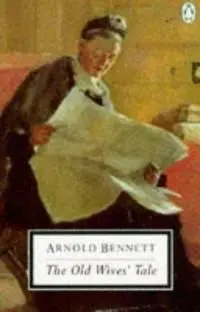
- Название:The Old Wives' Tale
- Автор:
- Издательство:Kessinger Publishing
- Жанр:
- Год:2005
- ISBN:9781417903672
- Рейтинг книги:5 / 5. Голосов: 1
-
Избранное:Добавить в избранное
- Отзывы:
-
Ваша оценка:
The Old Wives' Tale: краткое содержание, описание и аннотация
Предлагаем к чтению аннотацию, описание, краткое содержание или предисловие (зависит от того, что написал сам автор книги «The Old Wives' Tale»). Если вы не нашли необходимую информацию о книге — напишите в комментариях, мы постараемся отыскать её.
The Old Wives' Tale — читать онлайн бесплатно полную книгу (весь текст) целиком
Ниже представлен текст книги, разбитый по страницам. Система сохранения места последней прочитанной страницы, позволяет с удобством читать онлайн бесплатно книгу «The Old Wives' Tale», без необходимости каждый раз заново искать на чём Вы остановились. Поставьте закладку, и сможете в любой момент перейти на страницу, на которой закончили чтение.
Интервал:
Закладка:
Thus Sophia became the proprietress of the Pension Frensham in the cold and correct Rue Lord Byron. She made room in it for nearly all her other furniture, so that instead of being under-furnished, as pensions usually are, it was over-furnished. She was extremely timid at first, for the rent alone was four thousand francs a year; and the prices of the quarter were alarmingly different from those of the Rue Breda. She lost a lot of sleep. For some nights, after she had been installed in the Rue Lord Byron about a fortnight, she scarcely slept at all, and she ate no more than she slept. She cut down expenditure to the very lowest, and frequently walked over to the Rue Breda to do her marketing. With the aid of a charwoman at six sous an hour she accomplished everything. And though clients were few, the feat was in the nature of a miracle; for Sophia had to cook.
The articles which George Augustus Sala wrote under the title "Paris herself again" ought to have been paid for in gold by the hotel and pension-keepers of Paris. They awakened English curiosity and the desire to witness the scene of terrible events. Their effect was immediately noticeable. In less than a year after her adventurous purchase, Sophia had acquired confidence, and she was employing two servants, working them very hard at low wages. She had also acquired the landlady's manner. She was known as Mrs. Frensham. Across the balconies of two windows the Frenshams had left a gilded sign, "Pension Frensham," and Sophia had not removed it. She often explained that her name was not Frensham; but in vain. Every visitor inevitably and persistently addressed her according to the sign. It was past the general comprehension that the proprietress of the Pension Frensham might bear another name than Frensham. But later there came into being a class of persons, habitues of the Pension Frensham, who knew the real name of the proprietress and were proud of knowing it, and by this knowledge were distinguished from the herd. What struck Sophia was the astounding similarity of her guests. They all asked the same questions, made the same exclamations, went out on the same excursions, returned with the same judgments, and exhibited the same unimpaired assurance that foreigners were really very peculiar people. They never seemed to advance in knowledge. There was a constant stream of explorers from England who had to be set on their way to the Louvre or the Bon Marche.
Sophia's sole interest was in her profits. The excellence of her house was firmly established. She kept it up, and she kept the modest prices up. Often she had to refuse guests. She naturally did so with a certain distant condescension. Her manner to guests increased in stiff formality; and she was excessively firm with undesirables. She grew to be seriously convinced that no pension as good as hers existed in the world, or ever had existed, or ever could exist. Hers was the acme of niceness and respectability. Her preference for the respectable rose to a passion. And there were no faults in her establishment. Even the once despised showy furniture of Madame Foucault had mysteriously changed into the best conceivable furniture; and its cracks were hallowed.
She never heard a word of Gerald nor of her family. In the thousands of people who stayed under her perfect roof, not one mentioned Bursley nor disclosed a knowledge of anybody that Sophia had known. Several men had the wit to propose marriage to her with more or less skilfulness, but none of them was skilful enough to perturb her heart. She had forgotten the face of love. She was a landlady. She was THE landlady: efficient, stylish, diplomatic, and tremendously experienced. There was no trickery, no baseness of Parisian life that she was not acquainted with and armed against. She could not be startled and she could not be swindled.
Years passed, until there was a vista of years behind her. Sometimes she would think, in an unoccupied moment, "How strange it is that I should be here, doing what I am doing!" But the regular ordinariness of her existence would instantly seize her again. At the end of 1878, the Exhibition Year, her Pension consisted of two floors instead of one, and she had turned the two hundred pounds stolen from Gerald into over two thousand.
BOOK IV
WHAT LIFE IS
CHAPTER I
FRENSHAM'S
I
Matthew Peel-Swynnerton sat in the long dining-room of the Pension Frensham, Rue Lord Byron, Paris; and he looked out of place there. It was an apartment about thirty feet in length, and of the width of two windows, which sufficiently lighted one half of a very long table with round ends. The gloom of the other extremity was illumined by a large mirror in a tarnished gilt frame, which filled a good portion of the wall opposite the windows. Near the mirror was a high folding-screen of four leaves, and behind this screen could be heard the sound of a door continually shutting and opening. In the long wall to the left of the windows were two doors, one dark and important, a door of state, through which a procession of hungry and a procession of sated solemn self- conscious persons passed twice daily, and the other, a smaller door, glazed, its glass painted with wreaths of roses, not an original door of the house, but a late breach in the wall, that seemed to lead to the dangerous and to the naughty. The wall-paper and the window drapery were rich and forbidding, dark in hue, mysterious of pattern. Over the state-door was a pair of antlers. And at intervals, so high up as to defy inspection, engravings and oil-paintings made oblong patches on the walls. They were hung from immense nails with porcelain heads, and they appeared to depict the more majestic aspect of man and nature. One engraving, over the mantelpiece and nearer earth than the rest, unmistakably showed Louis Philippe and his family in attitudes of virtue. Beneath this royal group, a vast gilt clock, flanked by pendants of the same period, gave the right time--a quarter past seven.
And down the room, filling it, ran the great white table, bordered with bowed heads and the backs of chairs. There were over thirty people at the table, and the peculiarly restrained noisiness of their knives and forks on the plates proved that they were a discreet and a correct people. Their clothes--blouses, bodices, and jackets--did not flatter the lust of the eye. Only two or three were in evening dress. They spoke little, and generally in a timorous tone, as though silence had been enjoined. Somebody would half-whisper a remark, and then his neighbour, absently fingering her bread and lifting gaze from her plate into vacancy, would conscientiously weigh the remark and half-whisper in reply: "I dare say." But a few spoke loudly and volubly, and were regarded by the rest, who envied them, as underbred.
Food was quite properly the chief preoccupation. The diners ate as those eat who are paying a fixed price per day for as much as they can consume while observing the rules of the game. Without moving their heads they glanced out of the corners of their eyes, watching the manoeuvres of the three starched maids who served. They had no conception of food save as portions laid out in rows on large silver dishes, and when a maid bent over them deferentially, balancing the dish, they summed up the offering in an instant, and in an instant decided how much they could decently take, and to what extent they could practise the theoretic liberty of choice. And if the food for any reason did not tempt them, or if it egregiously failed to coincide with their aspirations, they considered themselves aggrieved. For, according to the game, they might not command; they had the right to seize all that was presented under their noses, like genteel tigers; and they had the right to refuse: that was all. The dinner was thus a series of emotional crises for the diners, who knew only that full dishes and clean plates came endlessly from the banging door behind the screen, and that ravaged dishes and dirty plates vanished endlessly through the same door. They were all eating similar food simultaneously; they began together and they finished together. The flies that haunted the paper-bunches which hung from the chandeliers to the level of the flower-vases, were more free. The sole event that chequered the exact regularity of the repast was the occasional arrival of a wine-bottle for one of the guests. The receiver of the wine-bottle signed a small paper in exchange for it and wrote largely a number on the label of the bottle; then, staring at the number and fearing that after all it might be misread by a stupid maid or an unscrupulous compeer, he would re- write the number on another part of the label, even more largely.
Читать дальшеИнтервал:
Закладка:
Похожие книги на «The Old Wives' Tale»
Представляем Вашему вниманию похожие книги на «The Old Wives' Tale» списком для выбора. Мы отобрали схожую по названию и смыслу литературу в надежде предоставить читателям больше вариантов отыскать новые, интересные, ещё непрочитанные произведения.









Обсуждение, отзывы о книге «The Old Wives' Tale» и просто собственные мнения читателей. Оставьте ваши комментарии, напишите, что Вы думаете о произведении, его смысле или главных героях. Укажите что конкретно понравилось, а что нет, и почему Вы так считаете.