Джозеф Киплинг - Indian Tales
Здесь есть возможность читать онлайн «Джозеф Киплинг - Indian Tales» весь текст электронной книги совершенно бесплатно (целиком полную версию без сокращений). В некоторых случаях можно слушать аудио, скачать через торрент в формате fb2 и присутствует краткое содержание. Год выпуска: 2014, Издательство: epubBooks Classics, Жанр: Классическая проза, на английском языке. Описание произведения, (предисловие) а так же отзывы посетителей доступны на портале библиотеки ЛибКат.
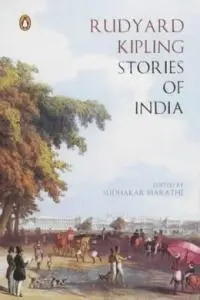
- Название:Indian Tales
- Автор:
- Издательство:epubBooks Classics
- Жанр:
- Год:2014
- ISBN:нет данных
- Рейтинг книги:5 / 5. Голосов: 1
-
Избранное:Добавить в избранное
- Отзывы:
-
Ваша оценка:
Indian Tales: краткое содержание, описание и аннотация
Предлагаем к чтению аннотацию, описание, краткое содержание или предисловие (зависит от того, что написал сам автор книги «Indian Tales»). Если вы не нашли необходимую информацию о книге — напишите в комментариях, мы постараемся отыскать её.
Indian Tales — читать онлайн бесплатно полную книгу (весь текст) целиком
Ниже представлен текст книги, разбитый по страницам. Система сохранения места последней прочитанной страницы, позволяет с удобством читать онлайн бесплатно книгу «Indian Tales», без необходимости каждый раз заново искать на чём Вы остановились. Поставьте закладку, и сможете в любой момент перейти на страницу, на которой закончили чтение.
Интервал:
Закладка:
I met Kitty on the homeward road—a shadow among shadows.
If I were to describe all the incidents of the next fortnight in their order, my story would never come to an end; and your patience would be exhausted. Morning after morning and evening after evening the ghostly 'rickshaw and I used to wander through Simla together. Wherever I went there the four black and white liveries followed me and bore me company to and from my hotel. At the Theatre I found them amid the crowd of yelling jhampanies ; outside the Club veranda, after a long evening of whist; at the Birthday Ball, waiting patiently for my reappearance; and in broad daylight when I went calling. Save that it cast no shadow, the 'rickshaw was in every respect as real to look upon as one of wood and iron. More than once, indeed, I have had to check myself from warning some hard–riding friend against cantering over it. More than once I have walked down the Mall deep in conversation with Mrs. Wessington to the unspeakable amazement of the passers–by.
Before I had been out and about a week I learned that the "fit" theory had been discarded in favor of insanity. However, I made no change in my mode of life. I called, rode, and dined out as freely as ever. I had a passion for the society of my kind which I had never felt before; I hungered to be among the realities of life; and at the same time I felt vaguely unhappy when I had been separated too long from my ghostly companion. It would be almost impossible to describe my varying moods from the 15th of May up to to–day.
The presence of the 'rickshaw filled me by turns with horror, blind fear, a dim sort of pleasure, and utter despair. I dared not leave Simla; and I knew that my stay there was killing me. I knew, moreover, that it was my destiny to die slowly and a little every day. My only anxiety was to get the penance over as quietly as might be. Alternately I hungered for a sight of Kitty and watched her outrageous flirtations with my successor—to speak more accurately, my successors—with amused interest. She was as much out of my life as I was out of hers. By day I wandered with Mrs. Wessington almost content. By night I implored Heaven to let me return to the world as I used to know it. Above all these varying moods lay the sensation of dull, numbing wonder that the Seen and the Unseen should mingle so strangely on this earth to hound one poor soul to its grave.
August 27. —Heatherlegh has been indefatigable in his attendance on me; and only yesterday told me that I ought to send in an application for sick leave. An application to escape the company of a phantom! A request that the Government would graciously permit me to get rid of five ghosts and an airy 'rickshaw by going to England! Heatherlegh's proposition moved me to almost hysterical laughter. I told him that I should await the end quietly at Simla; and I am sure that the end is not far off. Believe me that I dread its advent more than any word can say; and I torture myself nightly with a thousand speculations as to the manner of my death.
Shall I die in my bed decently and as an English gentleman should die; or, in one last walk on the Mall, will my soul be wrenched from me to take its place forever and ever by the side of that ghastly phantasm? Shall I return to my old lost allegiance in the next world, or shall I meet Agnes loathing her and bound to her side through all eternity? Shall we two hover over the scene of our lives till the end of Time? As the day of my death draws nearer, the intense horror that all living flesh feels toward escaped spirits from beyond the grave grows more and more powerful. It is an awful thing to go down quick among the dead with scarcely one–half of your life completed. It is a thousand times more awful to wait as I do in your midst, for I know not what unimaginable terror. Pity me, at least on the score of my "delusion," for I know you will never believe what I have written here. Yet as surely as ever a man was done to death by the Powers of Darkness I am that man.
In justice, too, pity her. For as surely as ever woman was killed by man, I killed Mrs. Wessington. And the last portion of my punishment is even now upon me.
On the Strength of a Likeness
If your mirror be broken, look into still water; but have a care that you do not fall in.
Hindu Proverb.Next to a requited attachment, one of the most convenient things that a young man can carry about with him at the beginning of his career, is an unrequited attachment. It makes him feel important and business–like, and blasé , and cynical; and whenever he has a touch of fever, or suffers from want of exercise, he can mourn over his lost love, and be very happy in a tender, twilight fashion,
Hannasyde's affair of the heart had been a godsend to him. It was four years old, and the girl had long since given up thinking of it. She had married and had many cares of her own. In the beginning, she had told Hannasyde that, "while she could never be anything more than a sister to him, she would always take the deepest interest in his welfare." This startlingly new and original remark gave Hannasyde something to think over for two years; and his own vanity filled in the other twenty–four months. Hannasyde was quite different from Phil Garron, but, none the less, had several points in common with that far too lucky man.
He kept his unrequited attachment by him as men keep a well–smoked pipe—for comfort's sake, and because it had grown dear in the using. It brought him happily through one Simla season. Hannasyde was not lovely. There was a crudity in his manners, and a roughness in the way in which he helped a lady on to her horse, that did not attract the other sex to him. Even if he had cast about for their favor, which he did not. He kept his wounded heart all to himself for a while.
Then trouble came to him. All who go to Simla know the slope from the Telegraph to the Public Works Office. Hannasyde was loafing up the hill, one September morning between calling hours, when a 'rickshaw came down in a hurry, and in the 'rickshaw sat the living, breathing image of the girl who had made him so happily unhappy. Hannasyde leaned against the railings and gasped. He wanted to run downhill after the 'rickshaw, but that was impossible; so he went forward with most of his blood in his temples. It was impossible, for many reasons, that the woman in the 'rickshaw could be the girl he had known. She was, he discovered later, the wife of a man from Dindigul, or Coimbatore, or some out–of–the–way place, and she had come up to Simla early in the season for the good of her health. She was going back to Dindigul, or wherever it was, at the end of the season; and in all likelihood would never return to Simla again; her proper Hill–station being Ootacamund. That night Hannasyde, raw and savage from the raking up of all old feelings, took counsel with himself for one measured hour. What he decided upon was this; and you must decide for yourself how much genuine affection for the old Love, and how much a very natural inclination to go abroad and enjoy himself, affected the decision. Mrs. Landys–Haggert would never in all human likelihood cross his path again. So whatever he did didn't much matter. She was marvelously like the girl who "took a deep interest" and the rest of the formula. All things considered, it would be pleasant to make the acquaintance of Mrs. Landys–Haggert, and for a little time—only a very little time—to make believe that he was with Alice Chisane again. Every one is more or less mad on one point. Hannasyde's particular monomania was his old love, Alice Chisane.
He made it his business to get introduced to Mrs. Haggert, and the introduction prospered. He also made it his business to see as much as he could of that lady. When a man is in earnest as to interviews, the facilities which Simla offers are startling. There are garden–parties, and tennis–parties, and picnics, and luncheons at Annandale, and rifle–matches, and dinners and balls; besides rides and walks, which are matters of private arrangement. Hannasyde had started with the intention of seeing a likeness, and he ended by doing much more. He wanted to be deceived, he meant to be deceived, and he deceived himself very thoroughly. Not only were the face and figure the face and figure of Alice Chisane, but the voice and lower tones were exactly the same, and so were the turns of speech; and the little mannerisms, that every woman has, of gait and gesticulation, were absolutely and identically the same. The turn of the head was the same; the tired look in the eyes at the end of a long walk was the same; the stoop–and–wrench over the saddle to hold in a pulling horse was the same; and once, most marvelous of all, Mrs. Landys–Haggert singing to herself in the next room, while Hannasyde was waiting to take her for a ride, hummed, note for note, with a throaty quiver of the voice in the second line, "Poor Wandering One!" exactly as Alice Chisane had hummed it for Hannasyde in the dusk of an English drawing–room. In the actual woman herself—in the soul of her—there was not the least likeness; she and Alice Chisane being cast in different moulds. But all that Hannasyde wanted to know and see and think about, was this maddening and perplexing likeness of face and voice and manner. He was bent on making a fool of himself that way; and he was in no sort disappointed.
Читать дальшеИнтервал:
Закладка:
Похожие книги на «Indian Tales»
Представляем Вашему вниманию похожие книги на «Indian Tales» списком для выбора. Мы отобрали схожую по названию и смыслу литературу в надежде предоставить читателям больше вариантов отыскать новые, интересные, ещё непрочитанные произведения.









Обсуждение, отзывы о книге «Indian Tales» и просто собственные мнения читателей. Оставьте ваши комментарии, напишите, что Вы думаете о произведении, его смысле или главных героях. Укажите что конкретно понравилось, а что нет, и почему Вы так считаете.