Джозеф Киплинг - Indian Tales
Здесь есть возможность читать онлайн «Джозеф Киплинг - Indian Tales» весь текст электронной книги совершенно бесплатно (целиком полную версию без сокращений). В некоторых случаях можно слушать аудио, скачать через торрент в формате fb2 и присутствует краткое содержание. Год выпуска: 2014, Издательство: epubBooks Classics, Жанр: Классическая проза, на английском языке. Описание произведения, (предисловие) а так же отзывы посетителей доступны на портале библиотеки ЛибКат.
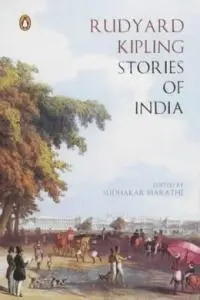
- Название:Indian Tales
- Автор:
- Издательство:epubBooks Classics
- Жанр:
- Год:2014
- ISBN:нет данных
- Рейтинг книги:5 / 5. Голосов: 1
-
Избранное:Добавить в избранное
- Отзывы:
-
Ваша оценка:
Indian Tales: краткое содержание, описание и аннотация
Предлагаем к чтению аннотацию, описание, краткое содержание или предисловие (зависит от того, что написал сам автор книги «Indian Tales»). Если вы не нашли необходимую информацию о книге — напишите в комментариях, мы постараемся отыскать её.
Indian Tales — читать онлайн бесплатно полную книгу (весь текст) целиком
Ниже представлен текст книги, разбитый по страницам. Система сохранения места последней прочитанной страницы, позволяет с удобством читать онлайн бесплатно книгу «Indian Tales», без необходимости каждый раз заново искать на чём Вы остановились. Поставьте закладку, и сможете в любой момент перейти на страницу, на которой закончили чтение.
Интервал:
Закладка:
Open and obvious devotion from any sort of man is always pleasant to any sort of woman; but Mrs. Landys–Haggert, being a woman of the world, could make nothing of Hannasyde's admiration.
He would take any amount of trouble—he was a selfish man habitually—to meet and forestall, if possible, her wishes. Anything she told him to do was law; and he was, there could be no doubting it, fond of her company so long as she talked to him, and kept on talking about trivialities. But when she launched into expression of her personal views and her wrongs, those small social differences that make the spice of Simla life, Hannasyde was neither pleased nor interested. He didn't want to know anything about Mrs. Landys–Haggert, or her experiences in the past—she had traveled nearly all over the world, and could talk cleverly—he wanted the likeness of Alice Chisane before his eyes and her voice in his ears. Anything outside that, reminding him of another personality, jarred, and he showed that it did.
Under the new Post Office, one evening, Mrs. Landys–Haggert turned on him, and spoke her mind shortly and without warning. "Mr. Hannasyde," said she, "will you be good enough to explain why you have appointed yourself my special cavalier servente? I don't understand it. But I am perfectly certain, somehow or other, that you don't care the least little bit in the world for me ." This seems to support, by the way, the theory that no man can act or tell lies to a woman without being found out. Hannasyde was taken off his guard. His defence never was a strong one, because he was always thinking of himself, and he blurted out, before he knew what he was saying, this inexpedient answer, "No more I do."
The queerness of the situation and the reply, made Mrs. Landys–Haggert laugh. Then it all came out; and at the end of Hannasyde's lucid explanation Mrs. Haggert said, with the least little touch of scorn in her voice, "So I'm to act as the lay–figure for you to hang the rags of your tattered affections on, am I?"
Hannasyde didn't see what answer was required, and he devoted himself generally and vaguely to the praise of Alice Chisane, which was unsatisfactory. Now it is to be thoroughly made clear that Mrs. Haggert had not the shadow of a ghost of an interest in Hannasyde. Only … only no woman likes being made love through instead of to—specially on behalf of a musty divinity of four years' standing.
Hannasyde did not see that he had made any very particular exhibition of himself. He was glad to find a sympathetic soul in the arid wastes of Simla.
When the season ended, Hannasyde went down to his own place and Mrs. Haggert to hers, "It was like making love to a ghost," said Hannasyde to himself, "and it doesn't matter; and now I'll get to my work." But he found himself thinking steadily of the Haggert–Chisane ghost; and he could not be certain whether it was Haggert or Chisane that made up the greater part of the pretty phantom.
He got understanding a month later.
A peculiar point of this peculiar country is the way in which a heartless Government transfers men from one end of the Empire to the other. You can never be sure of getting rid of a friend or an enemy till he or she dies. There was a case once—but that's another story.
Haggert's Department ordered him up from Dindigul to the Frontier at two days' notice, and he went through, losing money at every step, from Dindigul to his station. He dropped Mrs. Haggert at Lucknow, to stay with some friends there, to take part in a big ball at the Chutter Munzil, and to come on when he had made the new home a little comfortable. Lucknow was Hannasyde's station, and Mrs. Haggert stayed a week there. Hannasyde went to meet her. As the train came in, he discovered what he had been thinking of for the past month. The unwisdom of his conduct also struck him. The Lucknow week, with two dances, and an unlimited quantity of rides together, clinched matters; and Hannasyde found himself pacing this circle of thought:—He adored Alice Chisane, at least he had adored her. And he admired Mrs. Landys–Haggert because she was like Alice Chisane. But Mrs. Landys–Haggert was not in the least like Alice Chisane, being a thousand times more adorable. Now Alice Chisane was "the bride of another," and so was Mrs. Landys–Haggert, and a good and honest wife too. Therefore he, Hannasyde, was … here he called himself several hard names, and wished that he had been wise in the beginning.
Whether Mrs. Landys–Haggert saw what was going on in his mind, she alone knows. He seemed to take an unqualified interest in everything connected with herself, as distinguished from the Alice–Chisane likeness, and he said one or two things which, if Alice Chisane had been still betrothed to him, could scarcely have been excused, even on the grounds of the likeness. But Mrs. Haggert turned the remarks aside, and spent a long time in making Hannasyde see what a comfort and a pleasure she had been to him because of her strange resemblance to his old love. Hannasyde groaned in his saddle and said, "Yes, indeed," and busied himself with preparations for her departure to the Frontier, feeling very small and miserable.
The last day of her stay at Lucknow came, and Hannasyde saw her off at the Railway Station. She was very grateful for his kindness and the trouble he had taken, and smiled pleasantly and sympathetically as one who knew the Alice–Chisane reason of that kindness. And Hannasyde abused the coolies with the luggage, and hustled the people on the platform, and prayed that the roof might fall in and slay him.
As the train went out slowly, Mrs. Landys–Haggert leaned out of the window to say good–bye—"On second thoughts au revoir , Mr. Hannasyde. I go Home in the Spring, and perhaps I may meet you in Town."
Hannasyde shook hands, and said very earnestly and adoringly—"I hope to Heaven I shall never see your face again!"
And Mrs. Haggert understood.
Private Learoyd's Story
And he told a tale.
Chronicles of Gautama Buddha.Far from the haunts of Company Officers who insist upon kit–inspections, far from keen–nosed Sergeants who sniff the pipe stuffed into the bedding–roll, two miles from the tumult of the barracks, lies the Trap. It is an old dry well, shadowed by a twisted pipal tree and fenced with high grass. Here, in the years gone by, did Private Ortheris establish his depôt and menagerie for such possessions, dead and living, as could not safely be introduced to the barrack–room. Here were gathered Houdin pullets, and fox–terriers of undoubted pedigree and more than doubtful ownership, for Ortheris was an inveterate poacher and preëminent among a regiment of neat–handed dog–stealers.
Never again will the long lazy evenings return wherein Ortheris, whistling softly, moved surgeon–wise among the captives of his craft at the bottom of the well; when Learoyd sat in the niche, giving sage counsel on the management of "tykes," and Mulvaney, from the crook of the overhanging pipal , waved his enormous boots in benediction above our heads, delighting us with tales of Love and War, and strange experiences of cities and men.
Ortheris—landed at last in the "little stuff bird–shop" for which your soul longed; Learoyd—back again in the smoky, stone–ribbed North, amid the clang of the Bradford looms; Mulvaney—grizzled, tender, and very wise Ulysses, sweltering on the earthwork of a Central India line—judge if I have forgotten old days in the Trap!
Orth'ris, as allus thinks he knaws more than other foaks, said she wasn't a real laady, but nobbut a Hewrasian. I don't gainsay as her culler was a bit doosky like. But she was a laady. Why, she rode iv a carriage, an' good 'osses, too, an' her 'air was that oiled as you could see your faice in it, an' she wore di'mond rings an' a goold chain, an' silk an' satin dresses as mun 'a' cost a deal, for it isn't a cheap shop as keeps enough o' one pattern to fit a figure like hers. Her name was Mrs. DeSussa, an' t' waay I coom to be acquainted wi' her was along of our Colonel's Laady's dog Rip.
Читать дальшеИнтервал:
Закладка:
Похожие книги на «Indian Tales»
Представляем Вашему вниманию похожие книги на «Indian Tales» списком для выбора. Мы отобрали схожую по названию и смыслу литературу в надежде предоставить читателям больше вариантов отыскать новые, интересные, ещё непрочитанные произведения.








Обсуждение, отзывы о книге «Indian Tales» и просто собственные мнения читателей. Оставьте ваши комментарии, напишите, что Вы думаете о произведении, его смысле или главных героях. Укажите что конкретно понравилось, а что нет, и почему Вы так считаете.