Джозеф Киплинг - Indian Tales
Здесь есть возможность читать онлайн «Джозеф Киплинг - Indian Tales» весь текст электронной книги совершенно бесплатно (целиком полную версию без сокращений). В некоторых случаях можно слушать аудио, скачать через торрент в формате fb2 и присутствует краткое содержание. Год выпуска: 2014, Издательство: epubBooks Classics, Жанр: Классическая проза, на английском языке. Описание произведения, (предисловие) а так же отзывы посетителей доступны на портале библиотеки ЛибКат.
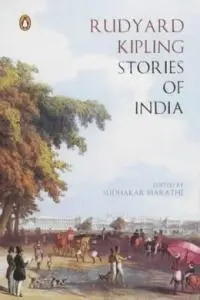
- Название:Indian Tales
- Автор:
- Издательство:epubBooks Classics
- Жанр:
- Год:2014
- ISBN:нет данных
- Рейтинг книги:5 / 5. Голосов: 1
-
Избранное:Добавить в избранное
- Отзывы:
-
Ваша оценка:
Indian Tales: краткое содержание, описание и аннотация
Предлагаем к чтению аннотацию, описание, краткое содержание или предисловие (зависит от того, что написал сам автор книги «Indian Tales»). Если вы не нашли необходимую информацию о книге — напишите в комментариях, мы постараемся отыскать её.
Indian Tales — читать онлайн бесплатно полную книгу (весь текст) целиком
Ниже представлен текст книги, разбитый по страницам. Система сохранения места последней прочитанной страницы, позволяет с удобством читать онлайн бесплатно книгу «Indian Tales», без необходимости каждый раз заново искать на чём Вы остановились. Поставьте закладку, и сможете в любой момент перейти на страницу, на которой закончили чтение.
Интервал:
Закладка:
"'Have you got your rifles?' sez Brazenose. 'Got 'em!' sez Orth'ris. 'I've got that thief Mulvaney's for all my back–pay, an' she'll kick my heart sick wid that blunderin' long shtock av hers.'—'Go on!' yells Brazenose, whippin' his sword out. 'Go on an' take the town! An' the Lord have mercy on our sowls!'
"Thin the bhoys gave wan divastatin' howl, an' pranced into the dhark, feelin' for the town, an' blindin' an' stiffin' like Cavalry Ridin' Masters whin the grass pricked their bare legs. I hammered wid the butt at some bamboo–thing that felt wake, an' the rest come an' hammered contagious, while the jingles was jingling, an' feroshus yells from inside was shplittin' our ears. We was too close under the wall for thim to hurt us.
"Evenshually, the thing, whatever ut was, bruk; an' the six–and–twinty av us tumbled, wan after the other, naked as we was borrun, into the town of Lungtungpen. There was a melly av a sumpshus kind for a whoile; but whether they tuk us, all white an' wet, for a new breed av divil, or a new kind av dacoit, I don't know. They ran as though we was both, an' we wint into thim, baynit an' butt, shriekin' wid laughin'. There was torches in the shtreets, an' I saw little Orth'ris rubbin' his showlther ivry time he loosed my long–shtock Martini; an' Brazenose walkin' into the gang wid his sword, like Diarmid av the Gowlden Collar—barring he hadn't a stitch av clothin' on him. We diskivered elephints wid dacoits under their bellies, an', what wid wan thing an' another, we was busy till mornin' takin' possession av the town of Lungtungpen.
"Thin we halted an' formed up, the wimmen howlin' in the houses an' Lift'nint Brazenose blushin' pink in the light av the mornin' sun. 'Twas the most ondasint p'rade I iver tuk a hand in. Foive–and–twenty privits an' a orficer av the Line in review ordher, an' not as much as wud dust a fife betune 'em all in the way of clothin'! Eight av us had their belts an' pouches on; but the rest had gone in wid a handful av cartridges an' the skin God gave thim. They was as nakid as Vanus.
"'Number off from the right!' sez the Lift'nint. 'Odd numbers fall out to dress; even numbers pathrol the town till relieved by the dressing party.' Let me tell you, pathrollin' a town wid nothing on is an ex pay rience. I pathrolled for tin minutes, an' begad, before 'twas over, I blushed. The women laughed so. I niver blushed before or since; but I blushed all over my carkiss thin. Orth'ris didn't pathrol. He sez only, 'Portsmith Barricks an' the 'Ard av a Sunday! Thin he lay down an' rowled any ways wid laughin'.
"Whin we was all dhressed, we counted the dead—sivinty–foive dacoits besides wounded. We tuk five elephints, a hunder' an' sivinty Sniders, two hunder' dahs, and a lot av other burglarious thruck. Not a man av us was hurt—excep' maybe the Lift'nint, an' he from the shock to his dasincy.
"The Headman av Lungtungpen, who surrinder'd himself, asked the Interprut'r—''Av the English fight like that wid their clo'es off, what in the wurruld do they do wid their clo'es on?' Orth'ris began rowlin' his eyes an' crackin' his fingers an' dancin' a step–dance for to impress the Headman. He ran to his house; an' we spint the rest av the day carryin' the Lift'nint on our showlthers round the town, an' playin' wid the Burmese babies—fat, little, brown little divils, as pretty as picturs.
"Whin I was inviladed for the dysent'ry to India, I sez to the Lift'nint, 'Sorr,' sez I, 'you've the makin's in you av a great man; but, av you'll let an ould sodger spake, you're too fond of the–ourisin'.' He shuk hands wid me and sez, 'Hit high, hit low, there's no plasin' you, Mulvaney. You've seen me waltzin' through Lungtungpen like a Red Injin widout the warpaint, an' you say I'm too fond av the–ourisin'?'—'Sorr,' sez I, for I loved the bhoy; 'I wud waltz wid you in that condishin through Hell , an' so wud the rest av the men!' Thin I wint downshtrame in the flat an' left him my blessin'. May the Saints carry ut where ut shud go, for he was a fine upstandin' young orficer,
"To reshume. Fwhat I've said jist shows the use av three–year–olds. Wud fifty seasoned sodgers have taken Lungtungpen in the dhark that way? No! They'd know the risk av fever and chill. Let alone the shootin'. Two hundher' might have done ut. But the three–year–olds know little an' care less; an' where there's no fear, there's no danger. Catch thim young, feed thim high, an' by the honor av that great, little man Bobs, behind a good orficer 'tisn't only dacoits they'd smash wid their clo'es off—'tis Con–ti–nental Ar–r–r–mies! They tuk Lungtungpen nakid; an' they'd take St. Pethersburg in their dhrawers! Begad, they would that!
"Here's your pipe, sorr. Shmoke her tinderly wid honey–dew, afther letting the reek av the Canteen plug die away. But 'tis no good, thanks to you all the same, fillin' my pouch wid your chopped hay. Canteen baccy's like the Army. It shpoils a man's taste for moilder things."
So saying, Mulvaney took up his butterfly–net, and returned to barracks.
The Phantom Rickshaw
May no ill dreams disturb my rest,
Nor Powers of Darkness me molest.
One of the few advantages that India has over England is a great Knowability. After five years' service a man is directly or indirectly acquainted with the two or three hundred Civilians in his Province, all the Messes of ten or twelve Regiments and Batteries, and some fifteen hundred other people of the non–official caste, in ten years his knowledge should be doubled, and at the end of twenty he knows, or knows something about, every Englishman in the Empire, and may travel anywhere and everywhere without paying hotel–bills.
Globe–trotters who expect entertainment as a right, have, even within my memory, blunted this open–heartedness, but none the less to–day, if you belong to the Inner Circle and are neither a Bear nor a Black Sheep, all houses are open to you, and our small world is very, very kind and helpful.
Rickett of Kamartha stayed with Polder of Kumaon some fifteen years ago. He meant to stay two nights, but was knocked down by rheumatic fever, and for six weeks disorganized Polder's establishment, stopped Polder's work, and nearly died in Polder's bedroom. Polder behaves as though he had been placed under eternal obligation by Rickett, and yearly sends the little Ricketts a box of presents and toys. It is the same everywhere. The men who do not take the trouble to conceal from you their opinion that you are an incompetent ass, and the women who blacken your character and misunderstand your wife's amusements, will work themselves to the bone in your behalf if you fall sick or into serious trouble,
Heatherlegh, the Doctor, kept, in addition to his regular practice, a hospital on his private account—an arrangement of loose boxes for Incurables, his friend called it—but it was really a sort of fitting–up shed for craft that had been damaged by stress of weather. The weather in India is often sultry, and since the tale of bricks is always a fixed quantity, and the only liberty allowed is permission to work overtime and get no thanks, men occasionally break down and become as mixed as the metaphors in this sentence.
Heatherlegh is the dearest doctor that ever was, and his invariable prescription to all his patients is, "lie low, go slow, and keep cool." He says that more men are killed by overwork than the importance of this world justifies. He maintains that overwork slew Pansay, who died under his hands about three years ago. He has, of course, the right to speak authoritatively, and he laughs at my theory that there was a crack in Pansay's head and a little bit of the Dark World came through and pressed him to death. "Pansay went off the handle," says Heatherlegh, "after the stimulus of long leave at Home. He may or he may not have behaved like a blackguard to Mrs. Keith–Wessington. My notion is that the work of the Katabundi Settlement ran him off his legs, and that he took to brooding and making much of an ordinary P. & O. flirtation. He certainly was engaged to Miss Mannering, and she certainly broke off the engagement. Then he took a feverish chill and all that nonsense about ghosts developed. Overwork started his illness, kept it alight, and killed him, poor devil. Write him off to the System—one man to take the work of two and a half men."
Читать дальшеИнтервал:
Закладка:
Похожие книги на «Indian Tales»
Представляем Вашему вниманию похожие книги на «Indian Tales» списком для выбора. Мы отобрали схожую по названию и смыслу литературу в надежде предоставить читателям больше вариантов отыскать новые, интересные, ещё непрочитанные произведения.







Обсуждение, отзывы о книге «Indian Tales» и просто собственные мнения читателей. Оставьте ваши комментарии, напишите, что Вы думаете о произведении, его смысле или главных героях. Укажите что конкретно понравилось, а что нет, и почему Вы так считаете.