Джозеф Киплинг - Indian Tales
Здесь есть возможность читать онлайн «Джозеф Киплинг - Indian Tales» весь текст электронной книги совершенно бесплатно (целиком полную версию без сокращений). В некоторых случаях можно слушать аудио, скачать через торрент в формате fb2 и присутствует краткое содержание. Год выпуска: 2014, Издательство: epubBooks Classics, Жанр: Классическая проза, на английском языке. Описание произведения, (предисловие) а так же отзывы посетителей доступны на портале библиотеки ЛибКат.
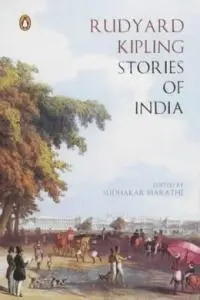
- Название:Indian Tales
- Автор:
- Издательство:epubBooks Classics
- Жанр:
- Год:2014
- ISBN:нет данных
- Рейтинг книги:5 / 5. Голосов: 1
-
Избранное:Добавить в избранное
- Отзывы:
-
Ваша оценка:
Indian Tales: краткое содержание, описание и аннотация
Предлагаем к чтению аннотацию, описание, краткое содержание или предисловие (зависит от того, что написал сам автор книги «Indian Tales»). Если вы не нашли необходимую информацию о книге — напишите в комментариях, мы постараемся отыскать её.
Indian Tales — читать онлайн бесплатно полную книгу (весь текст) целиком
Ниже представлен текст книги, разбитый по страницам. Система сохранения места последней прочитанной страницы, позволяет с удобством читать онлайн бесплатно книгу «Indian Tales», без необходимости каждый раз заново искать на чём Вы остановились. Поставьте закладку, и сможете в любой момент перейти на страницу, на которой закончили чтение.
Интервал:
Закладка:
The days were very long to His Majesty the King, and the nights longer still. Miss Biddums had informed him, more than once, what was the ultimate destiny of "fieves," and when he passed the interminable mud flanks of the Central Jail, he shook in his little strapped shoes.
But release came after an afternoon spent in playing boats by the edge of the tank at the bottom of the garden. His Majesty the King went to tea, and, for the first time in his memory, the meal revolted him. His nose was very cold, and his cheeks were burning hot. There was a weight about his feet, and he pressed his head several times to make sure that it was not swelling as he sat.
"I feel vevy funny," said His Majesty the King, rubbing his nose. "Vere's a buzz–buzz in my head."
He went to bed quietly. Miss Biddums was out and the bearer undressed him.
The sin of the "'parkle cwown" was forgotten in the acuteness of the discomfort to which he roused after a leaden sleep of some hours, He was thirsty, and the bearer had forgotten to leave the drinking–water. "Miss Biddums! Miss Biddums! I'm so kirsty!"
No answer, Miss Biddums had leave to attend the wedding of a Calcutta schoolmate. His Majesty the King had forgotten that.
"I want a dwink of water!" he cried, but his voice was dried up in his throat. "I want a dwink! Vere is ve glass?"
He sat up in bed and looked round. There was a murmur of voices from the other side of the nursery door. It was better to face the terrible unknown than to choke in the dark. He slipped out of bed, but his feet were strangely wilful, and he reeled once or twice. Then he pushed the door open and staggered—a puffed and purple–faced little figure—into the brilliant light of the dining–room full of pretty ladies.
"I'm vevy hot! I'm vevy uncomfitivle," moaned His Majesty the King, clinging to the portière, "and vere's no water in ve glass, and I'm so kirsty. Give me a dwink of water."
An apparition in black and white—His Majesty the King could hardly see distinctly—lifted him up to the level of the table, and felt his wrists and forehead. The water came, and he drank deeply, his teeth chattering against the edge of the tumbler. Then every one seemed to go away—every one except the huge man in black and white, who carried him back to his bed; the mother and father following. And the sin of the "'parkle cwown" rushed back and took possession of the terrified soul.
"I'm a fief!" he gasped. "I want to tell Miss Biddums vat I'm a fief. Vere is Miss Biddums?"
Miss Biddums had come and was bending over him. "I'm a fief," he whispered. "A fief—like ve men in the pwison. But I'll tell now, I tookt …I tookt ve 'parkle cwown when the man that came left it in ve hall. I bwoke ve paper and ve little bwown box, and it looked shiny, and I tookt it to play wif, and I was afwaid. It's in ve dooly–box at ve bottom. No one never asked for it, but I was afwaid. Oh, go an' get ve dooly–box!"
Miss Biddums obediently stooped to the lowest shelf of the almirah and unearthed the big paper box in which His Majesty the King kept his dearest possessions. Under the tin soldiers, and a layer of mud pellets for a pellet–bow, winked and blazed a diamond star, wrapped roughly in a half–sheet of note–paper whereon were a few words.
Somebody was crying at the head of the bed, and a man's hand touched the forehead of His Majesty the King, who grasped the packet and spread it on the bed.
"Vat is ve 'parkle cwown," he said, and wept bitterly; for now that he had made restitution he would fain have kept the shining splendor with him.
"It concerns you too," said a voice at the head of the bed. "Read the note. This is not the time to keep back anything."
The note was curt, very much to the point, and signed by a single initial. " If you wear this to–morrow night I shall know what to expect. " The date was three weeks old.
A whisper followed, and the deeper voice returned: "And you drifted as far apart as that! I think it makes us quits now, doesn't it? Oh, can't we drop this folly once and for all? Is it worth it, darling?"
"Kiss me too," said His Majesty the King, dreamily. "You isn't vevy angwy, is you?"
The fever burned itself out, and His Majesty the King slept.
When he waked, it was in a new world—peopled by his father and mother as well as Miss Biddums: and there was much love in that world and no morsel of fear, and more petting than was good for several little boys. His Majesty the King was too young to moralize on the uncertainty of things human, or he would have been impressed with the singular advantages of crime—ay, black sin. Behold, he had stolen the "'parkle cwown," and his reward was Love, and the right to play in the waste–paper basket under the table "for always".
He trotted over to spend an afternoon with Patsie, and the Commissioner's wife would have kissed him. "No, not vere," said His Majesty the King, with superb insolence, fencing one corner of his mouth with his hand, "Vat's my Mamma's place—vere she kisses me,"
"Oh!" said the Commissioner's wife, briefly. Then to herself: "Well, I suppose I ought to be glad for his sake. Children are selfish little grubs and—I've got my Patsie."
The Strange Ride of Morrowbie Jukes
Alive or dead—there is no other way.
Native Proverb.There is, as the conjurers say, no deception about this tale. Jukes by accident stumbled upon a village that is well known to exist, though he is the only Englishman who has been there. A somewhat similar institution used to flourish on the outskirts of Calcutta, and there is a story that if you go into the heart of Bikanir, which is in the heart of the Great Indian Desert, you shall come across not a village but a town where the Dead who did not die but may not live have established their headquarters. And, since it is perfectly true that in the same Desert is a wonderful city where all the rich moneylenders retreat after they have made their fortunes (fortunes so vast that the owners cannot trust even the strong hand of the Government to protect them, but take refuge in the waterless sands), and drive sumptuous C–spring barouches, and buy beautiful girls and decorate their palaces with gold and ivory and Minton tiles and mother–o'–pearl, I do not see why Jukes's tale should not be true. He is a Civil Engineer, with a head for plans and distances and things of that kind, and he certainly would not take the trouble to invent imaginary traps. He could earn more by doing his legitimate work. He never varies the tale in the telling, and grows very hot and indignant when he thinks of the disrespectful treatment he received. He wrote this quite straightforwardly at first, but he has since touched it up in places and introduced Moral Reflections, thus:
In the beginning it all arose from a slight attack of fever. My work necessitated my being in camp for some months between Pakpattan and Mubarakpur—a desolate sandy stretch of country as every one who has had the misfortune to go there may know. My coolies were neither more nor less exasperating than other gangs, and my work demanded sufficient attention to keep me from moping, had I been inclined to so unmanly a weakness.
On the 23d December, 1884, I felt a little feverish. There was a full moon at the time, and, in consequence, every dog near my tent was baying it. The brutes assembled in twos and threes and drove me frantic. A few days previously I had shot one loud–mouthed singer and suspended his carcass in terrorem about fifty yards from my tent–door. But his friends fell upon, fought for, and ultimately devoured the body: and, as it seemed to me, sang their hymns of thanksgiving afterward with renewed energy.
Читать дальшеИнтервал:
Закладка:
Похожие книги на «Indian Tales»
Представляем Вашему вниманию похожие книги на «Indian Tales» списком для выбора. Мы отобрали схожую по названию и смыслу литературу в надежде предоставить читателям больше вариантов отыскать новые, интересные, ещё непрочитанные произведения.





Обсуждение, отзывы о книге «Indian Tales» и просто собственные мнения читателей. Оставьте ваши комментарии, напишите, что Вы думаете о произведении, его смысле или главных героях. Укажите что конкретно понравилось, а что нет, и почему Вы так считаете.