Джозеф Киплинг - Indian Tales
Здесь есть возможность читать онлайн «Джозеф Киплинг - Indian Tales» весь текст электронной книги совершенно бесплатно (целиком полную версию без сокращений). В некоторых случаях можно слушать аудио, скачать через торрент в формате fb2 и присутствует краткое содержание. Год выпуска: 2014, Издательство: epubBooks Classics, Жанр: Классическая проза, на английском языке. Описание произведения, (предисловие) а так же отзывы посетителей доступны на портале библиотеки ЛибКат.
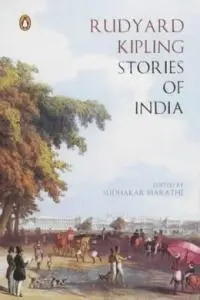
- Название:Indian Tales
- Автор:
- Издательство:epubBooks Classics
- Жанр:
- Год:2014
- ISBN:нет данных
- Рейтинг книги:5 / 5. Голосов: 1
-
Избранное:Добавить в избранное
- Отзывы:
-
Ваша оценка:
Indian Tales: краткое содержание, описание и аннотация
Предлагаем к чтению аннотацию, описание, краткое содержание или предисловие (зависит от того, что написал сам автор книги «Indian Tales»). Если вы не нашли необходимую информацию о книге — напишите в комментариях, мы постараемся отыскать её.
Indian Tales — читать онлайн бесплатно полную книгу (весь текст) целиком
Ниже представлен текст книги, разбитый по страницам. Система сохранения места последней прочитанной страницы, позволяет с удобством читать онлайн бесплатно книгу «Indian Tales», без необходимости каждый раз заново искать на чём Вы остановились. Поставьте закладку, и сможете в любой момент перейти на страницу, на которой закончили чтение.
Интервал:
Закладка:
"Man," said he, "when you have reached the uttermost depths of degradation, little incidents which would vex a higher life, are to you of no consequence. Last night, my soul was among the Gods; but I make no doubt that my bestial body was writhing down here in the garbage."
"You were abominably drunk if that's what you mean," I said,
"I was drunk—filthily drunk. I who am the son of a man with whom you have no concern—I who was once Fellow of a College whose buttery–hatch you have not seen. I was loathsomely drunk. But consider how lightly I am touched. It is nothing to me. Less than nothing; for I do not even feel the headache which should be my portion. Now, in a higher life, how ghastly would have been my punishment, how bitter my repentance! Believe me my friend with the neglected education, the highest is as the lowest—always supposing each degree extreme."
He turned round on the blanket, put his head between his fists and continued—
"On the Soul which I have lost and on the Conscience which I have killed, I tell you that I cannot feel! I am as the Gods, knowing good and evil, but untouched by either. Is this enviable or is it not?"
When a man has lost the warning of "next morning's head," he must be in a bad state. I answered, looking at McIntosh on the blanket, with his hair over his eyes and his lips blue–white, that I did not think the insensibility good enough.
"For pity's sake, don't say that! I tell you, it is good and most enviable. Think of my consolations!"
"Have you so many, then, McIntosh?"
"Certainly; your attempts at sarcasm which is essentially the weapon of a cultured man, are crude. First, my attainments, my classical and literary knowledge, blurred, perhaps, by immoderate drinking—which reminds me that before my soul went to the Gods last night, I sold the Pickering Horace you so kindly loaned me. Ditta Mull the clothesman has it. It fetched ten annas, and may be redeemed for a rupee—but still infinitely superior to yours. Secondly, the abiding affection of Mrs. McIntosh, best of wives. Thirdly, a monument, more enduring than brass, which I have built up in the seven years of my degradation."
He stopped here, and crawled across the room for a drink of water. He was very shaky and sick.
He referred several times to his "treasure"—some great possession that he owned—but I held this to be the raving of drink. He was as poor and as proud as he could be. His manner was not pleasant, but he knew enough about the natives, among whom seven years of his life had been spent, to make his acquaintance worth having. He used actually to laugh at Strickland as an ignorant man—"ignorant West and East"—he said. His boast was, first, that he was an Oxford Man of rare and shining parts, which may or may not have been true—I did not know enough to check his statements—and, secondly, that he "had his hand on the pulse of native life"—which was a fact. As an Oxford Man, he struck me as a prig: he was always throwing his education about. As a Mohammedan faquir —as McIntosh Jellaludin—he was all that I wanted for my own ends. He smoked several pounds of my tobacco, and taught me several ounces of things worth knowing; but he would never accept any gifts, not even when the cold weather came, and gripped the poor thin chest under the poor thin alpaca–coat. He grew very angry, and said that I had insulted him, and that he was not going into hospital. He had lived like a beast and he would die rationally, like a man.
As a matter of fact, he died of pneumonia; and on the night of his death sent over a grubby note asking me to come and help him to die.
The native woman was weeping by the side of the bed. McIntosh, wrapped in a cotton cloth, was too weak to resent a fur coat being thrown over him. He was very active as far as his mind was concerned, and his eyes were blazing. When he had abused the Doctor who came with me, so foully that the indignant old fellow left, he cursed me for a few minutes and calmed down.
Then he told his wife to fetch out "The Book" from a hole in the wall. She brought out a big bundle, wrapped in the tail of a petticoat, of old sheets of miscellaneous note–paper, all numbered and covered with fine cramped writing. McIntosh ploughed his hand through the rubbish and stirred it up lovingly.
"This," he said, "is my work—the Book of McIntosh Jellaludin, showing what he saw and how he lived, and what befell him and others; being also an account of the life and sins and death of Mother Maturin. What Mirza Murad Ali Beg's book is to all other books on native life, will my work be to Mirza Murad Ali Beg's!"
This, as will be conceded by any one who knows Mirza Murad Ali Beg's book, was a sweeping statement. The papers did not look specially valuable; but McIntosh handled them as if they were currency–notes. Then said he slowly—
"In despite the many weaknesses of your education, you have been good to me. I will speak of your tobacco when I reach the Gods. I owe you much thanks for many kindnesses. But I abominate indebtedness. For this reason, I bequeath to you now the monument more enduring than brass—my one book—rude and imperfect in parts, but oh how rare in others! I wonder if you will understand it. It is a gift more honorable than…. Bah! where is my brain rambling to? You will mutilate it horribly. You will knock out the gems you call Latin quotations, you Philistine, and you will butcher the style to carve into your own jerky jargon; but you cannot destroy the whole of it. I bequeath it to you. Ethel…. My brain again! … Mrs. McIntosh, bear witness that I give the Sahib all these papers. They would be of no use to you, Heart of my Heart; and I lay it upon you," he turned to me here, "that you do not let my book die in its present form. It is yours unconditionally—the story of McIntosh Jellaludin, which is not the story of McIntosh Jellaludin, but of a greater man than he, and of a far greater woman. Listen now! I am neither mad nor drunk! That book will make you famous."
I said, "Thank you," as the native woman put the bundle into my arms.
"My only baby!" said McIntosh, with a smile. He was sinking fast, but he continued to talk as long as breath remained. I waited for the end; knowing that, in six cases out of ten a dying man calls for his mother. He turned on his side and said—
"Say how it came into your possession. No one will believe you, but my name, at least, will live. You will treat it brutally, I know you will. Some of it must go; the public are fools and prudish fools. I was their servant once. But do your mangling gently—very gently. It is a great work, and I have paid for it in seven years' damnation."
His voice stopped for ten or twelve breaths, and then he began mumbling a prayer of some kind in Greek. The native woman cried very bitterly. Lastly, he rose in bed and said, as loudly as slowly—"Not guilty, my Lord!"
Then he fell back, and the stupor held him till he died. The native woman ran into the Serai among the horses, and screamed and beat her breasts; for she had loved him.
Perhaps his last sentence in life told what McIntosh had once gone through; but, saving the big bundle of old sheets in the cloth, there was nothing in his room to say who or what he had been.
The papers were in a hopeless muddle.
Strickland helped me to sort them, and he said that the writer was either an extreme liar or a most wonderful person. He thought the former. One of these days, you may be able to judge for yourselves. The bundle needed much expurgation and was full of Greek nonsense, at the head of the chapters, which has all been cut out.
If the thing is ever published, some one may perhaps remember this story, now printed as a safeguard to prove that McIntosh Jellaludin and not I myself wrote the Book of Mother Maturin.
Читать дальшеИнтервал:
Закладка:
Похожие книги на «Indian Tales»
Представляем Вашему вниманию похожие книги на «Indian Tales» списком для выбора. Мы отобрали схожую по названию и смыслу литературу в надежде предоставить читателям больше вариантов отыскать новые, интересные, ещё непрочитанные произведения.





Обсуждение, отзывы о книге «Indian Tales» и просто собственные мнения читателей. Оставьте ваши комментарии, напишите, что Вы думаете о произведении, его смысле или главных героях. Укажите что конкретно понравилось, а что нет, и почему Вы так считаете.