Джозеф Киплинг - Indian Tales
Здесь есть возможность читать онлайн «Джозеф Киплинг - Indian Tales» весь текст электронной книги совершенно бесплатно (целиком полную версию без сокращений). В некоторых случаях можно слушать аудио, скачать через торрент в формате fb2 и присутствует краткое содержание. Год выпуска: 2014, Издательство: epubBooks Classics, Жанр: Классическая проза, на английском языке. Описание произведения, (предисловие) а так же отзывы посетителей доступны на портале библиотеки ЛибКат.
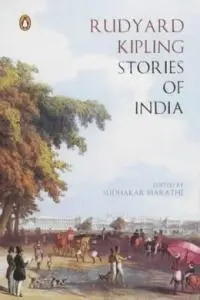
- Название:Indian Tales
- Автор:
- Издательство:epubBooks Classics
- Жанр:
- Год:2014
- ISBN:нет данных
- Рейтинг книги:5 / 5. Голосов: 1
-
Избранное:Добавить в избранное
- Отзывы:
-
Ваша оценка:
Indian Tales: краткое содержание, описание и аннотация
Предлагаем к чтению аннотацию, описание, краткое содержание или предисловие (зависит от того, что написал сам автор книги «Indian Tales»). Если вы не нашли необходимую информацию о книге — напишите в комментариях, мы постараемся отыскать её.
Indian Tales — читать онлайн бесплатно полную книгу (весь текст) целиком
Ниже представлен текст книги, разбитый по страницам. Система сохранения места последней прочитанной страницы, позволяет с удобством читать онлайн бесплатно книгу «Indian Tales», без необходимости каждый раз заново искать на чём Вы остановились. Поставьте закладку, и сможете в любой момент перейти на страницу, на которой закончили чтение.
Интервал:
Закладка:
Ortheris did not reply. He was staring across the valley, with the smile of the artist who looks on the completed work.
To be Filed for Reference
By the hoof of the Wild Goat up–tossed
From the Cliff where She lay in the Sun,
Fell the Stone
To the Tarn where the daylight is lost;
So She fell from the light of the Sun,
And alone.
Now the fall was ordained from the first,
With the Goat and the Cliff and the Tarn,
But the Stone
Knows only Her life is accursed,
As She sinks in the depths of the Tarn,
And alone.
Oh, Thou who hast builded the world!
Oh, Thou who hast lighted the Sun!
Oh, Thou who hast darkened the Tarn!
Judge Thou
The sin of the Stone that was hurled
By the Goat from the light of the Sun,
As She sinks in the mire of the Tarn,
Even now—even now—even now!
"Say is it dawn, is it dusk in thy Bower, Thou whom I long for, who longest for me? Oh, be it night—be it"—Here he fell over a little camel–colt that was sleeping in the Serai where the horse–traders and the best of the blackguards from Central Asia live; and, because he was very drunk indeed and the night was dark, he could not rise again till I helped him. That was the beginning of my acquaintance with McIntosh Jellaludin, When a loafer, and drunk, sings "The Song of the Bower," he must be worth cultivating. He got off the camel's back and said, rather thickly, "I—I—I'm a bit screwed, but a dip in Loggerhead will put me right again; and, I say, have you spoken to Symonds about the mare's knees?"
Now Loggerhead was six thousand weary miles away from us, close to Mesopotamia, where you mustn't fish and poaching is impossible, and Charley Symonds' stable a half mile farther across the paddocks. It was strange to hear all the old names, on a May night, among the horses and camels of the Sultan Caravanserai. Then the man seemed to remember himself and sober down at the same time. We leaned against the camel and pointed to a corner of the Serai where a lamp was burning.
"I live there," said he, "and I should be extremely obliged if you would be good enough to help my mutinous feet thither; for I am more than usually drunk—most—most phenomenally tight But not in respect to my head. 'My brain cries out against'—how does it go? But my head rides on the—rolls on the dunghill I should have said, and controls the qualm."
I helped him through the gangs of tethered horses and he collapsed on the edge of the veranda in front of the line of native quarters.
"Thanks—a thousand thanks! O Moon and little, little Stars! To think that a man should so shamelessly … Infamous liquor too. Ovid in exile drank no worse. Better. It was frozen. Alas! I had no ice. Good–night. I would introduce you to my wife were I sober—or she civilized."
A native woman came out of the darkness of the room, and began calling the man names; so I went away. He was the most interesting loafer that I had had the pleasure of knowing for a long time; and later on, he became a friend of mine. He was a tall, well–built, fair man, fearfully shaken with drink, and he looked nearer fifty than the thirty–five which, he said, was his real age. When a man begins to sink in India, and is not sent Home by his friends as soon as may be, he falls very low from a respectable point of view. By the time that he changes his creed, as did McIntosh, he is past redemption.
In most big cities, natives will tell you of two or three Sahibs , generally low–caste, who have turned Hindu or Mussulman, and who live more or less as such, But it is not often that you can get to know them. As McIntosh himself used to say, "If I change my religion for my stomach's sake, I do not seek to become a martyr to missionaries, nor am I anxious for notoriety."
At the outset of acquaintance McIntosh warned me, "Remember this. I am not an object for charity, I require neither your money, your food, nor your cast–off raiment. I am that rare animal, a self–supporting drunkard. If you choose, I will smoke with you, for the tobacco of the bazars does not, I admit, suit my palate; and I will borrow any books which you may not specially value. It is more than likely that I shall sell them for bottles of excessively filthy country liquors, In return, you shall share such hospitality as my house affords. Here is a charpoy on which two can sit, and it is possible that there may, from time to time, be food in that platter. Drink, unfortunately, you will find on the premises at any hour: and thus I make you welcome to all my poor establishment."
I was admitted to the McIntosh household—I and my good tobacco. But nothing else. Unluckily, one cannot visit a loafer in the Serai by day. Friends buying horses would not understand it. Consequently, I was obliged to see McIntosh after dark. He laughed at this, and said simply, "You are perfectly right. When I enjoyed a position in society, rather higher than yours, I should have done exactly the same thing. Good heavens! I was once"—he spoke as though he had fallen from the Command of a Regiment—"an Oxford Man!" This accounted for the reference to Charley Symonds' stable.
"You," said McIntosh, slowly, "have not had that advantage; but, to outward appearance, you do not seem possessed of a craving for strong drinks. On the whole, I fancy that you are the luckier of the two. Yet I am not certain. You are—forgive my saying so even while I am smoking your excellent tobacco—painfully ignorant of many things."
We were sitting together on the edge of his bedstead, for he owned no chairs, watching the horses being watered for the night, while the native woman was preparing dinner. I did not like being patronized by a loafer, but I was his guest for the time being, though he owned only one very torn alpaca–coat and a pair of trousers made out of gunny–bags. He took the pipe out of his mouth, and went on judicially, "All things considered, I doubt whether you are the luckier. I do not refer to your extremely limited classical attainments, or your excruciating quantities, but to your gross ignorance of matters more immediately under your notice. That, for instance," he pointed to a woman cleaning a samovar near the well in the centre of the Serai. She was flicking the water out of the spout in regular cadenced jerks.
"There are ways and ways of cleaning samovars. If you knew why she was doing her work in that particular fashion, you would know what the Spanish Monk meant when he said—
I the Trinity illustrate,
Drinking watered orange–pulp—
In three sips the Arian frustrate,
While he drains his at one gulp—
and many other things which now are hidden from your eyes. However, Mrs. McIntosh has prepared dinner. Let us come and eat after the fashion of the people of the country—of whom, by the way, you know nothing."
The native woman dipped her hand in the dish with us. This was wrong. The wife should always wait until the husband has eaten. McIntosh Jellaludin apologized, saying—
"It is an English prejudice which I have not been able to overcome; and she loves me. Why, I have never been able to understand. I foregathered with her at Jullundur, three years ago, and she has remained with me ever since. I believe her to be moral, and know her to be skilled in cookery."
He patted the woman's head as he spoke, and she cooed softly. She was not pretty to look at.
McIntosh never told me what position he had held before his fall. He was, when sober, a scholar and a gentleman. When drunk, he was rather more of the first than the second. He used to get drunk about once a week for two days. On those occasions the native woman tended him while he raved in all tongues except his own. One day, indeed, he began reciting Atalanta in Calydon , and went through it to the end, beating time to the swing of the verse with a bedstead–leg. But he did most of his ravings in Greek or German. The man's mind was a perfect rag–bag of useless things. Once, when he was beginning to get sober, he told me that I was the only rational being in the Inferno into which he had descended—a Virgil in the Shades, he said—and that, in return for my tobacco, he would, before he died, give me the materials of a new Inferno that should make me greater than Dante. Then he fell asleep on a horse–blanket and woke up quite calm.
Читать дальшеИнтервал:
Закладка:
Похожие книги на «Indian Tales»
Представляем Вашему вниманию похожие книги на «Indian Tales» списком для выбора. Мы отобрали схожую по названию и смыслу литературу в надежде предоставить читателям больше вариантов отыскать новые, интересные, ещё непрочитанные произведения.






Обсуждение, отзывы о книге «Indian Tales» и просто собственные мнения читателей. Оставьте ваши комментарии, напишите, что Вы думаете о произведении, его смысле или главных героях. Укажите что конкретно понравилось, а что нет, и почему Вы так считаете.